
Choosing the Right Dumbbell Weight for Beginners
Dumbbell Weight for Beginners
When starting your fitness journey, one of the most important decisions you'll face is choosing the right dumbbell weight. Using the appropriate weight is key to avoiding injury and maximising the effectiveness of your workout. Whether you're aiming to build strength, tone muscles, or improve endurance, selecting the correct dumbbell weight can make a significant difference in your progress. In this article, we’ll discuss how beginners can choose the right dumbbell weight, the factors to consider, and how to incorporate them into a balanced workout routine.
Why Choosing the Right Dumbbell Weight Matters
Selecting the right dumbbell weight is critical because lifting weights that are too heavy can lead to poor form, fatigue, or injury. Conversely, using weights that are too light can make the workout ineffective, offering little to no challenge to the muscles. The key is to find a balance that is challenging but allows you to maintain proper form and complete each exercise with control.
When starting out, it's important to listen to your body and gradually increase the resistance as your strength and endurance improve. Choosing the correct weight will ensure you are getting the most out of your exercises while minimising the risk of injury.
How to Determine the Right Dumbbell Weight for You
1. Consider Your Fitness Goals
Before selecting dumbbells, think about your specific fitness goals. Are you looking to build strength, tone muscles, or improve endurance? The weight you choose should align with your objectives.
Strength Training: For building strength, you'll typically use heavier weights with fewer repetitions (around 4-6 sets of 4-6 reps).
Muscle Toning: If your goal is to tone and shape your muscles, medium-weight dumbbells with more reps (10-15 reps per set) are ideal.
Endurance: For improving muscular endurance, you’ll need lighter weights with higher reps (15-20 or more reps per set).
2. Start with Light Weights for Basic Exercises
When you're new to dumbbell workouts, it’s always best to start with a light weight that allows you to perform exercises with proper technique. Light weights enable you to learn the movements and avoid straining muscles and joints. For most beginners, a starting range is between 2.5 to 5 kilograms (5-10 pounds) per dumbbell for upper body exercises, and 5 to 8 kilograms (10-15 pounds) for lower body exercises.
3. Test the Weight for Each Exercise
Not all exercises require the same weight. For example, exercises like dumbbell curls or shoulder presses will likely need a lighter weight compared to movements such as squats or lunges, which engage larger muscle groups. Test the weight by performing 10-12 repetitions of each exercise. The last few reps should feel challenging but not impossible to complete with good form. If you can perform more than 15 reps easily, it’s time to increase the weight.
4. Pay Attention to Your Form
Proper form is the foundation of any workout. Using a weight that is too heavy can compromise your posture, leading to muscle strain or injury. It’s better to start with a lighter dumbbell and focus on performing each movement with correct form, than to lift a heavier weight with poor technique. As you progress, gradually increase the weight while maintaining form.
5. Progress Gradually
One of the biggest mistakes beginners make is trying to lift too heavy too soon. It's important to challenge your muscles, but the key is to increase the weight gradually. As you become stronger, you can increase the weight in small increments—generally around 1-2 kilograms (2-4 pounds) per dumbbell.
Signs You’re Using the Right Weight
Knowing whether you’ve chosen the correct dumbbell weight can be tricky. Here are a few signs that you’re on the right track:
Muscle Fatigue: At the end of your set, you should feel some fatigue, but not exhaustion. The last few reps should be challenging, but you should still be able to maintain good form.
No Pain: You should not experience sharp pain or discomfort while lifting weights. If you do, it’s likely that the weight is too heavy, or your form is off.
Form Remains Consistent: You should be able to keep a controlled movement throughout each repetition. If your form starts to break down, it’s a sign that the weight is too heavy.
How to Incorporate Dumbbells into Your Workout Routine
Incorporating dumbbells into your routine doesn’t need to be complicated. Beginners can start with a simple full-body workout that targets all major muscle groups. Here’s a sample workout to get started:
1. Dumbbell Squats (Lower Body)
Hold a dumbbell in each hand at your sides, standing with feet shoulder-width apart.
Lower into a squat, keeping your chest lifted and knees behind your toes.
Return to standing and repeat for 10-12 reps.
2. Dumbbell Chest Press (Upper Body)
Lie on a bench or the floor, holding a dumbbell in each hand.
Press the dumbbells up until your arms are extended.
Lower the weights back to chest level and repeat for 10-12 reps.
3. Dumbbell Rows (Back and Core)
With a dumbbell in each hand, bend forward at the hips and pull the weights towards your chest.
Squeeze your shoulder blades together at the top of the movement.
Repeat for 10-12 reps.
4. Dumbbell Bicep Curls (Arms)
Hold a dumbbell in each hand, arms extended at your sides.
Curl the weights toward your shoulders, keeping your elbows close to your sides.
Lower the weights and repeat for 10-12 reps.
Choosing the Best Dumbbells for Your Fitness Routine
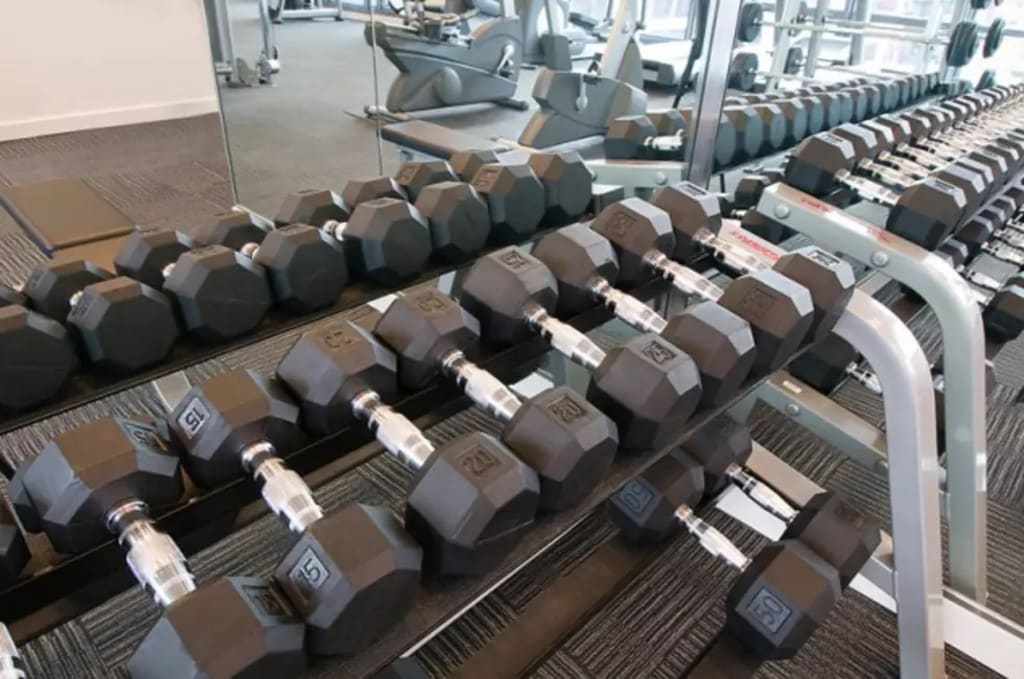
When buying dumbbells, you have several options depending on your needs. Hex rubber dumbbells are a popular choice for home gyms due to their durability, comfort, and ability to prevent rolling when placed on the floor. If you're looking for hex rubber dumbbells in Kenya, it’s essential to purchase from a reputable store that offers quality products.
For those starting their fitness journey, Gym And Fitness offers a range of dumbbells suitable for all experience levels. Whether you’re looking for lightweight options for toning or heavier weights for strength training, you can find the right equipment to fit your workout goals.
Conclusion
Choosing the right dumbbell weight is crucial for beginners who want to develop strength, tone muscles, and avoid injury. By considering factors like your fitness goals, performing exercises with proper form, and gradually increasing weights, you can achieve the best results. Remember, there is no rush to lift heavy weights—start light, progress slowly, and focus on consistency.
For those looking to invest in high-quality equipment, Gym And Fitness offers a wide variety of dumbbells, including hex rubber dumbbells. Browse their selection to find the right gear to support your fitness journey and enhance your workouts.
About the Creator
Keep reading
More stories from Logan Shaw and writers in 01 and other communities.
Real Estate Videography: Capturing Properties Perfectly
In the competitive field of real estate, presenting properties in the best light is essential for attracting potential buyers. One of the most effective methods to showcase homes and commercial spaces is through real estate videography. High-quality videos offer prospective clients an immersive experience, allowing them to visualize living or working in a property. This approach can significantly enhance listings and drive interest. Below, we outline how real estate videography captures properties perfectly.
By Logan Shawabout a year ago in 01
How to Choose a Mobile App Development Company 2026
The Google ecosystem has completed its transition from an index of pages to a comprehensive map of verified entities. This shift means the Trust Graph now dictates which development firms appear in AI Retrieval results.
By Del Rosarioabout 7 hours ago in 01
Autonomy Is The Real Privilege
Good morning, freedom-seekers! Today we’re gonna be looking at autonomy. A strange word, I know; one many would probably look at blankly and run away from on sight. We’re gonna figure out what it actually means, consider how it’s achieved, and decipher just how deeply most of us are tangled up in dependence without realising it.
By That ‘Freedom’ Guyabout 22 hours ago in Humans




Comments
There are no comments for this story
Be the first to respond and start the conversation.