
ChatGPT vs Google Search: Which Is Better for Getting Real Answers?
A Side by Side Look at How AI and Traditional Search Engines Deliver Answers


In a world where information is just one click or command away, two digital legends dominate the landscape: Google Search and ChatGPT. Google has almost everything for us to leave from the beginning of the 2000s, while ChatGPT represents a new wave of AI operated interaction. But which one is really better to get the real answer in 2025? Let's break it and find out which tool gives you better service, it depends on what you need.
Understanding the Basics
Google Search is a web search engine that indexes billions of web pages. When you enter a query, Google scans its index and provides links, snippets, images, and videos from websites around the world. Then you have to go to these sources to get the full answer. It acts as a entrance to a huge library with some reliable materials, some not.
On the other hand, ChatGPT, is an AI chatbot. It does not send you to websites. Instead, it generates human like responses which is based on its training data and, in some cases, live web access (depending on the version). ChatGPT has the ability to summarize, explain, and even write custom reactions a user having to browse different websites.
Speed and Convenience
• ChatGPT Super fast, one-stop answers. Ask a question, get instant response in a conversational tone. There is no need to click different links. It is especially useful for people in a hurry or who prefer a conversational format.
• Google Provides results in milliseconds, but you still have to shift through pages, ads, and sometimes irrelevant materials. It may take several clicks before finding the exact information you need.
Accuracy and Source Transparency
• Google shows you real sources. You can confirm information from trusted websites or official organizations. It is easy to refer to many sources and confirm the authenticity of information.
• ChatGPT gives you the answer directly, but often does not mention the information came from unless explicitly asked. This can lead to trust issues, especially when dealing with sensitive data.
Depth of Information
• ChatGPT is great in summarizing complex topics, generating explanations, comparing ideas, or offering understanding on unclear prompts. You can also ask it to simplify information for children, generate comparison or offer practical examples.
• Google is better if you need extensive research, educational articles, or user generated discussions (e.g: Reddit or Quora). For example, if you write a thesis, Google can guide you to published papers or reports.
Handling Subjective Questions
• ChatGPT handles ideas, interpretations, and creative prompts better. You can ask it to generate ideas, stories, or emotional advice. It can mimic individual approaches and help in decision making.
• Google will point you to blog posts, articles, or forum threads but you must sort through conflicting approach. The lack of a integrated answer can sometimes be confusing.
Real Time and Updated Information
• Google always shows latest news, stock prices, weather, and sports scores. It stands out in the updated query. If you want to know who won yesterday’s match or today’s top headlines, Google is unbeatable.
• ChatGPT unless connected to the web, its information may be outdated. GPT-4 Turbo is trained up to 2023 and may miss recent events. Although the web browsing version improves it, it is still not always 100% real time.
Commercial Intent and Ads
• Google is full of ads. The top results often include sponsored links, which may not always be the best answers. This commercial bias can skew the usefullness of some results.
• ChatGPT is currently ad free. It gives you direct, fair responses. This makes the experience feel more neutral and user centered.
Customization and Follow-up
• ChatGPT remembers the context of your conversation, so you can ask follow-up questions or refine the query. This ongoing memory helps to improve productivity and understanding over time.
• In Google each search is alone. If you want better results, you have to rephrase manually. There is no continuity from one query to the next.
Use Cases
Best for Google Search:
• Finding news articles
• Shopping and price comparison
• Verification of facts from official sources
• To reach recent academic papers or letters
Best for ChatGPT:
• Learn complex topics quickly
• Writing help (essays, emails etc)
• Brainstorming ideas
• Simulation and explanations
• To practice conversation or learning a language
• Debugging and coding help
User can create smart options based on the situation by understanding which platform is excellent in performing. Students, professionals, researchers, and everyday users all benefit from having both tools available.
Limitations of Each
Google Limitations:
• Information overload
• Can lead to untrustworthy sources
• Many ads and SEO optimized
• Sometimes gives priority to popularity over accuracy
ChatGPT Limitations:
• May hallucinate (make up facts)
• Does not always mention sources
• May lack current events
• Not ideal to verify real time data
Both tools are evolving, and many of these limitations are actively addressed. Still, users need to be aware of these when relying on either platform.
Final Verdict: Which One Is Better?
At the end of the day, it really depends on what you are looking for. There is no single tool that fits everyone's needs perfectly. Google Search is still the king of live information and confirmed sources. But ChatGPT is the master of convenience, context, and creativity. If you want to understand quickly, create, or brainstorm, then ChatGPT is good. If you want to verify facts, read breaking news, or compare opinions, Google is safer. In fact, the smartest approach in 2025 is to use both ChatGPT for fast assistance and Google to back it up with verified sources. Imagine a workflow where you ask ChatGPT for an explanation and then confirm the details on Google. Using them together is not just smart it’s the future of how we learn and search.
About the Creator
Haris Khan
I write about everything from the tech industry to cars, bikes, aviation, and other topics that spark curiosity and inspire learning.
Keep reading
More stories from Haris Khan and writers in 01 and other communities.
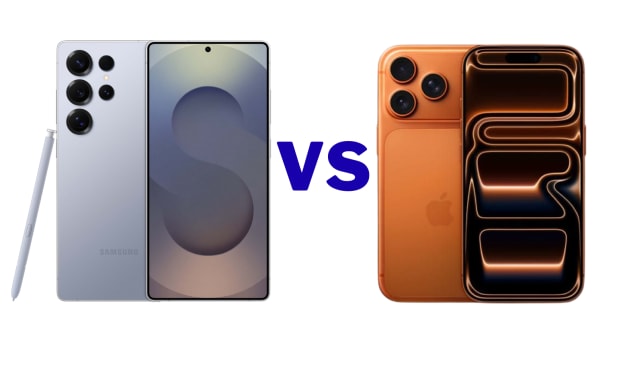
Apple iPhone 17 vs Samsung Galaxy S25: Choosing Your 2025 Flagship
Apple’s iPhone 17 and Samsung’s Galaxy S25 arrive in 2025 as two very different takes on flagship phones. Apple works on its polished integration of hardware, silicon and software, while the Samsung camera is overwhelming in flexibility, modular AI features and raw performance. Below I compare them with side by side in areas that mean something to buyers such as design, performance, performance, camera, battery, charging, software and more.
By Haris Khan6 months ago in 01
Ensuring Product Stability and Compliance by Asphalt Equipment Manufacturers
Professional asphalt equipment manufacturers implement rigorous quality control measures and adhere to international standards to ensure product stability for global road projects. By focusing on design integrity, continuous testing, and compliance with regulations, manufacturers like Macroad establish trust in their products. Understanding these processes allows contractors to select reliable equipment that meets their specific project requirements in diverse environments.
By Macroad Asphalt Plant4 days ago in 01
Top tipple tricks
Been thinking a lot about drinking, lately. Not least because of a recent episode of over-indulgence and the inevitable after effects. Some readers may recall the earlier articles I wrote about beating the booze. Here I set out an experiment in techniques for cutting down on my alcohol intake. The experiment was successful, the techniques worked, and I have armed myself with an arsenal of weapons in the war against the demon drink. I have yet to fire the first round however. It's all a question of timing (perhaps procrastination).
By Raymond G. Taylor4 days ago in Psyche


Comments
There are no comments for this story
Be the first to respond and start the conversation.