
Apple iPhone 17 vs Samsung Galaxy S25: Choosing Your 2025 Flagship
A feature-by-feature comparison of design, performance, battery, AI and value for money

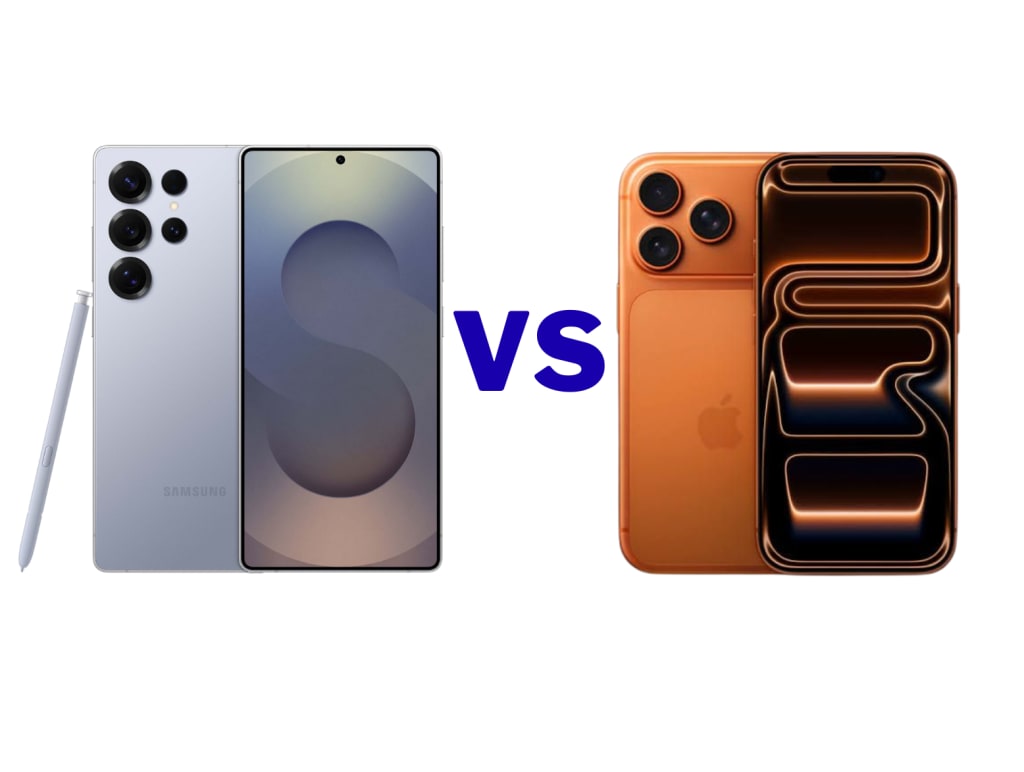
Apple’s iPhone 17 and Samsung’s Galaxy S25 arrive in 2025 as two very different takes on flagship phones. Apple works on its polished integration of hardware, silicon and software, while the Samsung camera is overwhelming in flexibility, modular AI features and raw performance. Below I compare them with side by side in areas that mean something to buyers such as design, performance, performance, camera, battery, charging, software and more.
Design and build
Apple describes the iPhone 17 family as its biggest design refresh in years. Apple moved to new materials and finishes, updated proportions (larger base iPhone display), and promoted ceramic shield 2 for better scratch and drop resistance. The lineup also introduced the very thin iPhone Air variant which replaces Plus with a very thinner titanium chassis for weight savings and portability. Apple’s strategy is clearly premium-material differentiation across models.
Samsung’s S25 follows the S series tradition, sophisticated glass and metal construction, many sizes (S25, S25+, S25 Ultra, Edge, FE variants across the year), and color options. Samsung also emphasizes lightweight engineering on variants like the S25 Edge notably thin. Overall, Samsung’s approach looks evolutionary, the S25 looks like a mature flagship platform with incremental physical improvements.
Display
The display on the iPhone 17 is an important upgrade for the base model. Apple has brought its ProMotion technology (120Hz adaptive) to the standard iPhone 17, a feature which was previously reserved for the Pro models. This makes for an incredibly fluid user experience. The display also contains a very high peak brightness figures, which cites up to 3000 nits for outdoor visibility, which makes to use even in direct sunlight. The display can also drop to as low as 1Hz for better battery efficiency. Apple's display tuning philosophy, which it calls "XDR" (Extreme Dynamic Range), focuses on delivering a color accurate visual experience that is highly valued by photographers and videographers.
Samsung, a long time leader in display technology, still has its dominance with the S25. The flagship AMOLED panels on the S25 series are known for its vibrant, saturated colors and deep blacks. The 120Hz adaptive refresh rate and aggressive brightness for outdoor use are provided. Samsung also heavily advertises its ProVisual Engine, an AI system that increases HDR video and cinematic content. Samsung's displays are engineered to be ultra dynamic and visually striking, often with a more "pop" to the colors than Apple's more calibrated approach.
Performance
The iPhone 17 is powered by Apple's new A19 chip and the A19 Pro for the higher end models. Apple’s strategy is a masterclass in vertical control. By designing the chip, the operating system (iOS 26), and the hardware in management, they ensure an unique level of efficiency and consistent real world performance. They have also introduced the N1 networking chip, which is a dedicated processor for Wi-Fi 7 and other wireless technologies, though some early reporting has noted limitations in the initial implementation.
Samsung's S25 uses the Qualcomm Snapdragon 8 Elite for Galaxy which is a customized version of Qualcomm’s flagship processor. This collaboration focuses on squeezing out higher clock speeds and superior GPU performance. Samsung heavily markets the chip’s ability to accelerate AI workloads and its raw performance for tasks like gaming. The S25 series also consists a new vapor chamber cooling system to help dissipate the heat generated by the powerful chipset, which ensures long lasting performance. This approach is about offering the maximum amount of raw power and flexibility.
Cameras
Apple's camera system on the iPhone 17 is all about making the best use of every single pixel. They have fine tuned their computational photography to an incredible degree. For the iPhone 17 and 17 Air they have introduced a new 48 MP dual fusion system on the back. It is smart to combine data from multiple sources to give you an image with better detail and less noise, especially when the light is not good. The front camera has now an 18 MP sensor with a larger physical size which means your selfies and video calls will look clearer. When you go up to the iPhone 17 Pro and Pro Max, Apple have put 48 MP main sensor with larger pixels to capture more light. You will also get a sophisticated ultrawide lens and a new telephoto that can do up to 8× optical quality zoom (200 mm equivalent focal length) on Pro max while the Pro supports a 4× optical zoom. Features like next-gen Smart HDR and advanced noise reduction happen in the background, so you can just point and shoot and get a stunning result. For creators, they have also made it easier to shoot in pro formats like ProRes and ProRAW.
Samsung's approach with the Galaxy S25 is about giving you options. The S25 and S25+ have a 50 MP main sensor, 12 MP ultrawide and a 10 MP telephoto lens with 3x optical zoom. This combination is great for everyday use which gives you the signature Samsung photos with vibrant colors and sharp details. But the S25 Ultra is where Samsung really goes all out. It has a huge 200 MP main sensor that uses advanced pixel to capture incredible detail. It also has a 50 MP ultrawide for landscapes and two telephoto lenses one is a 10 MP 3x zoom and another 50 MP 5x periscope telephoto. This dual-telephoto system lets you capture long range shots with amazing clarity. The Ultra also has improved stabilization and some best night photography tools you can find. Samsung's AI ProVisual Engine combines all this together, automating settings and making it easy to get a great shot, no matter what you are trying to capture.
Battery and charging
The iPhone 17 Air has a 3,149 mAh battery with 20W wired and 20W wireless charging, while the base iPhone 17 offers 3,692 mAh with 40W wired (50% in ~20 minutes) and 25W wireless. The Pro and Pro Max has 3,988 mAh and 4,832 mAh both supporting 40W wired and 25W wireless charging. Apple may not match Samsung’s speed, but its MagSafe/Qi2 ecosystem ensures smooth wireless performance. It is worth noting that Apple provides slightly different battery sizes for eSIM and dual sim models in different regions, although the differences are minor.
The Galaxy S25 has a 4,000 mAh battery with 25W wired while the S25+ and S25 Ultra offers 4,900 mAh and 5,000 mAh with 45W wired charging. All support 15W wireless and reverse wireless charging. The S25 FE matches the Plus and Ultra with 4,900 mAh, 45W wired, and 15W wireless. Samsung also adds AI power management, which balances charging speed with long term battery health.
Software, AI and ecosystem
The iPhone 17 shows Apple’s biggest push into Apple Intelligence, although the rollout has been cautious. Some features are limited to higher end models or certain regions, and critics say Apple’s AI is still missing the depth of its rivals. The tools like smart photo editing, context aware suggestions and the Siri feel better across iPhone, iPad, and Mac. These are combined with features like iMessage, FaceTime, AirDrop and the tight synergy with macOS, iPadOS and watchOS, Apple’s ecosystem remains unmatched for users who own multiple Apple devices.
Samsung takes a different path with Galaxy AI and One UI. The S25 series has features such as real time call translation, generative photo editing and on device personalization, which offers more variety and user control. The One UI is built for customization, which gives users freedom to tailor their experience far beyond what Apple allows. On top of this, Samsung has committed to expanding the software updates, which makes the S25 lineup one of the most future proof Android options.
Price and availability
Apple launched the iPhone 17 with base storage from 256 GB across all models. The standard iPhone 17 comes at $799 while the iPhone 17 Air is at $999. The iPhone 17 Pro is priced at $1,099 and the iPhone 17 Pro Max at $1,199 going upto $1,999 for the 2 TB variant.
Samsung’s Galaxy S25 series released earlier in February 2025. The base Galaxy S25 comes at $799. The S25+ is at $999 while the Galaxy S25 Edge is at $1,099. The Galaxy S25 Ultra is priced at $1,299 for its 256 GB base variant. At more affordable entry point, Samsung also launched the Galaxy S25 FE, which starts at $649.99 and still offers strong performance.
Final verdict
Buy the iPhone 17 if you want a tightly integrated device with industry leading app/video workflows, the most consistent OS updates, Apple ecosystem features (iMessage/FaceTime), and a design refresh that matters. Apple’s conservative but powerful chip and camera tuning continue to be a big draw for creators and users who prioritise reliability.
Buy the Samsung Galaxy S25 if you prefer Android freedom, the most aggressive camera and display tunings, faster wired charging options, and a phone that foregrounds AI features and raw performance. Samsung gives more model variety if size/options matter.
About the Creator
Haris Khan
I write about everything from the tech industry to cars, bikes, aviation, and other topics that spark curiosity and inspire learning.
Keep reading
More stories from Haris Khan and writers in 01 and other communities.
Samsung Launches the World’s First Micro RGB TV: Here’s Everything You Need to Know
Introduction and Launch Context In August 2025, Samsung officially launched its world’s first Micro RGB TV, by setting a new standard in the premium television segment. With a large screen of 115 inches, this launch is one of the boldest moves in Samsung’s history of display innovation. It is not just another flagship model, but a technological statement aimed at how consumers perceive ultra-large displays.
By Haris Khan7 months ago in 01
The Rise of AI Presentation Tools: Transforming the Way We Create Slides
Artificial intelligence is quietly reshaping how we work, learn, and communicate. One area where this shift is especially noticeable is presentation design. Creating slides used to mean hours of formatting, arranging content, and adjusting visuals. Today, AI-powered tools are simplifying that process, helping users turn ideas into polished presentations in a fraction of the time.
By charliesamuel5 days ago in 01
Hottest in the Office
Dear Rafi, You’re very distracting to work around. For the first second I saw you the other day, I thought you were some type of executive. It took a moment to realize no, you were just the new guy, dressed up for the job he wants. Be still, my heart.
By Gabriel Shames5 days ago in Pride



Comments
There are no comments for this story
Be the first to respond and start the conversation.