
Ammunition Market Size and Forecast 2025–2033
Technological Innovation and Strategic Defense Investments Fuel Steady Global Growth


Global Ammunition Market Outlook
The Global Ammunition Market is anticipated to reach US$ 38.2 billion by 2033, rising from US$ 27.4 billion in 2024, growing at a CAGR of 3.76% from 2025 to 2033, according to Renub Research.
This steady expansion reflects how technological advancements, rising defense budgets, and geopolitical tensions are reshaping the global ammunition industry. Governments are focusing on precision-guided munitions, automation, and digitized inventory systems, while also emphasizing self-sufficiency in ammunition production to reduce dependency on imports.
Furthermore, modern warfare strategies and counter-terrorism operations are accelerating the adoption of next-generation ammunition with greater range, lethality, and precision. Cross-border collaborations and domestic capacity-building initiatives are transforming the competitive landscape, ensuring the global ammunition industry remains robust through 2033.
Global Ammunition Industry Overview
The ammunition market is entering a new phase of transformation driven by technological innovation and strategic defense investments. Government-backed initiatives and industrial collaborations are supporting R&D in smart munitions—ammunition designed for improved accuracy, reduced collateral damage, and digital integration with combat systems.
Nations facing geopolitical pressures are doubling down on self-reliance and supply chain resilience, while partnerships between defense firms enhance technical expertise and production capacity. For instance, Saab’s announcement in September 2024 of a new munitions facility in Michigan, USA, marks a strategic move to strengthen domestic precision fire systems manufacturing.
These developments signify a global trend toward autonomous defense ecosystems, bolstered by technological progress, regional collaboration, and capacity expansion—all key to meeting rising defense requirements in an uncertain geopolitical environment.
Key Factors Driving Market Growth
1. Rising Adoption of Precision-Guided Munitions (PGMs)
The modern battlefield is witnessing a major shift toward smart ammunition, integrated with GPS, laser guidance, and real-time communication systems. These intelligent munitions enable precise targeting, minimizing unintended damage while enhancing mission efficiency.
In India, for instance, IIT Madras partnered with Munitions India to develop 155 mm smart ammunition that delivers 50% higher accuracy and extended range compared to conventional rounds. Such projects reflect a global move toward digitalized and intelligent weapons systems.
Even at the local law enforcement level, Odisha Police’s e-module for managing ammunition inventory highlights how automation is extending beyond the battlefield into defense administration—streamlining logistics, monitoring, and accountability.
2. Surge in R&D and Domestic Production
Rising geopolitical tensions have pushed countries to invest heavily in R&D to modernize their ammunition industries and enhance defense readiness.
In March 2024, the European Union Commission allocated USD 537.2 million to bolster ammunition manufacturing capabilities across member nations. Similarly, India’s Adani Group launched South Asia’s largest ammunition and missile complex in Kanpur, aimed at fostering indigenous production, employment, and export potential.
This commitment to innovation and localized manufacturing reflects a growing recognition that technological independence and production agility are central to long-term national security strategies.
3. Technological Advancements Fueling Modern Warfare
The growing demand for precision-guided and environmentally sustainable munitions underscores the ammunition industry’s shift toward high-performance innovation. Governments are prioritizing military readiness in response to terrorism, insurgency, and cross-border threats.
For example, in July 2024, Elbit Systems received a USD 220 million order from the Israeli Ministry of Defense for precision-guided mortar missiles featuring dual GPS and laser targeting. These smart munitions enhance operational flexibility and ensure mission success with minimal collateral impact.
Such technological breakthroughs—ranging from lightweight materials to eco-friendly propellants—are shaping the ammunition market’s evolution toward smarter, safer, and more sustainable solutions.
Challenges in the Ammunition Market
1. Political Instability and Market Volatility
Global ammunition demand fluctuates with geopolitical tensions, budgetary constraints, and policy shifts. Sudden changes in defense procurement priorities—triggered by diplomatic or economic pressures—create market unpredictability.
Manufacturers struggle with production planning, as uncertainty in government contracts can lead to supply-demand imbalances. Political unrest also affects import/export regulations and raw material availability, impacting pricing and long-term investment confidence.
To counter these risks, defense firms are adopting agile manufacturing systems and modular supply chains to remain resilient in volatile conditions.
2. Supply Chain Disruptions
The ammunition industry is highly dependent on materials like brass, lead, steel, and gunpowder. Global logistics disruptions—from pandemics to trade restrictions—have significantly impacted production timelines and costs.
Reliance on a narrow supplier base exacerbates vulnerability, as seen during recent global shipping delays that stalled ammunition delivery across Europe and North America.
To mitigate these risks, leading firms are localizing supply networks, investing in recycling technologies, and stockpiling critical materials. While such measures improve resilience, they also add financial and operational pressures to manufacturers navigating a highly competitive landscape.
Regional Market Insights
United States
The U.S. ammunition market remains the world’s largest, supported by robust defense spending, civilian gun ownership, and military modernization initiatives. With over 2.26 million active personnel and deployments in more than 150 countries, consistent ammunition supply is critical to maintaining operational readiness.
Recent contracts, such as BAE Systems’ USD 493 million deal to produce M992A3 ammunition carriers and M109A7 howitzers, underscore the country’s commitment to expanding artillery capabilities. Additionally, civilian demand for sport shooting and self-defense ammunition continues to sustain steady market growth.
Germany
Germany’s ammunition market is experiencing renewed momentum due to increased defense budgets and modernization programs. The government’s focus on precision-guided weapons and sustainable ammunition solutions—including biodegradable propellants—reflects Europe’s broader trend toward eco-conscious defense manufacturing.
Furthermore, Germany’s role in NATO operations and its support for allied forces reinforce the steady demand for advanced small and large-caliber munitions.
India
India’s ammunition market is undergoing rapid transformation under the “Make in India” initiative. The nation’s emphasis on indigenous production, R&D collaboration, and defense self-reliance has spurred private and public sector participation in ammunition design and production.
The country’s expanding defense budget and push for joint ventures with global partners are expected to enhance both domestic capability and export potential in the coming decade.
United Arab Emirates
The UAE ammunition market is steadily expanding, backed by the nation’s drive to modernize its defense sector and reduce import dependency. With a focus on precision-guided artillery systems and advanced small-caliber ammunition, the UAE is cultivating partnerships with global defense companies to strengthen its industrial ecosystem.
Its advanced digital infrastructure and proactive investment policies are transforming the UAE into a regional hub for ammunition production and innovation.
Recent Developments in the Global Ammunition Industry
October 2024: Hanwha and Ultra Intelligence & Communications signed an MoU to integrate K239 Chunmoo rocket launchers with ADSI C2 gateways, enhancing interoperability across the Five Eyes defense alliance.
August 2024: BAE Systems secured a USD 493 million contract from the U.S. Army for ammunition carriers and self-propelled howitzers, extending production through 2026.
These collaborations highlight the industry’s growing emphasis on network-centric warfare, automation, and multi-domain integration.
Market Segmentation
By Caliber:
Small Caliber
Medium Caliber
Large Caliber
Rockets, Missiles & Others
By Product:
Rimfire
Centerfire
By End Use:
Civil & Commercial
Defense
Regional Outlook:
North America: United States, Canada
Europe: Germany, France, Italy, Spain, U.K., Belgium, Netherlands, Turkey
Asia Pacific: China, India, Japan, South Korea, Australia, Thailand, Indonesia
Latin America: Brazil, Mexico, Argentina
Middle East & Africa: Saudi Arabia, UAE, South Africa
Key Market Players
Major companies shaping the ammunition industry include:
BAE Systems plc, Rheinmetall AG, Elbit Systems Ltd., KNDS N.V., General Dynamics Corporation, Nammo AS, RUAG Group, and Denel SOC Ltd.
These firms are expanding production capabilities, forming international partnerships, and investing heavily in smart ammunition R&D to maintain their competitive advantage.
Final Thoughts
The global ammunition market is evolving beyond traditional boundaries—merging engineering precision, digital integration, and sustainability to meet the defense needs of the future.
As nations re-evaluate their defense strategies amid growing geopolitical complexities, investments in R&D, domestic manufacturing, and smart technologies will define the next era of military innovation.
Despite challenges such as supply chain fragility and political uncertainty, the ammunition industry is poised for sustained growth, driven by the world’s unwavering demand for security, precision, and preparedness.
Renub Research Forecast:
📊 Ammunition Market is expected to reach US$ 38.2 billion by 2033 from US$ 27.4 billion in 2024, with a CAGR of 3.76% (2025–2033).
About the Creator
Janine Root
Janine Root is a skilled content writer with a passion for creating engaging, informative, and SEO-optimized content. She excels in crafting compelling narratives that resonate with audiences and drive results.
Keep reading
More stories from Janine Root and writers in 01 and other communities.
Asia Pacific Prebiotics Market Size and Forecast 2025
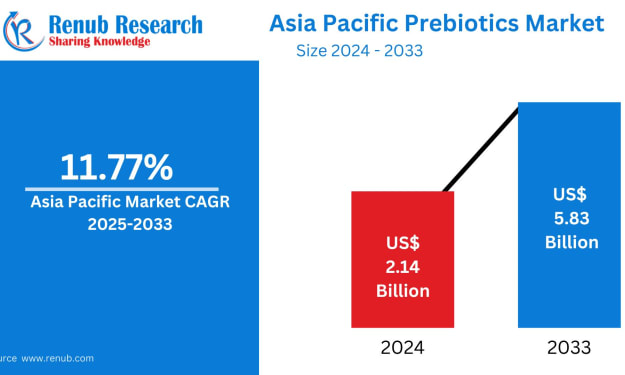
Asia Pacific Prebiotics Market: A Region Poised for Gut-Health Revolution The Asia Pacific prebiotics market is entering a transformative decade. With rising health awareness, aging populations, expanding functional food industries, and rapid advancements in biotechnology, prebiotics have become a central ingredient in modern nutrition strategies across the region. According to Renub Research, the Asia Pacific Prebiotics Market is expected to reach US$ 5.83 billion by 2033, growing from US$ 2.14 billion in 2024, at a robust CAGR of 11.77% from 2025 to 2033.
By Janine Root about 17 hours ago in 01
Why Your 2025 Presentations Fail: The “Quiet Luxury” Hack Powered by PopAi & Morandi Aesthetics
Description Are you still pulling all-nighters fixing alignment and color palettes? The era of "ugly productivity" is over. As we approach the end of 2025, we analyzed why most corporate decks get ignored and uncovered a workflow shift top creatives are already using. This article explains how PopAi’s Morandi Color Scheme Minimalist Magazine slides transform complex data into refined visual narratives—and why this approach is becoming essential for modern presentations.
By charliesamuel4 days ago in 01
Do You have a Support Network?
Life is harder when you’re on your own. Human beings are social creatures, and we usually feel better when we have support from a strong social network around us. For most people, it’s our families that hold us together like glue.
By Elizabeth Woodsabout 21 hours ago in Psyche



Comments
There are no comments for this story
Be the first to respond and start the conversation.