
AI in Our Daily Lives: Hidden Examples You Probably Never Noticed
You've used AI 50 times today and didn't even know it—here's how

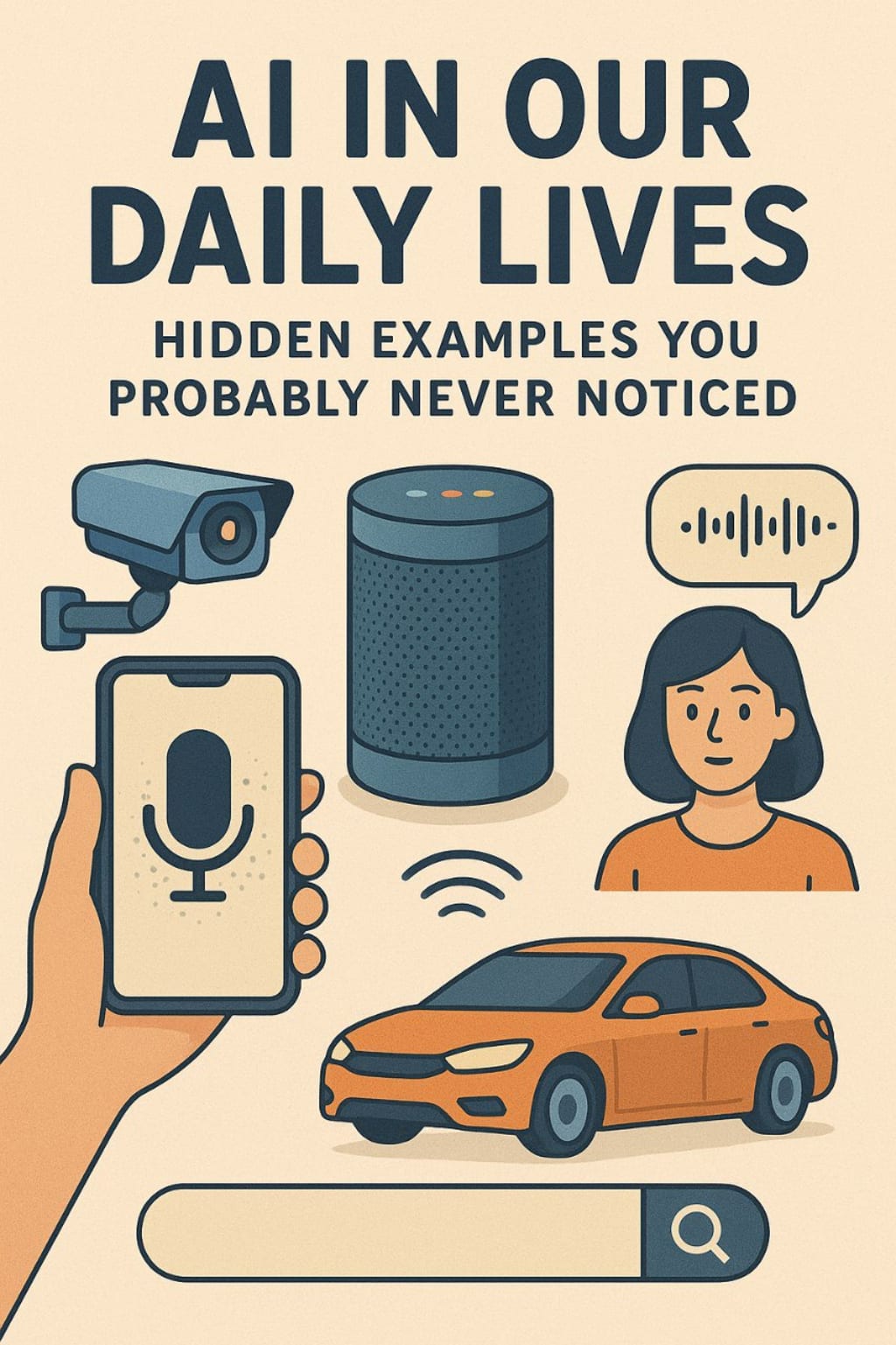
How artificial intelligence quietly powers your everyday routines without you even realizing it
When most people think about artificial intelligence, images of humanoid robots or sci-fi movies come to mind. But the reality is far more subtle and pervasive. AI isn't just coming to our future—it's already woven into the fabric of our daily lives in ways that might surprise you.
The Morning Coffee That Knows You Better Than You Know Yourself
Your day likely starts with AI before you've even had your first sip of coffee. That Spotify playlist that perfectly matches your Monday morning mood? That's machine learning algorithms analyzing your listening patterns, the time of day, and even your skip behavior to curate the perfect soundtrack for your commute.
But it goes deeper. If you use a smart coffee maker, it's learning your preferences—how strong you like your brew, what time you typically wake up, and even adjusting based on the weather forecast (yes, AI knows you prefer stronger coffee on rainy days).
Your Commute: A Symphony of Invisible Intelligence
The moment you open your maps app, you're tapping into one of AI's most impressive daily performances. Google Maps and similar services process real-time data from millions of users, traffic cameras, and sensors to predict the fastest route. But here's what's fascinating: the AI doesn't just look at current traffic—it predicts where congestion will be by the time you reach each point on your route.
Even the traffic lights you encounter have likely been optimized by AI systems that adjust timing based on traffic patterns, pedestrian crossings, and even special events in the city.
The Grocery Store That Reads Your Mind
Ever wonder why certain products are always in stock at your local grocery store while others seem perpetually sold out? AI-powered inventory management systems are constantly analyzing sales data, weather patterns, local events, and even social media trends to predict what you'll want to buy.
That "Customers who bought this also bought" suggestion isn't random—it's the result of sophisticated recommendation engines that have analyzed millions of shopping patterns to understand the subtle connections between products.
Your Phone: The Ultimate AI Assistant (Beyond Siri)
While voice assistants get most of the attention, your smartphone is running dozens of AI processes you never notice. Your camera automatically adjusts settings, recognizes faces for tagging, and even suggests the best shots from a burst of photos. The keyboard learns your typing patterns and predicts your next word with uncanny accuracy.
Perhaps most impressively, your phone's battery management uses AI to learn your usage patterns and optimize power consumption—extending battery life by predicting when you'll need your phone most.
Banking on Intelligence
Every swipe of your credit card triggers AI algorithms that analyze the transaction in milliseconds. These systems consider your spending patterns, location, time of purchase, and merchant type to determine if the transaction is legitimate or potentially fraudulent.
Banks also use AI to analyze your spending habits and automatically categorize transactions, helping you understand where your money goes without manual input.
The Netflix Paradox: Choice Without Choice
The "Netflix homepage paralysis" is real, but what you see isn't random. AI algorithms analyze not just what you've watched, but how you watched it—did you binge the entire season, or watch one episode and stop? Did you rewind certain scenes? Even the thumbnail images shown for each movie are personalized based on what the AI thinks will catch your attention.
Healthcare's Quiet Revolution
AI is increasingly present in healthcare, often invisibly. Many medical imaging systems now use AI to help radiologists spot anomalies they might miss. Your fitness tracker uses machine learning to distinguish between different types of activities and even detect irregular heart rhythms. Some pharmacies use AI to flag potential drug interactions or dosage issues before you pick up your prescription.
The Social Media Mirror
Social media platforms use AI not just to curate your feed, but to moderate content, translate posts in real-time, and even detect mental health concerns in users' posts. The ads you see are the result of incredibly sophisticated targeting algorithms that know more about your preferences than you might realize.
Email's Silent Guardian
Your email inbox would be unusable without AI. Spam filters use machine learning to identify unwanted messages, while smart categorization systems sort your emails into different folders. Gmail's Smart Reply feature uses natural language processing to suggest responses based on the email's content and your writing style.
The Future Is Already Here
The most remarkable thing about AI in our daily lives isn't its sophistication—it's its invisibility. The best AI systems are those you never notice, seamlessly integrating into your routines to make life more convenient, efficient, and personalized.
As AI continues to evolve, we can expect even more integration into our daily lives. The key is striking the right balance between convenience and privacy, between automation and human control.
The next time you go through your daily routine, take a moment to appreciate the invisible army of algorithms working behind the scenes. AI isn't just changing our future—it's quietly revolutionizing our present, one small convenience at a time.
About the Creator
Can You Send a Fax from Your Phone, and How?
We primarily associate faxing with sending necessary documents using a special device connected to a telephone line. Indeed, until recently, this was the standard practice, and businesses relied heavily on bulky fax machines that dominated office spaces. But the world of document transmission has evolved significantly. What does faxing look like in today's mobile-first environment? Is the process truly simpler? Most importantly, can you accomplish this task directly from your smartphone?
By Arooj Manoor3 days ago in 01
Navigating Cryptocurrency Asset Recovery
The challenging environment of digital asset theft and loss has given rise to a specialized sector focused on recovery. This field consists of companies with distinct operational models, from direct investigation to technical support and foundational analytics. The following outlines five notable entities often referenced in this space, categorized by their primary function.
By Milan Roberts8 days ago in 01
📢 Raise Your Voice Thread: 01/22/2026
Our “Raise Your Voice Threads” are hosted most alternating Thursdays at 12PM ET to offer creators more avenues to uncover exceptional stories on Vocal. As we are continuously searching for fresh creators and inspiring stories, this thread provides an opportunity to exchange and discuss the stories that have moved and motivated us on Vocal.
By Raise Your Voice by Vocal6 days ago in Resources




Comments
There are no comments for this story
Be the first to respond and start the conversation.