
6 Factors to Consider While Buying a Smartphone
6 Things to Check in a Phone
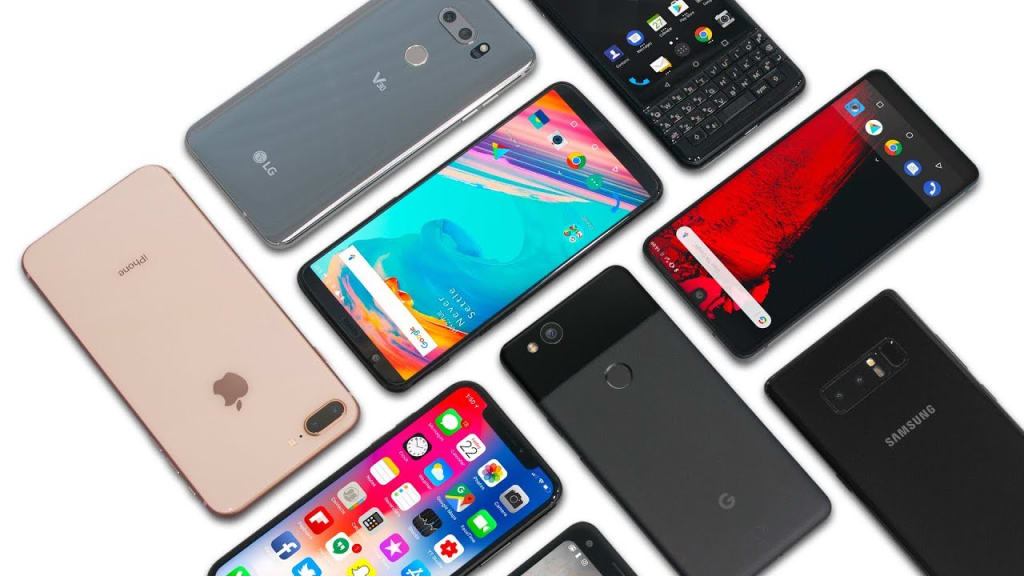
Buying a cellphone is an overwhelming task considering the number of options. From the best camera phones to the most stylish sets, it can get quite hard to decide which one is the best.
To help you pick the best one, we are here with 6 things that you should pay close attention to while you are buying a smartphone. If you consider them carefully, you will end with a phone that has the right mix of the best qualities.
6 Things to Check in a Phone
Below are 6 factors to consider before you buy a smartphone.
- Processor
- RAM and Memory
- Battery
- The Exterior
- OS and Interface
- Camera
Now let’s get into the details of each factor.
1. Processor
The processor of a cell phone determines how fast and how well it will work. Just like a CPU in a computer, the processor of a smartphone processes instructions and executes them. If the processor is fast and efficient, you get faster results without any lags.
Therefore, when you are on the lookout for a smartphone, make sure to check the processor and its clock speed in GHz (Giga Hertz). A clock speed above 1Ghz is reasonable while a speed from 1.8 to 2.2 GHz is great for gaming and heavy usage.
Depending upon your use, you can opt for a processor like the Qualcomm Snapdragon 652 or Snapdragon 820/821 is great for heavy use.
If you want to use your cell for simple tasks a MediaTek processor will also work well enough. The cost will increase with the processing power so you will need to come up with the right balance to avoid compromising on performance.
2. Battery
Imagine you are outside and your cell phone dies in a few hours! If you are stranded in the middle of nowhere with a dead phone, what’s the point of getting one that doesn’t even let you communicate with others when needed.
Thus, paying attention to the battery of a cell phone is very important to understand how long it lasts. Plus, if you love gaming and video streaming for hours, you should consider a set that lets you do that without you, running for the charger.
A 4000mAh battery is reasonable as it can last for a day. Also, look into phones with a fast-charging capability but make sure to find a balance between battery capacity and fast charging. Fast charging phones usually have low battery capacity.
3. The Exterior
When you go out to buy a cellphone, you need to consider the build quality and design as well. While the exterior comes in all shapes and sizes a strong body keeps your phone protected. Cell Phones nowadays come with Gorilla Glass Protection, a waterproof body, and can even tolerate staying submerged in water.
Thus make sure you consider these specs to ensure that your cellphone is strong enough to tolerate a bit of damage.
The Google Pixel 6 Pro is a good example. It comes with Corning Gorilla Glass Victus at the back and front and even on the camera keeping the phone protected.
Another thing to check is the display, as we use our phones for almost everything a large screen becomes a must. Having a phone with at least a 5.7 inches screen is a great idea. If you want a wider display then you can look into Infinix Hot 7 Pro which comes with a 6.2 inches screen with reasonable overall specs.
4. OS and Interface
The Operating system of a phone is the software that carries out all the tasks. The two most common operating systems around are iOS and Android. Both are great in their ways so it comes down to what you prefer.
If you consider data security your top priority and want a simple system that updates regularly, then using an Apple phone with an iOS system is a good idea. On the other hand, if you want a system that you can customize endlessly, then Android is the go-to option.
After you have decided on the operating system you should also look into the user interface. Smartphones have a layer of UI over the operating system like Samsung has One UI 2 and OnePlus comes with Oxygen OS. Do make sure you try this UI to see which keeps you the most comfortable.
5. RAM and Memory
As your phone processes data, it saves it temporarily in its RAM (random access memory). The larger is the RAM the more data it can process and the faster is the phone performance. Usually, phones offer between 4GB to 12GB RAM.
If you love to play games, you will need a cellphone with a larger RAM so that your experience is smooth and the game doesn't get stuck frequently. Another thing to check is the ROM (read-only memory). The files saved in your phone and all the images and videos that you download, all lie in the permanent memory.
If you have a large ROM, you can save more data in one place without the need for external storage. Cellphones usually offer from 32GB to 256GB of ROM. If you don't store that much data and want a cost-effective solution, a 64GB ROM will be enough.
But, if you want more backup, a 128GB ROM is reasonable.
6. Camera
Cameras have become a very important part of every smartphone. From triple cameras to quad cameras, photography just keeps getting better and better. But, it’s not just limited to photographers, a good camera is needed for video calls as well which is important during Covid-19.
Thus, as you are in search of a smartphone, try to find one with a good camera system. Cameras usually have a primary sensor that has the highest image resolution or MP (megapixel) value. Then there are macro sensors and color filters.
Depending on your needs, you should pick a cell that has the right mix of lenses offering clear, vibrant, and detailed photos even in low light. That way you can take photos and make movies that are worth the money.
If you want the best camera experience, trying the iPhone 13 Pro or the Huawei P40 Pro can be a great idea.
On the contrary, if you don’t need a great camera and you want a simple alternative, an old phone with a single camera can also do the trick.
Conclusion
In this article, we went through 6 factors that should be considered thoroughly before one purchases a smartphone. If you are looking into different options, make sure to check the RAM, ROM, build quality, camera, battery, operating system, and processor.
Try to dig in as much as possible so you know what each feature means, and what each value implies. While the above points are just a few, these are the basic points that serve as great stepping stones.
About the Creator
Keep reading
More stories from writers in 01 and other communities.
AI Agents in Action: Why Your Bot Still Sucks in 2026
I woke up this morning to my agent arguing with a flight carrier. It was glorious. No, seriously. In early 2024, we were all just playing with chatbots that hallucinated legal advice. Now, seeing ai agents in action is like watching a digital concierge with a chip on its shoulder.
By Sherry Walker3 days ago in 01
Instacart VS DoorDash
The on-demand delivery space has exploded over the past decade, with dozens of apps competing for your attention and wallet. Among them, two names consistently rise to the top: Instacart and DoorDash. While both deliver items to your doorstep, they operate quite differently—and choosing between them can significantly impact your convenience, budget, and overall experience.
By Ashish Sudra2 days ago in 01



Comments
There are no comments for this story
Be the first to respond and start the conversation.