
Why Writers Are Obsessed With Stories About Stories
And Why We Should Be


“We tell ourselves stories in order to live.” — Joan Didion
Writers are notorious for being a little obsessed with… well, writing. But more than that, we seem to have a deep, borderline spiritual fixation on stories about stories. You know the ones: tales where characters fall into books (Inkheart), rewrite their fates (The NeverEnding Story), or become aware they’re part of a narrative (The Princess Bride, anyone?).
But why do we love them so much?
Let’s dig into what makes stories about stories so irresistible — especially to the people who spend their lives creating them.
🪞1. Storyception: The Meta-Magic of Narratives Within Narratives
There’s something deliciously clever about a story that knows it’s a story. When characters read, tell, or even become stories, it creates a layered narrative that reflects on itself. This kind of meta-narrative scratches an intellectual itch — it makes us feel like we’re in on a secret.
As a writer, it’s a chance to play. To break the fourth wall. To write about writing without actually writing an essay. It allows us to sneak in commentary about storytelling itself — the rules, the tropes, the expectations — all under the guise of fantasy or fiction.
Books like The Starless Sea by Erin Morgenstern revel in this. They’re love letters to books, to libraries, to forgotten words. And if you’ve ever hugged a book to your chest like it was a lifeline (guilty), those kinds of stories hit like a warm, knowing wink.
📚2. Writing Is Power. So Is Storytelling.
In many of these tales, the act of telling a story changes the world. Whether it’s a spell cast through words or a fate rewritten through narration, stories become a form of magic.
And honestly? That tracks. As writers, we know how powerful a single story can be. It can spark revolutions, shift perspectives, change lives. It makes perfect sense that in fantasy, stories literally hold power. It’s the fantasy version of what we already believe.
When a character tells a story that reshapes reality, we see our own hopes mirrored back: that what we write matters. That it can shift the world — even if it’s just someone else’s.
🌀3. It’s the Ultimate Exploration of Identity
Stories shape who we are. The books we grew up with. The tales passed down in our families. The daydreams we whispered to ourselves when no one else was listening.
So when a book puts storytelling front and centre, it’s not just being clever. It’s poking at identity. Who are we without our stories? Who gets to tell them? Can we rewrite our own?
Books like The Ten Thousand Doors of January explore this theme beautifully. They ask: what happens when someone finally has the power to tell their own story — not the one society forced on them?
🔍4. We Crave Meaning, and Stories Give It to Us
At their core, stories are how we make sense of chaos. They’re how we frame grief, love, loss, and hope. So stories that are about storytelling are, in a way, about meaning itself.
Characters who discover they’re part of a story are often wrestling with fate, free will, destiny. Sound familiar? That’s most of us, trying to figure out where we fit in the larger narrative of our lives.
By writing about stories, we’re writing about purpose. Even if it’s cloaked in magic and metaphor.
✍️5. It’s Deeply, Relentlessly Relatable (Especially to Writers)
Let’s be real: writers writing stories about writers or readers is the most delicious form of narcissism. But it works because it’s true.
We read to escape. To connect. To imagine. When a story mirrors that back to us, it feels like home.
For writers, there’s also something comforting about seeing our weird little obsessions validated. Yes, characters who hoard notebooks and speak in metaphors are heroes. Yes, the pen is mightier than the sword. And yes, sometimes the most powerful magic in the world is knowing how to tell a damn good story.
Stories about stories are, in many ways, the purest form of fantasy. Not because they have dragons or spells (though they often do), but because they let us believe in the power of narrative itself.
They whisper: you’re not just living. You’re storying. And maybe, just maybe, you get to write your next chapter.
So if you find yourself obsessed with books about books, tales within tales, or heroes who write their way out of disaster, don’t worry.
You’re a writer. Of course you love stories about stories.
About the Creator
Georgia
Fantasy writer. Romantasy addict. Here to help you craft unforgettable worlds, slow-burn tension, and characters who make readers ache. Expect writing tips, trope deep-dives, and the occasional spicy take.
Early March 2026: 4 Goals Accomplished
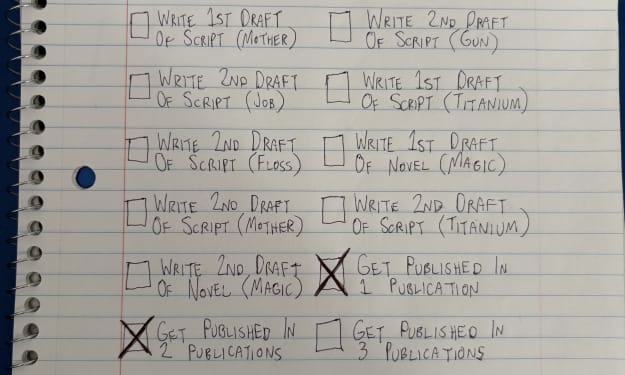
It's early March and I've now accomplished my 4th writing goal for the year of 2026. Before diving into the behind-the-scenes of it... why not tell you up front what that accomplishment was? I was published in a 2nd publication for this year. Published in Helix Literary Magazine out of Central Connecticut State University. You can read it for free right now!
By Stephen Kramer Avitabile3 days ago in Writers
Understanding the Engineering Excellence Behind Aerospace Component Manufacturing
The aerospace industry represents one of the most technically demanding sectors in the world. Every aircraft, satellite, and defense system relies on highly engineered components designed to operate under extreme pressure, temperature variations, vibration, and aerodynamic stress. Understanding the engineering excellence behind aerospace component manufacturing provides insight into how safety, performance, and reliability are consistently achieved.
By Beckett Dowhan7 days ago in Writers



Comments
There are no comments for this story
Be the first to respond and start the conversation.