
Whoever is not merciful to anyone, Allah will not be merciful to him.
যে ব্যক্তি কারো প্রতি দয়া করে না, আল্লাহ তাআলাও তার প্রতি দয়া করেন না।

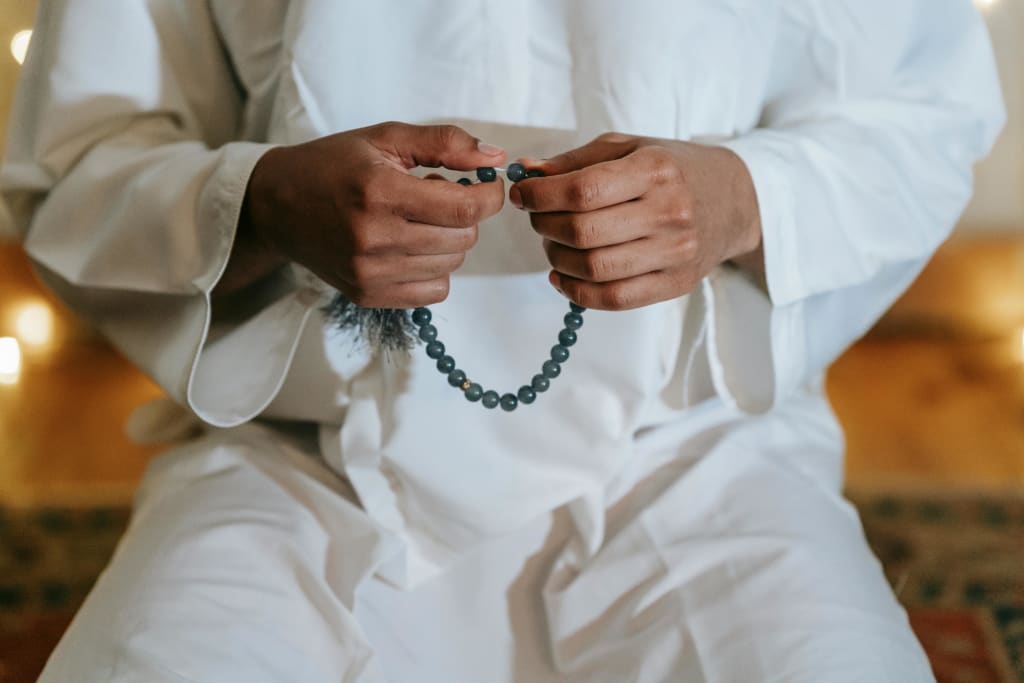
The Messenger of Allah (peace and blessings of Allah be upon him) said, “Whoever is not merciful to others, Allah will not be merciful to him.” (Sahih Bukhari and Muslim)
This hadith clarifies a fundamental foundation of humanity—kindness, mercy, and compassion. At the center of all the moral ideals of the world, all the demands of advanced civilizations, is this one quality—kindness. Islam calls it “Rahmah.” This quality is such a spiritual beauty that not only makes a person beloved to Allah, but also makes him the embodiment of humanity in society.
The first part of the hadith contains a conditional message—“Whoever is not merciful.” That is, kindness is a quality that is not only desirable, but also necessary. It is like a condition for human existence. Without kindness, a person remains human only in body, but becomes an animal in heart. The Messenger of Allah himself was a living reflection of kindness. He loved children, respected the elderly, protected the rights of his slaves, and even showed kindness to his enemies.
This hadith holds up a mirror in front of us, so that we can see our own faces—are we truly kind? Are we kind to our family, neighbors, workplaces, strangers on the street, and even animals? When we make fun of someone, ignore someone’s suffering, and fail to help someone even when we have the power, do we realize that these unkind actions can prevent Allah’s mercy from being bestowed upon us?
Being kind does not mean simply helping someone with something; kindness means tenderness of heart, purity of feelings, and the ability to understand the suffering of others. When a person becomes a true believer, he makes kindness not just an element of behavior, but a habit of life. The Messenger of Allah (peace and blessings of Allah be upon him) showed kindness even to a nation that abused him, made him bleed, and expelled him from Mecca. But he did not curse them, but prayed, “O Allah! Guide my people, they do not know.”
This kindness is not just for family or friends, but is universal. Islam teaches that one who is kind to his own people is not truly kind. True kindness is manifested when it is applied equally to strangers, enemies, the poor, the weak, and even animals. The Messenger of Allah said, “Whoever is kind to an animal, Allah will reward him for it.” In fact, a woman was once told that she would go to Hell because she locked up a cat without feeding it.
The end of the hadith contains an enlightening warning—“Not even Allah is kind to her.” That is, there is a deep connection between human kindness and Allah’s kindness. If a person is unkind to Allah’s creation, he himself may be deprived of Allah’s mercy. Once the companions were surprised and asked, “If we are kind to animals, will that help us receive Allah’s mercy?” The Prophet said, “Be kind to all living beings.”
Kindness is an inner light in a person that makes him just, forgiving, and makes him consider the suffering of others as his own. Kindness saves a person from arrogance, keeps him away from slander, and prevents him from going down the path of sin. When a person is kind, he does not just do a deed, but feels a kind of spiritual liberation. He knows that he is helping someone not only for his needs, but also for his own good in the hereafter.
Kindness seems to be a lost quality in today’s world. Insults on social media, hatred in political divisions, violence in religious discrimination—all seem to be the opposite of kindness. People now get angry quickly, scold easily, insult without hesitation, and take revenge without hesitation. However, the teaching of the Prophet was completely different—no matter how strong you are, it is better to forgive; No matter how much you suffer, it is great to endure.
This hadith reminds us that if we want Allah's mercy, we must also be merciful. Allah's mercy is limitless, but He gives that special mercy to His merciful servants, which is the key to salvation in this world and the Hereafter. Therefore, we must keep the imprint of mercy in our behavior, words, looks, thoughts, and even reactions.
Let kindness be our habit, let it be in our blood. When we see someone, let us think - this person may also be in pain like me. When we see tears in someone's eyes, let tears come to our eyes too. If a blind person cannot cross the road, let us extend our hand, and if someone makes a mistake, let us forgive instead of cursing. Because, we will be merciful, so that we too will be merciful.
About the Creator
Keep reading
More stories from Abdul Barik and writers in Writers and other communities.
Excess sugar intake: The body's silent poison
Excess sugar intake: The silent poison of the body Most of the tea, coffee, sweets or soft drinks we drink every day contain an invisible danger - sugar. Just as sugar is a symbol of taste in our lives, it silently sows the seeds of various diseases inside the body. This process is so slow and subtle that we do not realize it until some major problem in the body becomes apparent. Excess sugar intake has now become a global problem, which is considered the main source of fatal diseases like diabetes, obesity, heart disease and even cancer.
By Abdul Barik8 months ago in Writers
It's Winter
Anne Bernays and Pamela Painter — What If? Writing Exercise for Fiction Writers prompts The Exercise —Write a scene involving two characters. Have the point-of-view character presume something entirely different about the situation from what the other character's overt behavior seems to imply. For example, a landlord comes to visit, and the tenant suspects that it isn't a visit but an inspection. Make up several situations in which one character can fantasize or project or suspect or even fear what another character is thinking. The Objective - To show how your characters can use their imaginations to interpret the behavior and dialogue of other characters.
By Denise E Lindquist16 days ago in Writers



Comments
There are no comments for this story
Be the first to respond and start the conversation.