
What Is Empiricism? A Comprehensive Look at the Origins of Knowledge and the Role of Experience
In Pursuit of Knowledge: The Rise of Empiricism

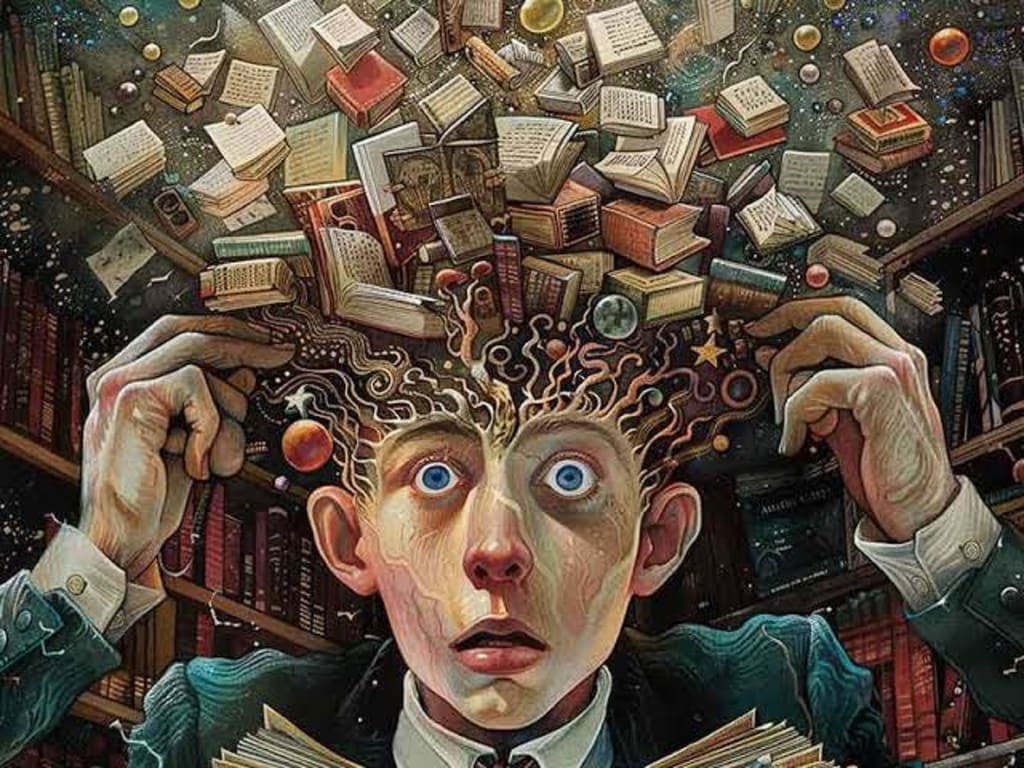
Since the dawn of human existence, we have consistently sought to understand our surroundings, ourselves, and the universe. Fundamental questions such as “How do we learn?”, “How reliable is our knowledge?”, and “What is the nature of reality?” lie at the heart of philosophy. Different answers to these questions have given rise to various philosophical movements. Among them stands empiricism—a powerful school of thought that locates the origin of knowledge in sensory experience and observation. More than just a philosophical stance, empiricism forms the foundation of the scientific method and modern thought, deeply shaping our worldview. In this article, we will explore what empiricism is, its philosophical roots, core principles, historical evolution, and its impact on science.
The Core Definition of Empiricism: Knowledge Rooted in Experience and Perception
The Central Role of Sensory Experience: The “Tabula Rasa” Concept
The core claim of empiricism is that all knowledge originates from sensory experiences. According to this view, the human mind is born as a blank slate what John Locke famously called a “tabula rasa.” This empty slate is gradually filled with impressions and data received through our senses throughout life. Observation, hearing, touch, taste, and smell serve as the raw material for our knowledge. Just as a child explores the world through experience, every new sensation adds another fragment to our understanding. Empirical knowledge is not derived from innate ideas or pre-existing truths, but rather from constant interaction with the world.
Fundamental Differences from Rationalism: A Philosophical Opposition
To fully grasp empiricism, one must understand its contrast with rationalism. Rationalism sees the source of knowledge in reason, logic, and innate (a priori) ideas. It holds that certain truths like mathematical or logical principles do not rely on experience. Empiricism, on the other hand, regards sensory experience as the sole or primary source of knowledge. For rationalists, reason is an active force capable of generating knowledge on its own, whereas for empiricists, reason is more like a passive processor of sensory input. This distinction sparked major philosophical debates between figures like Descartes, Spinoza, and Leibniz on the rationalist side, and Locke, Berkeley, and Hume on the empiricist side debates that continue to influence philosophy today.
The Historical Journey of Empiricism: From Antiquity to the Enlightenment
Though empiricism is often associated with modern philosophy, its roots trace back to ancient times and evolved through multiple phases into the form we know today.
Seeds of Empiricism in Ancient Greece: The Power of Observation
The idea that knowledge comes from experience can be seen in the early stages of Western philosophy, especially in Ancient Greece. Aristotle stands out as a philosopher who emphasized observation and empirical methods. For him, knowledge arises from processing sensory impressions of the external world. Unlike Plato, who focused on an abstract world of forms, Aristotle believed that knowledge could be acquired through careful observation and classification of the natural world. Thinkers like Epicurus also argued that sensory perception was the foundation of human experience and by extension, knowledge. While these thinkers did not establish a systematic empiricist doctrine, they sowed the seeds of the approach by emphasizing the value of experience.
Empiricism in the Middle Ages: Between Faith and Observation
During the Middle Ages, Western philosophy was largely dominated by theological thought. Knowledge was often grounded in divine revelation and sacred texts, placing empirical observation in a secondary role. However, empirical thinking was not entirely absent. Medieval thinkers like Roger Bacon emphasized the importance of scientific experimentation. Bacon argued that experimental knowledge was more reliable than purely rational deduction, becoming one of the early pioneers of the scientific method. Although empiricism did not emerge as a full-fledged movement during this era, figures like Bacon served as critical links to its later development.
The Early Modern Period: The Revival of Empiricism and the Birth of Science
Empiricism gained real momentum in the 17th century, on the threshold of the Enlightenment. This was a time of radical shifts, when traditional authorities were being challenged and a new scientific worldview was emerging. Francis Bacon is considered one of the founding figures of modern science. He rejected the Aristotelian deductive method in favor of inductive reasoning. According to Bacon, the path to knowledge lay in careful observation of nature, conducting experiments, and drawing general principles from specific data. He emphasized the importance of removing biases from observation and experimentation. This approach marked a key turning point, transforming empiricism from a philosophical idea into a core methodology of scientific inquiry.
About the Creator
Nedir Life
We Believe Information Should Be Clear and Worth Your Time. Let’s face it. Finding real, reliable information online is not easy anymore.
🧐 ❓ 👉 nedir.life
Keep reading
More stories from Nedir Life and writers in Writers and other communities.
Mutation: The Hidden Engine of Life and the Key to Evolution
Isn’t life itself a grand tale of transformation? From the depths of the universe to the tiniest cell on Earth, everything is in a constant state of flux. Stars are born, galaxies expand, seasons shift… And perhaps the most fascinating reflection of this cosmic dance lies within the genetic code of living beings. Over billions of years, how did life evolve from single-celled organisms to massive mammals with intricate systems? The answer lies in a subtle yet powerful force: mutation those tiny, often unnoticed genetic leaps that can radically alter the course of life.
By Nedir Life8 months ago in Writers
It's Winter
Anne Bernays and Pamela Painter — What If? Writing Exercise for Fiction Writers prompts The Exercise —Write a scene involving two characters. Have the point-of-view character presume something entirely different about the situation from what the other character's overt behavior seems to imply. For example, a landlord comes to visit, and the tenant suspects that it isn't a visit but an inspection. Make up several situations in which one character can fantasize or project or suspect or even fear what another character is thinking. The Objective - To show how your characters can use their imaginations to interpret the behavior and dialogue of other characters.
By Denise E Lindquist18 days ago in Writers
Point The Blame At Your Heart
I write some poems, but not as many as others on Vocal. Most of my poems are about love—wanting love, sad love, or feelings of love. I think I am a big softie inside! Here we go. We blame love stuff on our hearts. We say “loving you with all my heart” and “you break my heart.” All love and feelings are linked to our hearts. We blame everything good or bad on hearts.
By Rosalina Jane4 days ago in Writers
Smart phones, Humans and Aliens.
WARNING. I will be tapping into one of your favorite creative tensions: The absurdity of humans worshipping their glowing rectangles as if they were tiny oracles. There’s something deliciously poetic about that contradiction, and it lends itself beautifully to an instructive proviso.
By Novel Allen4 days ago in Poets



Comments (1)
Empiricism makes a lot of sense. I've always believed that hands-on experience and observation are key to learning. It's how we truly understand the world around us. This idea that our minds start as a blank slate is fascinating. It shows how much we rely on our senses to build knowledge, just like a kid learning about things by touching and seeing.