

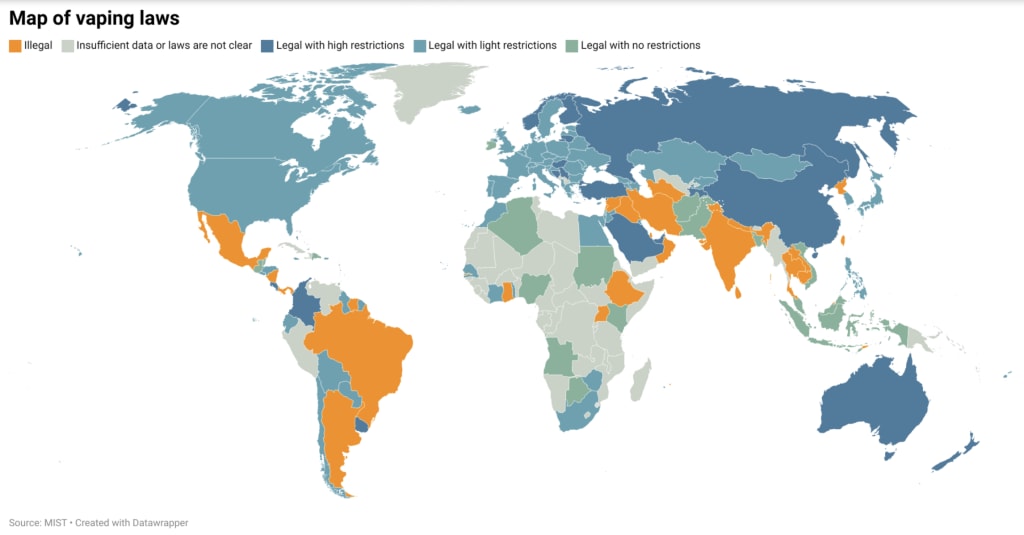
Navigating the world of vaping can be tricky, especially when laws and regulations vary from country to country. For vapers traveling internationally or simply staying informed, understanding vaping laws is essential to avoid unexpected fines, restricted access to products, or worse, legal trouble. Whether you’re using a disposable e-cig, starter kits, or advanced vape devices, being informed about regulations is a responsibility every vaper should take seriously.
This blog takes a global look at vaping laws, exploring what’s allowed, what’s not, and how these regulations shape the vaping experience. From North America to Asia-Pacific, we’ll break down the rules and offer insights into how vapers can adapt to this changing legal landscape. Plus, we’ll look at what's on the horizon for vaping laws worldwide.
Vaping Laws in North America
United States
The United States has a patchwork approach to vaping regulations, with federal and state laws overlapping. At the federal level, the FDA (Food and Drug Administration) oversees the regulation of e-cigarettes as tobacco products. This means that manufacturers must obtain FDA approval for new products, comply with marketing restrictions, and enforce age verification for sales.
However, individual states add their own rules. For example, states like California and New York have banned flavored e-liquids, aiming to reduce the appeal of vaping to minors. Meanwhile, public vaping bans are common across the country, with restrictions often mirroring those for smoking.
Impact on Vapers:
If you’re a user of disposable e-cigs or starter kits in the U.S., you’ll notice limited flavor options and varying legal environments depending on where you are. Staying updated on state-specific regulations is crucial.
Canada
Canada takes a more uniform approach to vaping laws through the Tobacco and Vaping Products Act (TVPA). This federal law regulates the advertising, sale, and labeling of vape devices and e-liquids, ensuring they are not marketed to minors. Like the U.S., Canada prohibits certain flavors but has a more lenient stance overall, with broad availability of vape products.
Impact on Vapers:
Canadian vapers have access to a wide range of trusted brands but must adhere to strict advertising bans and ensure they’re purchasing from licensed vendors.
Vaping Laws in Europe
Europe’s vaping laws are largely governed by the Tobacco Products Directive (TPD), a set of EU-wide rules that include:
A maximum nicotine concentration of 20 mg/mL for e-liquids.
Limits on the size of e-liquid containers (10 mL for refill containers and 2 mL for vape tanks).
Mandatory health warnings on packaging.
While the TPD establishes a baseline, individual countries enforce stricter measures. For instance, Finland imposes higher taxes on vape products, while countries like Germany take a more business-friendly approach.
Impact on Vapers:
Compared to other regions, European regulations strike a balance between accessibility and safety. However, the flavor restrictions and size limits may feel restrictive for vapers who prefer customizing their experience.
Vaping Laws in Asia-Pacific
Australia
Australia has some of the toughest vaping laws globally. Nicotine e-liquid is classified as a prescription-only substance, meaning vapers must obtain a doctor’s note to access products legally. This also creates a black market for vape devices, raising concerns about product safety.
New Zealand
Unlike its neighbor, New Zealand takes a more progressive stance. E-cigarettes and nicotine products are legal, with heavy regulation on advertising and the sale of products to minors. The government views vaping as a harm-reduction tool, rather than a threat.
Other Asian Countries
Asia presents a mixed bag, with countries like Japan allowing heat-not-burn devices but restricting e-liquids, and others like India enforcing outright bans on vaping. Cultural and economic factors heavily influence these regulations, creating challenges for international brands and local vapers alike.
Impact on Vapers:
Asia-Pacific vapers face varying degrees of challenge, from strict compliance in Australia to relative freedom in New Zealand. It pays to research the laws before traveling or purchasing vape products in this region.
Vaping Laws in the Rest of the World
South America
South America is catching up with its vaping laws, with countries like Brazil banning vaping outright and others like Colombia adopting more lenient stances. Enforcement can be inconsistent, leaving vapers in a gray area.
Africa
Many African nations lack specific regulations on vaping, with most defaulting to tobacco laws. However, growing international attention to vaping's rise might soon push African countries toward stricter policies.
Middle East
Approaches to vaping vary widely in the Middle East, influenced by cultural norms and religious considerations. Countries like the UAE have legalized vaping but with tight controls, while others like Qatar maintain strict bans.
Impact on Vapers:
Cultural attitudes and economic factors such as taxes and import policies heavily influence vaping accessibility worldwide. Understanding these nuances is vital for avoiding legal issues.
How Vaping Laws Affect Consumers
Vaping regulations directly affect how vapers access and use their products. From determining what flavors are available to ensuring the safety of vape devices, laws play a crucial role. While some laws aim to protect public health, others raise concerns about limiting personal freedoms.
For example:
Public Health vs. Personal Freedom: Stricter laws often focus on reducing vaping among minors, but these restrictions can limit adults’ ability to choose harm-reduction tools.
Access to Trusted Brands: Complex regulations can delay the approval of new vape devices, reducing consumer choice and innovation in the industry.
Being informed about current and upcoming regulations allows vapers to make smarter purchasing decisions and anticipate shifts in the market.
The Future of Vaping Laws
The global outlook suggests that vaping regulations will continue to evolve, prioritizing public health while addressing emerging concerns. Here’s what we might see in the next decade:
Stronger Flavor Bans: Governments may expand restrictions on flavored e-liquids to curb youth usage.
Standardized Regulations: International efforts may push for more unified global standards, making it easier for vapers to understand the landscape.
Rise of Advocacy: With growing awareness, communities of vapers are likely to advocate for balanced regulations that consider harm reduction and personal choice.
The role of education cannot be overstated—both for vapers and policymakers. By sharing factual information, the global vaping community can help shape fair and effective laws.
Why Staying Updated Matters
Understanding vaping laws isn’t just about avoiding fines or trouble during travel; it’s about being an informed member of the global vaping community. With the vaping industry growing rapidly and regulations continuously changing, staying informed ensures that you can adapt and thrive, no matter where you are.
If you’re passionate about your vaping experience, now’s the time to join advocacy efforts and stay updated on local laws. Together, vapers can promote policies that balance public health and personal freedom while fostering a responsible vaping culture.
About the Creator
VDC
Vape.com, launched in 2022, offers 10,000+ vaping products with fast shipping, real-time inventory, and excellent customer service.


Comments
There are no comments for this story
Be the first to respond and start the conversation.