
Update for 2026 Tax Brackets: Revised Rates, Increased Income Limits, and Strategic Tips for Tax Savings.
Get up to speed on 2026 tax brackets — Everything from increased income limits, modifications to the federal tax rates, and strategic tips to save even more this tax year.

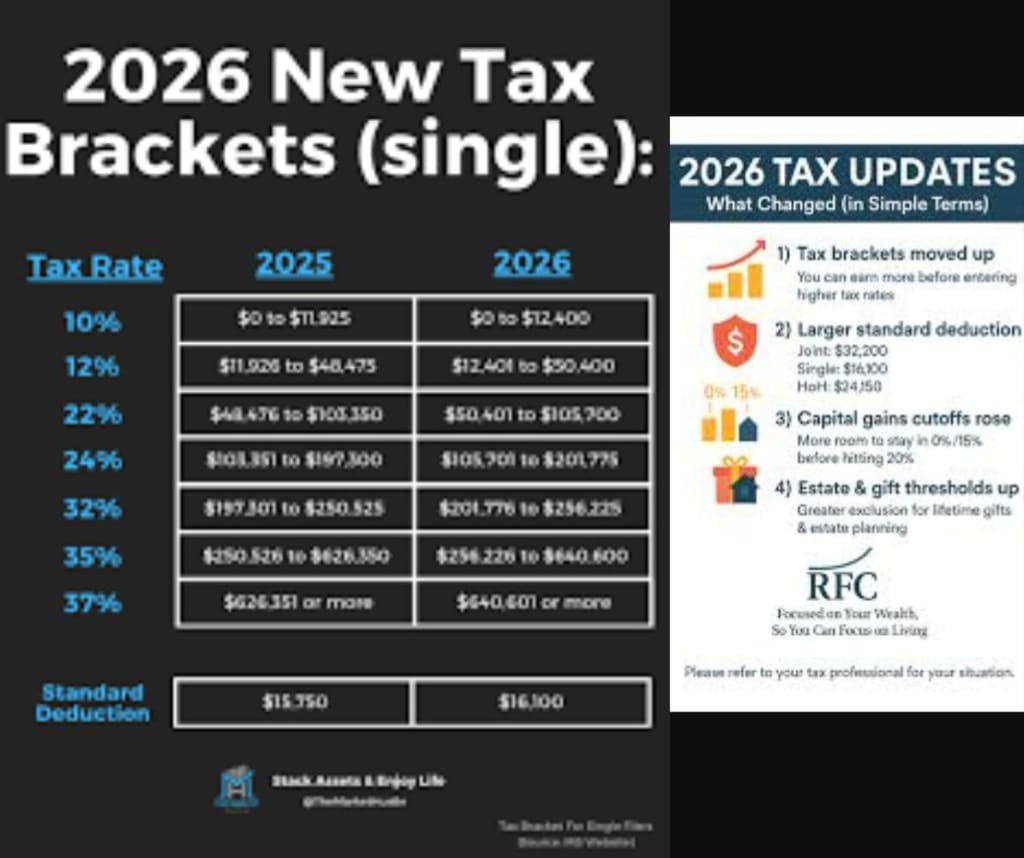
Update for 2026 Tax Brackets: Revised Rates, Increased Income Limits, and Strategic Tips for Tax Savings.
Get up to speed on 2026 tax brackets — Everything from increased income limits, modifications to the federal tax rates, and strategic tips to save even more this tax year.
Introduction
Whether we like them or not, they will affect everyone.Whether you’re an employee, freelancer, or business owner, understanding the new tax brackets as we transition to 2026 is an essential part of managing your income, and you can proactively avoid a surprise tax bill when it’s time to file.
Each year, the IRS makes changes to the different tax brackets in accordance with inflation, cost of living, and fairy many other economic principals.
In this guide, we will discuss the 2026 tax brackets, including their possible impact on your tax ramifications and also share some good tax planning strategies to save you more money and get you through the year, financially confident.
What is a tax bracket?
Before we go over the 2026 tax brackets update, let's take a moment to refresh our understanding of tax brackets. In simple terms, the United States employs a progressive income tax system. That is, the more money you make, the greater percentage of that income is taxed (but only on the income that reaches that threshold).
For example:
Just because you are in the 22% tax bracket does not mean you pay tax on ALL your income at 22%.
Only the portion of your income within the 22% bracket is taxed at that rate and lower portions of your income (in the 10% and/or 12% bracket) are taxed at their respective lower rates.
This structure serves to provide an element of fairness and to prevent lower-income people from paying the same tax rates as those with significantly higher incomes.
2026 Tax Brackets Update — What’s Different?
The tax brackets for 2026 have several important updates that taxpayers should be aware of that have primarily come from inflation adjustments (and some expiring provisions from the Tax Cuts and Jobs Act (TCJA) that are set to expire in the year following 2025).
That means in 2026 you could see a different income threshold for each group of taxpayers (potentially at a higher tax rate). Here is a general breakdown of what we might expect (limited generalizations based on early IRS modeling and general predictions):
1. The Reinstatement of Pre-2018 Tax Rates
The TCJA lowered the tax rates temporarily from 2018 through 2025. Unless new legislation is passed making congressionally mandated tax cuts permanent (or changing the tax code further), in 2026, the rates look to revert back to pre-TCJA levels:
10%
15%
25%
28%
33%
35%
39.6%
This means that some taxpayers may pay a little bit more in taxes in 2026 simply due to the tax rate existing pre-2018, even if their income hasn't changed substantially.
2. Adjustment of Income Limits
The IRS will increase income limits each year for inflation purposes. Income limits help decide how much income is placed in each bracket.
While official income limits will not be released until much closer to the tax year, analysts expect about 4-6% increase in the income limits compared to 2025 levels. This will depend on the inflation rate-whether it is accelerating, declining, or stagnant.
For example, the baseline for the 25% poverty level may be at a slightly higher income base than it was in 2025. This helps prevent the proverbial “bracket creep” that occurs when you earn more, but net, you have more purchasing power.
3. Standard Deduction Changes
Another item that is expected to go up minimally in 2026 is the standard deduction. The standard deduction is a fixed dollar amount taxpayer's can take off their gross income before tax. However, the TCJA nearly doubled the standard deduction, so it could be halved if the standard deduction provisions cease.
Part of this means is that more taxpayers will likely go back to having itemized deductions to obtain the best tax value.
2026 Tax Brackets: Significance
Knowing how tax brackets impact your income is more than just your rate of tax. A tax bracket can have an important impact on tax planning. For many tax beds, even a very small change in rates impacts your take-home pay, savings potential, and investment returns.
Here is why knowing tax brackets can make a difference:
You can make a change to your withholdings before dealing with a tax bill later.
You can make better decisions to invest and to contribute to your retirement.
It will help you think about the best timing for bonuses, asset sales, or charitable donations.
How to determine your taxable income
Your taxable income is not your income. It is what is left over after your deductions, credits, and adjustments. Here are the quick steps:
Total Income (wages, self-employment income, dividend income, etc.)
Adjustments (Retirement Contributions, Student Loan Interest, etc.)
Deductions (Standard or Itemized)
This is your taxable income.
Once you consider your taxable income, you can use the 2026 tax brackets to estimate your tax bill.
Smart Tax Planning Tips for 2026
While expectations for tax policy are subject to change in 2026, don't worry - you can start proactively preparing. Here are a few smart tax planning concepts that could help you minimize what you'll owe:
1. Max out your Retirement Contributions
Making a contribution to a 401(k) or IRA will lower your taxable income now and grow your retirement savings down the road. If rates rise in 2026, those pre-tax contributions will become that much more valuable.
2. Tax Loss Harvesting
If you invest in stocks or mutual funds, selling any of your losing investments can offset the gains of your winning investments (this is called tax-loss harvesting), thus shifting your taxable income. This can be a powerful strategy for you for income tax purposes, particularly if capital gains rates increase in 2026 as well.
3. Delay Income
If possible, you may want to delay any income (such as a bonus or pay from freelance work) until a lower tax year or accelerate deductible expenses, like charitable donations, into 2025. A payment in 2026 may be taxable, whereas depending on government action a payment in 2025 may not be taxable because rates have gone up.
4. Check Your Withholdings
If your employer withholds taxes from your paycheck, you will probably want to double-check your W-4 form. Government tax policy changes could affect your tax liability in 2026 so check to see how much you will owe or get back as a tax refund.
5. Investigate Tax Credits
Make sure to take advantage of tax credits such as the Child Tax Credit, Earned Income Tax Credit, and Education Credits. All these tax credits decrease your tax bill directly, rather than just lowering your taxable income.
What Small Businesses Should Know About 2026 Tax Improvement
Another thing small business owners should consider is adapting to a possible change in corporate and pass-through taxation structure. For 2026, Congress could again raise the 21% corporate tax rate established by the TCJA.
Also, the Qualified Business Income (QBI) tax deduction — where eligible business owners can now also deduct up to 20% of their business income — is can recession after 2025 barring extension
To avoid excessive complexity and maintain profits, business owners should:
Review their entity structure (LLC, S-corp, etc.)
Consider accruing deduction and deferring income through acceleration of deductions before 2026
Work with a tax advisor to set plans for rates to rise
How Inflation Affects the 2026 Tax Brackets
Inflation creates a great deal of havoc when constructing tax policy. The IRS raises tax bracket thresholds, for instance, during years of greater inflation so taxpayers are not pushed into higher tax brackets.
For 2026, inflation will be moderate, so the aforementioned inflation adjustments will keep most households out of the higher brackets. However, taxpayers on the threshold of a tax bracket may consider themselves fortunate to only See a modest rise in their tax rate.
Here's What Congress and the IRS Will Do
Congress may still intervene before 2026, extending or altering parts of the TCJA. They are busy debating whether to make lower tax rates permanent or whether to allow rates to expire.
The IRS is expected to officially announce the 2026 tax brackets in late 2025. Until then, paying attention to any proposed changes as well as economic reports should keep you informed as you begin to plan with more certainty.
Conclusion
The 2026 Tax Brackets Update is more than a list of numbers — it’s a guide to better financial decisions. Armed with the new rates, the income limits, and any changes in deductions, you can plan ahead and, hopefully reduce your tax burden and obtain a better financial future.
That’s true for both the individual taxpayer and the small business owner; planning early guarantees you stay one step ahead — not one step behind after tax season has arrived.
Keep learning, keep planning, and let the updates happen for you not against you.
About the Creator
Link Logic
Link Logic brings together ideas, technology, and strategy to help drive deeper and smarter digital decisions. Clear thinking. Smart linking. Real outcomes.
Keep reading
More stories from Link Logic and writers in Writers and other communities.
Australia vs New Zealand: A Rivalry Without Boundaries
Australia vs New Zealand: A Rivalry Without Boundaries Learn about the intense rivalry between New Zealand vs Australia across sports, culture and history. From cricket to rugby and so much more, discover what makes this Trans-Tasman rivalry so interesting for the world at large.
By Link Logic4 months ago in Writers
Published in Portrait of New England
My quest to find many publications with prestige to submit to has worked out even better than I thought. I was searching for more publications with more prestige in order to bolster my resume. I truly thought I'd try this for a year and not get published anywhere... maybe if I was lucky... in one of them. And I was OK with that... I was just going to try again the following year, and the year after that, and so on.
By Stephen Kramer Avitabile27 days ago in Writers
How Students Can Check Scholarship Status Without Missing Updates
For millions of students worldwide, scholarships play a critical role in continuing education without financial strain. However, receiving a scholarship is only the first step. One of the most common challenges students face afterward is tracking their scholarship status accurately and on time. Missed updates, incomplete information, or misunderstanding the process can result in delayed payments or even disqualification.
By Abbasi Publisher5 days ago in Writers




Comments
There are no comments for this story
Be the first to respond and start the conversation.