
Trump's Greenland Gambit: A Geopolitical Power Play in the Arctic (Pinned Comment 😱)
Trump's Greenland Gambit: A Geopolitical Power Play in the Arctic

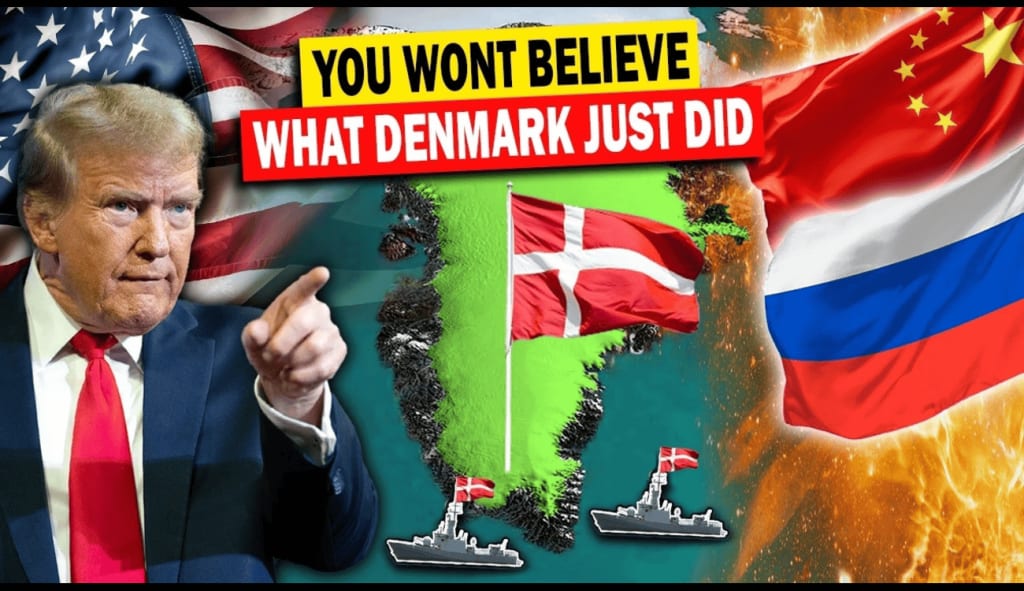
Trump's Greenland Gambit: A Geopolitical Power Play in the Arctic
The geopolitical landscape in the Arctic has shifted dramatically, with Greenland emerging as a focal point amid escalating tensions. Donald Trump's controversial interest in purchasing Greenland has garnered international attention, stirring concerns beyond the realm of mere real estate. The strategic significance of this vast island extends far beyond its picturesque landscapes, intertwining with issues of national security, resource competition, and global influence.
Greenland's Strategic Value
Geographic and Geopolitical Significance
Greenland is not just a remote island; it holds immense strategic value. Located between the Arctic and Atlantic Oceans, Greenland:
Serves as a crucial geographic point for military operations.
Is rich in natural resources, notably rare earth minerals, critical for modern technology.
Possesses potential shipping routes that could significantly shorten travel times by bypassing traditional canals like Suez and Panama.
With its large reserves of minerals and strategic location, Greenland could play a vital role in future international trade and security.
Military and Security Implications
Greenland's position is strategically important for several nations, especially the United States, Russia, and China. Key points of interest include:
The potential establishment of military bases to monitor Arctic activities.
Enhanced surveillance capabilities through facilities like the recently updated Pituffik Spaceport.
The ability to counteract military advances from both Russia and China, who aspire to increase their influence in the Arctic.
Greenland’s geopolitical layout means its ownership equates to security leverage in a highly contested region.
Public Opinion in Greenland
The sentiments of the Greenlandic people are critical. Recent polls reveal:
Only 6% support U.S. acquisition of their island.
A significant 85% oppose the idea.
This overwhelming local sentiment indicates that the possibility of U.S. control over Greenland faces strong resistance from its inhabitants.
Denmark's Response to Trump's Proposal
Initial Reaction and Diplomatic Efforts
Denmark reacted strongly to Trump's proposal to buy Greenland. The Danish government emphasized its commitment to sovereignty, with officials stating:
"We respect territories and the sovereignty of states."
Immediate diplomatic maneuvers were engaged to reduce tensions and clarify positions.
Military Investment and Arctic Security Strategy
In response to increasing U.S. interest, Denmark announced a substantial investment in Arctic security amounting to $2 billion. This investment plan included:
Three new Arctic vessels.
Enhanced long-range drone capabilities.
Strengthened satellite surveillance.
These measures display Denmark's intent to fortify its position in the Arctic and reassure both its citizens and allies.
Alliance Building and International Cooperation
Denmark is not acting alone; it is collaborating with other nations, particularly France, to enhance Arctic security. This alliance-building reflects a united approach to counteract threats in the evolving geopolitical climate.
China's Growing Presence in the Arctic
Economic Investments and Infrastructure Projects
China's influence in Greenland is evident through its past investments and ongoing infrastructure projects. Notable cases include:
Chinese firms have shown interest in Greenland’s mining sector, particularly in rare earth minerals.
Initiatives from Chinese companies have aimed at improving transportation and utilities in Greenland.
Such ventures indicate China’s long-term strategy to deepen its foothold in the Arctic.
Geopolitical Ambitions and Rare Earth Minerals
China’s motivations are clear. Access to Greenland's resources aligns with its broader goals of securing rare earth minerals essential for technology and manufacturing. This ambition has raised concerns among Arctic nations about China's intentions.
International Concerns and Countermeasures
International stakeholders, including Denmark and the U.S., have actively opposed China's increasing influence in Greenland. Actions taken include:
Blocking significant Chinese investments in strategic infrastructure.
Vocalizing concerns over potential militarization of Chinese interests in the region.
These countermeasures aim to maintain a balance of power in the Arctic amid growing Chinese presence.
Russia's Arctic Strategy and Military Buildup
Military Bases, Infrastructure, and Submarines
Russia has significantly increased its military presence in the Arctic. This includes:
The establishment of military bases and a fleet of submarines.
Upgraded naval capabilities focused on Arctic operations.
These developments heighten security concerns among neighboring nations and the U.S.
Resource Control and the Northern Sea Route
Control of the Northern Sea Route is vital for Russia. This route allows:
Enhanced access to valuable resources.
Increased shipping capabilities, posing a challenge to Western maritime interests.
Russia’s focus on consolidating power in the Arctic aligns with its broader geopolitical strategies.
Geopolitical Tensions and the Ukraine War
The conflict in Ukraine has further complicated Russia’s stance in the Arctic. Increased military activity and assertive claims on territories have raised alarms among Arctic nations about potential threats and territorial disputes.
The United States' Arctic Strategy and Interests
Military Presence and Capabilities
The U.S. has bolstered its military presence in the Arctic to counter Russian and Chinese movements. This involves:
Upgrading bases and enhancing capabilities through partnerships.
Developing surveillance systems to monitor Arctic activities effectively.
Geopolitical Objectives and Risk Assessment
The U.S. aims to secure its geopolitical interests in the Arctic. This includes assessing risks posed by:
Russian military actions in the region.
Chinese economic expansions and their implications for U.S. security.
The Future of US-Greenland Relations
Looking ahead, U.S.-Greenland relations will be influenced by ongoing geopolitical complexities. Understanding local sentiments, global competition, and military strategies will be crucial.
Conclusion
Greenland represents a crucial battleground in the Arctic, surrounded by competing national interests. The island’s strategic value, combined with the tensions involving the U.S., Denmark, China, and Russia, sets the stage for a complex geopolitical landscape.
In a world where resource competition is intensifying and military postures are shifting, all eyes will remain on Greenland. Awareness and understanding of the evolving dynamics in the Arctic will be vital as nations navigate this high-stakes environment.
Stay informed about this vital topic; the Arctic's future is unfolding, and its implications are far-reaching.
Watch Full Story On Our Youtube Channel @WorldNewsShorted .
About the Creator
Global World News
Uncover the full story behind the headlines!
🌎 Global News & Insider Insights | 💻
Check Our Global News Portal 👇
Keep reading
More stories from Global World News and writers in Writers and other communities.
Rivalry Over Ukraine's Critical Minerals: The US and EU Showdown
🌍 The New Battle for Ukraine's Resources As tensions rise between the US and the EU, the focus is on Ukraine's critical minerals. These minerals are not just a resource; they represent a strategic asset in the ongoing global competition for technological dominance. On February 24, reports surfaced that Ukrainian President Volodymyr Zelenskyy and US President Donald Trump were in talks—not to end the war, but to negotiate access to these vital resources. Trump’s desire for these minerals is clear, as the US seeks to secure its position in the global market.
By Global World News about a year ago in Writers
March 15, 2026
Merriam Webster - Word of the day: Tranche refers to a division or portion of a whole. World Contact Day is commemorated every year on March 15. It is a unique observance held globally to focus on communicating with extraterrestrial life and exploring the possibility that intelligent beings may exist beyond Earth. World Contact Day inspires people to invoke their curiosity and spend time thinking about the universe and the mysteries surrounding it. What is the “Ides of March”? According to the Roman calendar, the Ides are a monthly occurrence. In March and other months with 31 days, the Ides always falls on the 15th; it falls on the 13th in months with 30 days. The Ides traditionally marked the arrival of the new Moon and was cause for celebration. The word “Ides” is derived from Latin, meaning “to divide.” Mothering Sunday in 2026 falls on Sunday, March 15. Mothering Sunday, celebrated in the United Kingdom and Ireland, occurs on the fourth Sunday of Lent, which is exactly three weeks before Easter. Unlike the fixed-date Mother's Day in countries like the United States, Canada, and Australia, Mothering Sunday’s date changes each year according to the Christian liturgical calendar. On March 15, 2026, several notable observances and events are celebrated: Dumbstruck Day: A day to express frustration. Everything You Think is Wrong Day: A day to challenge and celebrate wrong beliefs. International Day Against Police Brutality: A day to raise awareness and advocate against police violence. My look at today, March 15, 2026 below:
By Denise E Lindquistabout 19 hours ago in Writers
Importance of Traceability Documentation in US Military Procurement
Traceability documentation plays a critical role in the procurement processes of the United States military. The defense sector relies on a vast network of suppliers and contractors to deliver the specialized components required for aircraft, naval systems, ground vehicles, communication equipment, and other mission-critical technologies. With such a complex supply chain, maintaining accurate documentation for every component becomes essential to ensure reliability, compliance, and operational readiness.
By Beckett Dowhan5 days ago in Writers


Comments (1)
🔥 "Greenland—a U.S. state or a geopolitical battleground? 🇬🇱🇺🇸🇷🇺🇨🇳" Most people think Trump’s Greenland move was a joke… but was it really? 🤔 The U.S. sees it as a national security necessity, Denmark is pouring billions into defense, and China is silently creeping in with investments. And guess what? Russia is already militarizing the Arctic. 🚨 With only 6% of Greenlanders open to U.S. control, who really owns the future of the Arctic? 🌍❄️ 🔥 Read the full article—you might have missed the part where China’s mining deals could shift global power dynamics forever. Let’s debate! ⬇️