

The dogs barked again. Incessantly, rhythmically. Their yelps bounced through the cracked streets of Oak Cliff, Texas, echoing between rusted chain-link fences and old houses with sagging porches. The sun had baked the sidewalks into submission hours ago, but the heat still hung in the air like a wet wool blanket. Kudzu clawed up telephone poles. Lawn chairs and broken tricycles sat in overgrown yards like forgotten memories.
A young man sat on a porch deep in the neighborhood's chest, rocking slowly in a chair that moaned with every shift. He cupped his hand around a lighter, shielding the flame as he sparked a loose blunt between his lips. Smoke swirled around him, catching the amber of the dying day.
At his feet, a small boy sat on the wooden stairs. Knees pulled to his chest, bright Nike shorts bunched at the thighs, he thumped his foot against the step. A hole in his sneaker revealed one scrunched-up toe.
“Hey, lil man,” the young man said without looking up. “It’s just a day.”
The boy didn’t reply right away. He stared at the street as if it might change shape if he looked hard enough. His fingers pulled at a loose thread in his shorts.
“What'd I do… why’s it my fault?”
Silence. Then the long exhale of smoke.
“I didn’t ask to be born,” the boy said, voice cracking like dry leaves. “But I tried anyway. I tried. And I tried. And I tried. And I tried. And I tried! And still I ain't enough!”
He rose to his feet and swung his fist at the porch railing. The wood splintered beneath the blow, and his hand came away cut and bleeding. Dust and paint chips clung to his knuckles. He stood there shaking, the sound of dogs far off in the background again.
The man didn’t flinch. He got up slowly, crouched beside the boy, and gently pulled him in with one rough hand on the back of the child’s head.
“I know you did,” he said, voice low. “I’m proud of you.”
The boy’s chest hitched. Tears clung to his cheeks and dripped onto the wood. He gripped his shorts like they might anchor him to something. The yellow swoosh gleamed in the evening sun—blinding, loud against the rest of his faded clothes.
“He made you,” the man whispered, “but he don’t make you. That’s all you. Always will be. I love you, lil man.”
That house had no insulation—just drywall and secrets. On the fridge were crayon drawings of stick-figure battles, and beside them, an eviction notice pinned with a magnet shaped like a watermelon slice. The kitchen floor had missing tiles, and the hallway light flickered like it was holding its breath.
I think back to when I was a Power Ranger.
In the sliver of backyard we had—filled with cigarette butts, rusted bike frames, and a broken basketball hoop—I’d become the protector of Earth. My red plastic mask, chipped and bent, hung from my hand. I’d leap from the porch and land hard, one knee down like I’d seen on TV. The trampoline was my launchpad; the dirt patch behind the shed was the enemy base. I could stop time. I could fly.
“It’s up to me,” I’d say, in the deepest voice I could find.
I’d twirl, strike, roll—taking down imaginary foes with every kick and swing. The air buzzed with heat and imagination. Even when I was hungry, even when my hand still stung from the railing, I felt invincible.
Then:
“AY! Shut the fuck up!” a voice bellowed from inside.
A door creaked. A man appeared in the doorway, shirtless, holding a can of cheap beer. He looked like someone who’d fought sleep and lost.
“Why can’t you just sit down and color or something?” he spat, flinging a shoe across the yard. It hit the porch and bounced, landing near the garden hose.
The hero dropped his mask. The porch became a battlefield lost. He climbed off the trampoline, his shoulders sagging.
He dragged himself across the yard and collapsed onto the mat, torn in three places and coated in dirt. He stared at the sky, eyes tracing the shape of clouds.
Only when I was a hero did things truly matter.
Inside, the house smelled like old beer and new sweat. The floor creaked like it hated being stepped on. Later that night, after the visitors left—car doors slamming, tires crunching gravel—the boy crept from his room.
The hallway was dim, just a yellow sliver of light from the bathroom. He made a run for it.
A shadow appeared.
“Where you been?” the man grumbled, stepping into view.
“I was in my room… I just needed to pee.”
“Don’t talk back.” The words slurred, spit flying.
Then a hand, fast. A loud crack.
The boy hit the wall, then the floor. His lip split on impact. He blinked away stars.
“You’re cleaning up after dinner,” the man said before staggering off, humming something out of tune.
Back in his room, the child sat cross-legged on the mattress—bare, no sheets. He touched the sore spot on his face and unwrapped a Winnie the Pooh blanket from a pile in the corner. Draped over his shoulders, it became a cape.
He looked around at his “trophy room”—a shoebox of treasures: a Lego head, two Hot Wheels cars, a rock that looked like a heart, a drawing of him flying over their house.
“I’ll get better and come back stronger,” he whispered.
The next morning, the boy walked alone down Rugged Avenue, a gravel-split street with potholes big enough to swallow bike tires. Heat shimmered off parked cars, and the cicadas screamed their warnings to anyone listening.
He walked slowly, head down, dragging his toe through the dust. His shirt stuck to his back, soaked through before noon. A long purple bruise bloomed below his eye, and his bottom lip had crusted over with dried blood.
People passed.
A woman at the bus stop glanced once, then away.
Two boys on bikes sped past without a word.
No one asked.
He made it to the corner store and stood near the entrance, unsure why he’d come. The cold air from inside spilled out every time the door opened. He lingered there, watching the security guard sip from a large foam cup. Inside, shelves overflowed with colorful bags of chips, soda bottles, and candy bars—things that looked like prizes but might as well be diamonds.
A small mirror near the entrance caught his reflection.
He stared at it.
Then, slowly, he raised both arms like wings. Like a plane.
He tipped forward slightly.
And in that moment, he wasn’t a kid with a black eye and empty stomach.
He was flying.
“The heroes don’t always win the fights,” he told the ceiling. “But they always come back.”
For most kids, heroes are symbols—people to admire. I was no different. But while they admired from a distance, I became them.
I held their code like scripture. Even when bruised, even when kicked, I didn’t let go. No villain could destroy me. Not forever.
Unlike most heroes, I didn’t save the world. I didn’t rescue people from buildings or defeat giant monsters. I didn’t win.
But I fought every day.
My power wasn’t strength. It wasn’t speed. It was belief. In myself. In the idea that I could be more than the pain. I could be good.
That child never beat his enemy. But for small, radiant moments, he didn’t lose either.
He floated, fists clenched, cape swaying.
And that? That was enough.
About the Creator
Keep reading
More stories from writers in Writers and other communities.
After the Storm
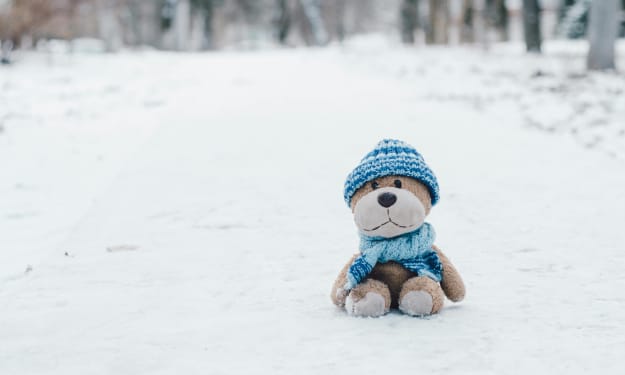
After the storm of winter snow there sat a small bear by the name Ted, of course. He loves the snow and likes to roll around in it making all sorts of trails and whatever he has a mind to do. He wondered where all the people are, but in a way, he is hoping that they are all snug in the homes maybe drinking hot chocolate-one of his favorite drinks with mini-marshmallows and eating something homemade for he likes this winter wonderland all to himself to romp and play and maybe even catch some fish down by the river.
By Mark Graham4 days ago in Fiction



Comments
There are no comments for this story
Be the first to respond and start the conversation.