
The Things We Don’t Say Out Loud (But Write Anyway)
Unspoken truths, quiet confessions, and the power of writing what we hide.


There are things I’ve never told anyone—not even my closest friends, not even family. Not because they’re dark secrets, but because they’re quiet ones. The kind that sit in the chest like unopened letters. Some of them are about fear, some about love, and some are just questions I never knew how to ask out loud.
When I was twelve, I used to lie awake at night wondering if I was ever truly understood. I didn’t have the words to explain that feeling then. It was just a tightness in my throat, like I was trying to say something that had no shape yet. Later, I learned there’s a word for that: alexithymia—a term psychologists use when people struggle to identify and describe emotions. I don’t have it in a clinical sense, but the idea helped me understand something: sometimes we don’t speak, not because we won’t, but because we can’t, yet.
Writing changed that for me.
The first time I wrote something honest, I didn’t even mean to. It was a school assignment. A short essay on “What Makes You Happy.” I started with simple things: my dog, French toast on Sundays, and bike rides. But then something slipped out. “I feel safest when no one expects me to talk,” I wrote. I stared at the sentence for a long time. It was true—and I had never said it to anyone before.
That line got underlined by my teacher with a little note: “Powerful. Can you explain more?”
No, I couldn’t. But I wrote more anyway.
As I grew older, I found myself drawn to journals, blogs, and even anonymous online forums. Not to rant or vent, but to make sense of the things I didn’t know how to express face-to-face. When my grandfather passed away, I didn’t cry at the funeral. I felt numb and distant. People asked if I was okay, and I nodded. But weeks later, I wrote a letter to him in my notebook. Just “Dear Grandpa…” and then pages of things I never said when he was alive—how I admired his quiet kindness, how I still smelled his cologne in the hallway, how I wished I had asked him more about his life. Writing that didn’t bring him back, but it brought me back to myself.
Research actually supports this. Studies from psychologist Dr. James Pennebaker at the University of Texas have shown that expressive writing—especially about emotional experiences—can improve mental and even physical health. People who wrote about painful or meaningful events for just 15 minutes a day showed lower stress levels and stronger immune responses. It’s not magic. It’s just that naming pain is the first step to healing it.
But it’s not just pain we write about—it’s everything.
One of my closest friends told me she used to write letters to her future child, long before she knew if she even wanted kids. Another writes poems when he’s in love but can’t say the words out loud. One person I met online posts anonymous essays about her life with OCD because she says talking about it in person feels “too clinical and small.” On the page, she says she feels whole.
I think that’s the heart of it: we write to feel whole.
Sometimes I wonder what would happen if we all shared the things we only write in notebooks, Google Docs, or half-finished drafts. Would we be closer? Or would it be too much, too raw?
Maybe part of the magic is that writing lets us own our truths quietly, on our own terms.
Some people speak loudly. Others write gently. Both ways are brave.
Not long ago, I shared a personal piece on a writing platform. It wasn’t dramatic—just an honest reflection about feeling lost after finishing school. I was afraid it sounded weak or cliché. But then a comment came in from someone across the world: “I didn’t know anyone else felt this way. Thank you for writing it.”
That’s when it clicked: we don’t just write for ourselves. We write to remind each other we’re not alone.
So if you’re holding onto something unsaid—fear, love, questions, memories—you don’t have to force it into a conversation. Start with a sentence. Write badly. Write privately. Write honestly.
Some truths live quietly for years before they ever get heard. But when they do, when we finally let them live on the page, they stop hurting in the same way.
They become part of who we are. Not the hidden part—but the strong, honest part.
And that’s something worth sharing—even if it starts as just a whisper in ink.
About the Creator
Nouman wali
A passionate blogger ✍️ and story writer 📖
I turn thoughts into words that inspire, connect, and spark imagination ✨.
Let’s share stories that matter, one word at a time 🌍📝.
Keep reading
More stories from Nouman wali and writers in Writers and other communities.
Barron Trump: Age, Height, Education, College Plans, Net Worth, and Hidden Talents Like Singing
Introduction Barron Trump is the youngest child of former U.S. President Donald Trump and Melania Trump. Even though he comes from a very well-known family, Barron has lived a quiet and private life. Many people are curious about him — his age, how tall he is, what school he went to, and what he plans to do in the future. Some even wonder if he has any special talents like singing. In this article, we’ll explore Barron Trump’s life in simple words and help you get to know him better.
By Nouman wali9 months ago in The Swamp
Early March 2026: 4 Goals Accomplished
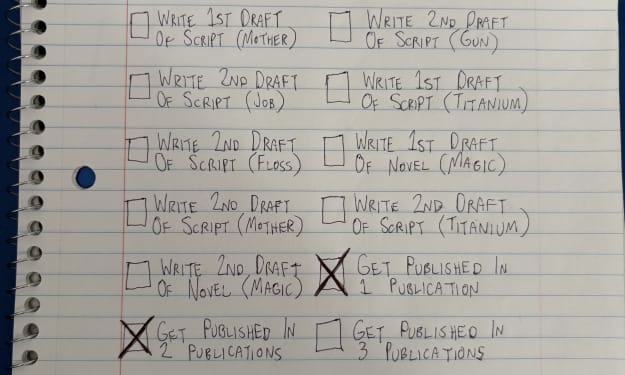
It's early March and I've now accomplished my 4th writing goal for the year of 2026. Before diving into the behind-the-scenes of it... why not tell you up front what that accomplishment was? I was published in a 2nd publication for this year. Published in Helix Literary Magazine out of Central Connecticut State University. You can read it for free right now!
By Stephen Kramer Avitabile7 days ago in Writers
Vocal Creators it's time for Spring cleaning
It's time for Spring cleaning on Vocal Hello, fellow Vocal creators. With the season changing from Winter to Spring and the recent announcement about changes to the platform, I decided this was the ideal time to get things in order. Perhaps you should consider some Spring cleaning for your own articles.
By Cheryl E Preston6 days ago in Writers



Comments (1)
Food for thought: we write in hopes that we* may also feel less alone. Subconsciously anyways. Great share 🥰