
The Soul of a Poet
Finding Voice, Truth, and Purpose in a World of Words
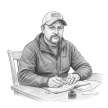

I thought I would write and tell a little about myself. I was born and raised in a rural area of Western North Carolina, in a small mountain community called Spillcorn. It's a place where everyone knows each other, where generations stay rooted in the same hills and hollers. Many who were raised there never left, never received an education, and never traveled farther than the town itself. I was determined to do things differently. I went to college and moved to the big city of Asheville, big to me at least. That move opened my world.
Since then, I have traveled to more than forty countries, seen many cultures, and met people from every walk of life. I served as an administrator over seven large nursing facilities, guiding others through some of the most vulnerable moments of their lives. I have been blessed with a wonderful, supportive family and still am. I am third from the youngest of nineteen children, and I have so many nieces and nephews and great, and great-great nieces and nephews that I cannot begin to count them. Through all of life’s adventures and challenges, one thing has remained constant. I have always turned to writing.
Growing up poor in a rural area gave me both the material and the motivation to write. It offered me a well of memory to draw from and an escape when times were hard. When you read my poems, you may notice how often my life, my family, and my upbringing appear in my lines. Those experiences shape my words and give them meaning. My poetry carries the memories of red clay, the sound of rain on a tin roof, and the laughter that flows through crowded kitchens. Every poem I write is tied in some way to where I came from.
For as long as I can remember, poetry has called to me like a ghost in the dark, silent yet persistent. Writing poetry feels like breathing through the heart, where each word becomes both a release and a discovery. It is a craft that unfolds slowly through years of trial, reflection, and courage. Poetry cannot be rushed. It grows with patience, and it changes as we do.
In my early years of writing, I tried to imitate the poets I admired. I thought if I studied their structure, rhythm, and tone, I might uncover the secret to creating something timeless. I read Emily Dickinson until her compact lines filled my thoughts. I wandered through the haunted beauty of Edgar Allan Poe, letting his shadows teach me how darkness can become art. I let the stillness and grace of William Wordsworth remind me that beauty often lives in the simplest places. I admired the tender melancholy of John Keats, who found glory even in sorrow. Over time, those voices helped me find my own.
Poetry teaches patience. Sometimes a poem comes easy, flowing in one sitting. Other times, it sits there for weeks, refusing to reveal itself. I have spent many nights staring at a page, reshaping one word until it finally fits. The struggle is part of the process. If every poem came out perfectly formed, there would be no discovery in writing it.
Someone once told me that I should put my poems into AI programs to have them polished. That suggestion troubled me. Poetry should never be scrubbed of its rough edges. It is meant to be raw, honest, and full of human error. The greatest poets made countless mistakes, and those imperfections are part of what makes their work timeless. To smooth a poem until it gleams may also erase its heartbeat.
When I gathered the courage to self-publish my first book, Bloodroot and Coal Dust, it felt like stepping into a dream. I had published cookbooks before, filled with family recipes and memories, yet poetry was different. It was personal. Seeing my name on that book filled me with pride and gratitude. Every poem in it carried a piece of my soul, shaped by years of living, learning, and loving.
Poetry has taught me how to listen, to words, to silence, and to the space between them. Sometimes the most meaningful lines come from what remains unsaid. I have learned to let metaphors lead me, to let verbs carry emotion, and to trust imagery over explanation. Writing poetry helps me make sense of a world that often feels uncertain, especially today. It allows me to turn confusion into clarity and pain into peace.
Many of you have read my poems here on Vocal, and I am so grateful for that and for the feedback. This community feels like an extended family to me. I love spending time reading your poems, learning from your creativity, and feeling inspired by the way each of you expresses emotion and truth through words. The contests keep me motivated and help me grow as a writer, especially the poetry ones that challenge me to dig deeper. I rarely enter the story contests, since storytelling in prose has never been my strength, though poetry will always feel like home to me.
Today I am fifty-seven years old, retired, and married to a wonderful person who has stood by my side for twenty years. We travel often and hike every chance we get. So, when you notice that I have not posted in a few days, you can bet I am either out on a trail somewhere or off exploring a new place. Nature refreshes my spirit and fills my mind with new ideas for poems. The rhythm of walking, the sound of wind in the trees, and the sight of a distant mountain often spark the beginnings of a new piece.
Being a poet means living with open eyes and an open heart. It means seeing beauty in small things, the rhythm of rain, the sounds of a cicada, the scent of honeysuckle. It means feeling deeply, even when it hurts. Poetry turns those feelings into something that can touch others. It connects people across time, language, and distance.
Sometimes I wonder whether poetry still matters in a world that moves so fast. Then I remember how it slows us down, how it asks us to feel instead of rush. Even if only one person reads my work and feels understood, I have done something worthwhile. Poetry remains an act of courage, a declaration that emotions still exist.
I often say that someday I will be known as the next Emily Dickinson, though instead of drawers full of handwritten pages, someone will find a computer overflowing with my poems. It is a funny thought, yet it holds truth. Dickinson wrote for herself, yet her words reached generations. I hope my poems will do the same, even if only in small ways.
Poetry continues to evolve, yet its essence never changes. It remains an art of honesty and emotion, a place where the human soul finds voice. Every poet writes to understand life a little better, to leave behind something meaningful.
For me, being a poet is about more than writing. It is about feeling, noticing, and remembering. It is about transforming life’s chaos into music. My poems are shaped by the hills and hollers of Spillcorn, by the sound of family laughter, and by the long road that took me from poverty to purpose. I carry those roots in every line.
As I continue to write, I hope to keep that spirit alive, to let my words reflect the truth of who I am and where I came from. Poetry reminds me that no matter how far I travel, I will always belong to the rhythm of the mountains and the silent strength of home.
About the Creator
Tim Carmichael
I am an Appalachian poet and cookbook author. I write about rural life, family, and the places I grew up around. My poetry and essays have appeared in Beautiful and Brutal Things, My latest book. Check it out on Amazon
Keep reading
More stories from Tim Carmichael and writers in Writers and other communities.
Early March 2026: 4 Goals Accomplished
It's early March and I've now accomplished my 4th writing goal for the year of 2026. Before diving into the behind-the-scenes of it... why not tell you up front what that accomplishment was? I was published in a 2nd publication for this year. Published in Helix Literary Magazine out of Central Connecticut State University. You can read it for free right now!
By Stephen Kramer Avitabile8 days ago in Writers
Becca
"Everything is so... flat." Denille said stupidly as she looked around her new neighborhood. She looked around at the muted desert where even the smallest sign of life seemed to have given up. The plant life was shrubs that were half cooked by the heat and where there should have been a lawn, a mess of white rocks laid glistening in the sun. Even the sky looked stretched thin, like the sun had ironed it smooth. She’d moved from Riverside, where at least there were hills, but here in Barstow, everything felt baked and brittle.
By Sara Wilson8 days ago in Fiction



Comments (3)
I am pleased to learn more about you, Tim. Your poetry is most inspiring, and reading about your background today feels personally grounding. Poetry always has and always will be my first love of writing. I am happy you have declined so-called polishing with AI. I cringe at the thought, honestly, and as an editor on another platform, I face the unfortunate occurrence of these AI-buffed poems more than I care to admit. You certainly have much life experience to draw from, and one of nineteen children- wow! I know someone with sixteen siblings, and it never ceases to blow my mind. I really enjoyed your get to know you better piece. Thanks for sharing with us!😊
Tim, I love reading your poems and stories because you have zero pretention and I can trust in that. Your work is sort of like listening to rain falling onto a tin roof...very comforting.
Tim.....First of all, it is a great pleasure to know you, to read your work and allow your words and experiences change or start a feeling in mine. Secondly, I read this, hearing the narrator's voice from the old TV show, The Walton's...wonderfully inviting and familiar...this line (among many) sat with me. It means feeling deeply, even when it hurts. Amen. That is what makes the words hold meaning. Lessons, pains, faith, hope, stamina...What a fabulous look into an incredible poet. Emily would be proud