
The Silent Scream
When the loudest pain makes no sound

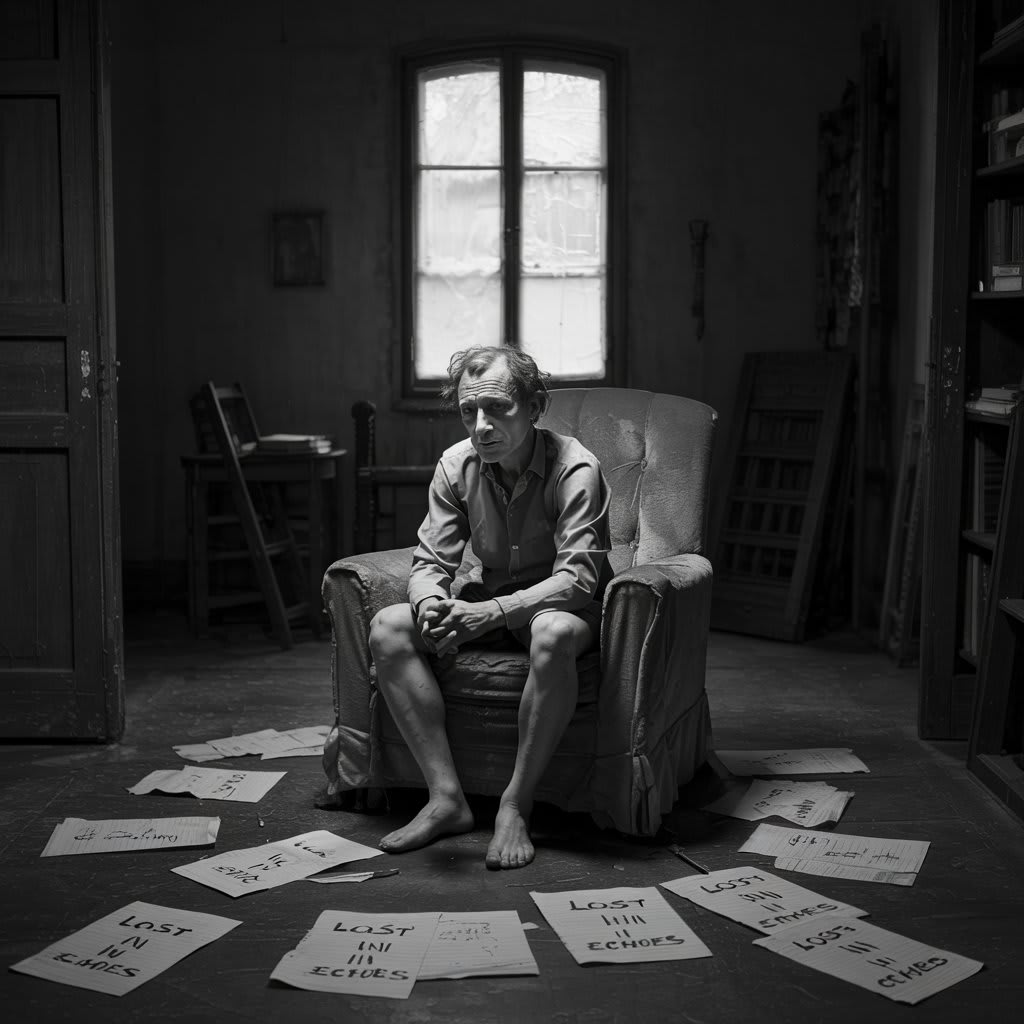
I always smiled.
People said I was the kind of person who lit up a room. And perhaps I did. But what no one ever saw was the dimness that followed me home, like a shadow that had lost its light. I wasn’t always like this. There was a time when my laughter was real and my days were full of color. But then — slowly, silently — something inside me began to change.
It started with small things: forgetting to return calls, avoiding friends, skipping meals. I told myself I was just tired. That life was overwhelming, but manageable. I was wrong.
There’s a kind of pain that doesn’t scream. It doesn’t tear at your skin or leave visible wounds. It sits quietly in your chest, like a cold stone that grows heavier with each breath. No one sees it. No one hears it. But it’s there — always there. That was my reality. A silent scream echoing inside my mind.
I went through my days like a ghost. I woke up, I functioned, I smiled. I gave advice to others, laughed at their jokes, celebrated their joys. I was a master of pretense. No one suspected that each night, I lay in bed, staring at the ceiling, wondering if I was losing my mind.
What hurt the most was the guilt. I had a roof over my head, food on my plate, people who loved me. What right did I have to feel this emptiness? This nothingness? I felt ungrateful, ashamed, weak.
But depression — I would learn — doesn’t ask for permission. It creeps in when the door is left ajar, even slightly. And it builds a home in silence.
One evening, I sat at my desk, a notebook open in front of me. I hadn’t written in years. The pen trembled in my hand. I didn’t know what I was doing. I didn’t know what I wanted to say. And then, without planning to, I wrote:
> “I’m drowning.
And no one can see the water.”
I stared at the words. They didn’t look poetic. They looked like me. Raw. Unfiltered. For the first time in months, I felt something real. It wasn’t joy, but it was something — a flicker of honesty in the darkness.
So I wrote again.
And again.
Each night, I emptied pieces of myself onto the page. I wrote about the fear, the numbness, the guilt. I wrote about the pressure to be okay. The pain of pretending. I wrote as if my life depended on it — and maybe, in some way, it did.
Writing didn’t cure me. But it became a mirror. It showed me things I was too afraid to face in daylight. It reminded me that I was still here, still breathing, still capable of expression — even if it was only on paper.
Slowly, I started to talk to others. Carefully. Cautiously. I told a close friend, then another. I saw a therapist. I learned words like “anxiety” and “clinical depression.” I learned that I wasn’t weak. I wasn’t ungrateful. I was human.
There were setbacks. Days when I couldn’t get out of bed. Nights when I questioned every step forward. But the scream inside me? It grew quieter. Not because it vanished, but because I finally gave it a voice.
One day, months later, a friend texted me:
> “You always seem so put-together. How do you stay so strong?”
I stared at the message for a long time. And then I smiled — not the practiced one, but a real, quiet smile.
I replied:
> “By falling apart. And slowly putting myself back together.”
Reflections:
This story isn’t just mine. It belongs to everyone who has ever felt lost in their own mind. Everyone who has battled demons invisible to the world. Everyone who has screamed in silence.
Mental health isn’t a trend. It’s not a hashtag. It’s a reality. And the more we talk about it, the more we write about it, the less alone we become.
So here’s to the ones who are still screaming silently.
May you find your voice.
May you write your way home.
About the Creator
Keep reading
More stories from Muhammad Ali and writers in Writers and other communities.
Echoes for the Departed
Detective Rehan Shah stood in the candlelit room, staring at the lifeless body of Professor Adil Murtaza. A respected academic, known for his work on memory and trauma. And now, the third victim in a series of killings that had the entire city gripped with fear.
By Muhammad Ali 9 months ago in Writers
It's Winter
Anne Bernays and Pamela Painter — What If? Writing Exercise for Fiction Writers prompts The Exercise —Write a scene involving two characters. Have the point-of-view character presume something entirely different about the situation from what the other character's overt behavior seems to imply. For example, a landlord comes to visit, and the tenant suspects that it isn't a visit but an inspection. Make up several situations in which one character can fantasize or project or suspect or even fear what another character is thinking. The Objective - To show how your characters can use their imaginations to interpret the behavior and dialogue of other characters.
By Denise E Lindquist22 days ago in Writers
A Very Short Story With One Syllable Words Only
Anne Bernays and Pamela Painter — What If? Writing Exercise for Fiction Writers prompts The Exercise — Write a short story using words of only one syllable. The Objective - To make you conscious of word choice
By Denise E Lindquistabout 22 hours ago in Writers
Rachel Reviews: The Spiral Archive by Pieter Hendrik
It's difficult for me to know where to start with a review of this book as it was, for me, an entirely unique experience and one that I'll probably never have again. I don't want that to be interpreted as unenjoyable but it has left me scratching my head a little and ruminating on its content, its themes and its characters.
By Rachel Deeming6 days ago in BookClub


Comments
There are no comments for this story
Be the first to respond and start the conversation.