
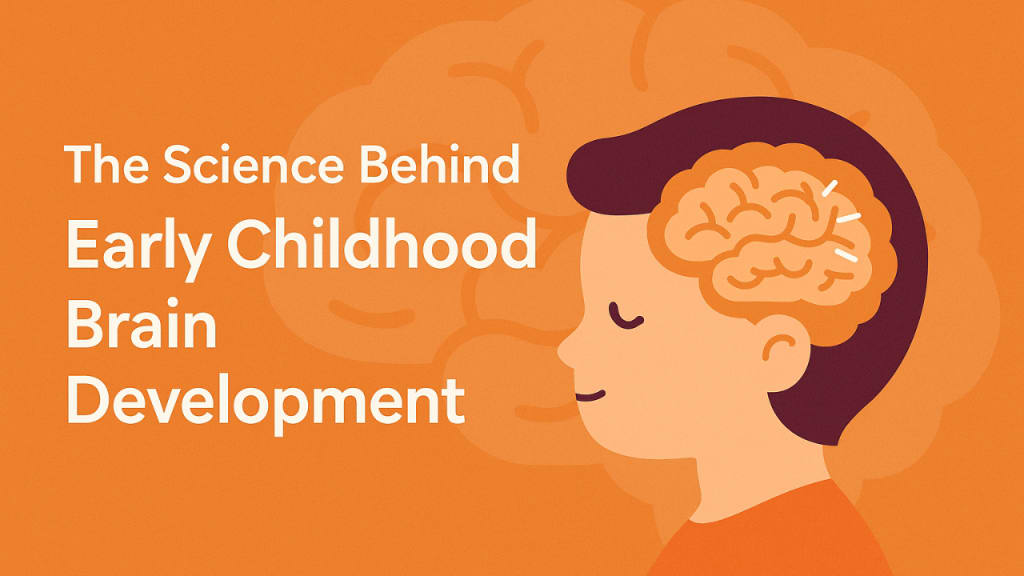
The Science Behind Early Childhood Brain Development
How Brain Growth in Early Years Shapes Learning, Emotions & Success.

Early childhood education is the most important stage of a child's life. Between zero and five years old, a child's brain grows more than it ever will again. This time of rapid development lays the foundation for long-term health, behaviour, and learning. Most parents have no idea how important these years are, or how much a high-quality early learning centre can assist with this process.
Understanding the science of early brain development help parents to make informed decisions while selecting a good childcare center. This blog talks about how the brain develops in early childhood, how early learning centers help in development, and the necessity of having the right environment for your child's achievement.
What happens in the brain during early childhood?
From birth to age five, more than a million new neural connections are made every second. They are built by experience, and especially by experience with caregivers and the world. Here is how the brain is built during early childhood:
1. Neuroplasticity: Neuroplasticity is the ability of the brain to change and adapt in reaction to experience. During early childhood, neuroplasticity is at a peak, so this is an extremely critical learning time.
2. Synapse formation: Synapses are connections between neurons. Synapses are created rapidly as a reaction to external stimuli like touch, language, and play.
3. Pruning: Unused connections are eliminated and used connections are reinforced as the child matures. It keeps the brain efficient.
Children who are growing up in a nurturing and stimulating environment – like those in a high-quality day care centre – are well positioned to form solid cognitive, social, and emotional foundations.
Reasons Why Brain Development During Early Learning Is So Important
1. Foundation for Learning: The brain establishes the foundation for future learning, such as literacy, numeracy, and problem-solving.
2. Language Development: Proper exposure to language at an early age from childcare significantly enhances communication and vocabulary.
3. Social and Emotional Growth: Interpersonal relationships and emotional control are developed in group care environments.
4. Executive Function Development: Planning, attention, and memory abilities are developed at this point.
5. Development of Critical Thinking: Guided play and questioning enhance critical thinking and decision-making in children.
6. Mental Health Foundation: Emotional well-being and stress responses are influenced by early experiences.
7. Motor Skill Development: Structured activity and physical play promote fine and gross motor development.
8. Imagination and Creativity: Settings that engage imagination are associated with increased innovation and adaptability of thought.
9. Sense of Identity: Children acquire knowledge about themselves, build confidence, and try on interests.
10. Ethical and Cultural Awareness: Exposure to a range of perspectives encourages inclusion, empathy, and ethical awareness.
Early Learning Centres' Role in Brain Development
An early learning centre in Prestons are not a babysitter. It is a specifically designed setting that supports brain development through:
1. Play-Based Learning: Through play, children learn about their world, problem-solving, and can be creative.
2. Language Exposure: Day care children are exposed to a language-rich environment that develops vocabulary and communication.
3. Routine and Structure: Routine provides neural pathways linked with memory and emotional regulation.
4. Safe Emotional Environment: Healthy interaction with carers allows trust, empathy, and confidence to develop.
What Parents Can Do to Assist Brain Development in the Home
As well as enrolling their child in a high-quality early learning centre in Prestons, parents can also assist their child by:
- Reading, talking, and singing to their child every day
- Having unstructured playtimes
- Creating regular routines and emotional stability
- Limiting television watching
- Getting good nutrition and sleep
These experiences augment what the children receive at their day care centre and facilitate home-centre relationships.
Last Word: Invest in Early Learning for Lifelong Gains
The early years are the building blocks of all that follows. High-quality early childhood education, especially in a reputable child care center like Prestons' Wiggles and Giggles, has long-lasting impacts on academic achievement, social conduct, and emotional stability.
By appreciating the science of brain development in early childhood, parents can more profoundly appreciate the value of choosing the right early learning centre. Moving areas or seeking alternatives, place the centres of best practices high on your list and your child's growth at the priority of their services.
Keep in mind, the right beginning can make all the difference – and it begins at Wiggles and Giggles, Prestons' finest early learning centre.
About the Creator
Wiggles and Giggles | Prestons
Wiggles & Giggles offers quality childcare in Prestons, including long day care, before/after school, and vacation care. Since 2010, our family-run centre has delivered trusted early learning for children aged 6 weeks to school age.
Keep reading
More stories from Wiggles and Giggles | Prestons and writers in Writers and other communities.
The Importance of Nutrition in Early Childhood
Early childhood is the most important phase of the life of a child. It is a time when their body, brain, and social capabilities are all developing very rapidly, laying the foundation for future learning, behaviour, and health. To parents going around an early learning centre Prestons or searching for quality childcare, it matters to understand the function of nutrition at early phases. It's not only about filling the children up; it's about powering their growing minds and bodies.
By Wiggles and Giggles | Prestons7 months ago in Writers


Comments
There are no comments for this story
Be the first to respond and start the conversation.