
The Role of Transcription in Organizing and Interpreting Data
how transcription can transform unstructured data into a structured resource

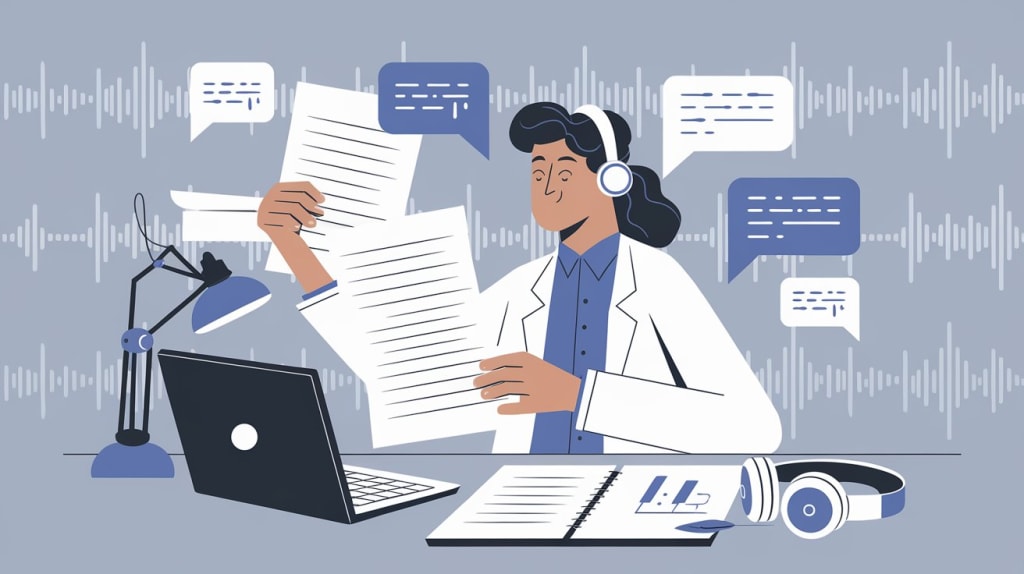
In today’s digital landscape, data is everywhere—from recorded meetings and interviews to lectures and media content. Yet much of this information exists in an unstructured form, making it difficult to manage and extract valuable insights. Transcription services offer a powerful solution by converting audio and video into text, enabling businesses, researchers, and professionals to organize and interpret data more effectively.
In this article, we explore how transcription can transform unstructured data into a structured resource, highlighting its benefits for various industries, from business and legal to media and academia.
The Importance of Data Organization
The sheer volume of data generated in the digital age can be overwhelming. Recorded meetings, interviews, and research discussions often contain critical insights, but without proper organization, these insights remain hidden in lengthy audio or video files. Transcription bridges this gap by converting spoken words into written text, which can then be easily indexed, searched, and analyzed.
Organizing data through transcription:
Makes Data Searchable: Text is far easier to search through than audio or video. Whether you need to locate a specific comment from a meeting or reference a key point from an interview, a transcript allows for quick and efficient searches.
Improves Accessibility: Written content is accessible to a broader audience, including those who may have hearing impairments or prefer reading. This not only enhances usability but also boosts your digital content’s discoverability.
Enhances Data Analysis: With structured data, organizations can identify trends, perform keyword analyses, and derive actionable insights much more efficiently.
How Transcription Helps Organize Data
Making Data Searchable
One of the primary benefits of transcription is its ability to make data searchable. Once audio and video are converted into text, users can perform keyword searches to locate specific details quickly. This is particularly useful in scenarios such as:
Business Meetings: Finding a critical decision or follow-up action in a long meeting.
Research Interviews: Quickly identifying recurring themes or specific responses in qualitative research.
Media Content: Locating key quotes or insights from an interview for further analysis or reporting.
Structuring Unorganized Content
Raw recordings lack clear organization. Transcription services add structure by:
Adding Time-Stamps and Speaker Labels: These elements help track the flow of conversation and attribute comments to the correct speakers.
Segmenting Information: Breaking long recordings into manageable sections makes it easier to focus on specific topics and extract meaningful insights.
Enhancing Data Categorization
By converting audio to text, transcription allows for more effective categorization:
Business Applications: Meeting notes, client calls, and training sessions can be categorized by project or department, aiding in future reference and analysis.
Legal Documentation: Accurate transcripts of depositions and court proceedings ensure that critical details are preserved and easily retrievable.
Improving Collaboration
Text-based records facilitate easier sharing and collaboration among team members. Whether reviewing meeting minutes or analyzing interview transcripts, written records provide a clear and consistent reference point that can be accessed by everyone involved, regardless of location.
The Role of Transcription in Data Interpretation
Beyond organizing data, transcription plays a key role in interpreting it. Once audio content is transcribed, it becomes much easier to analyze and derive insights.
Enabling Quick Insights
Text-based data allows for rapid identification of trends and patterns:
Keyword Analysis: Tools can scan transcripts to highlight frequently mentioned words or phrases, helping to identify common themes.
Trend Identification: By comparing transcripts over time, organizations can detect shifts in customer sentiment, emerging market trends, or changes in public opinion.
Supporting Detailed Data Analysis
Transcripts facilitate deeper analysis:
Ease of Annotation: Researchers can annotate transcripts, highlight critical segments, and add notes directly to the text.
Comparative Analysis: Comparing transcripts from different sessions or between different speakers can provide valuable insights into communication patterns and subject matter nuances.
Choosing the Right Transcript Type
The type of transcript—verbatim or clean—depends on the intended use:
Verbatim Transcripts: Capture every word, including fillers and pauses, which is crucial for legal contexts or detailed linguistic studies.
Clean Transcripts: Remove non-essential elements, offering a streamlined version of the conversation ideal for business or media purposes.
Use Cases & Industry Applications
Transcription services are versatile and have broad applications across multiple industries:
Business
Meeting Transcriptions: Ensure that all details from internal meetings and client calls are recorded accurately, making it easier to follow up on discussions and decisions.
Training Materials: Transcripts of training sessions can be repurposed into educational resources for ongoing professional development.
Conference Calls & Webinars: Providing transcripts for these sessions enables easy review and dissemination of critical information.
Legal
Deposition Transcripts: Essential for maintaining accurate records of legal proceedings, helping attorneys and legal professionals build comprehensive case files.
Compliance Documentation: Transcriptions help ensure that all legal conversations and procedures are documented accurately, supporting regulatory compliance.
Media
Journalist Interviews: Transcripts allow journalists to quickly reference and verify quotes, enhancing the accuracy of their reporting.
Podcast Transcriptions: Making podcast content available in text form not only improves SEO but also broadens the audience reach.
Video Subtitles: Accurate transcripts are the foundation for subtitles, enabling media content to be accessible to a global audience.
Academia
Lecture Transcriptions: Students and educators benefit from having lectures transcribed, allowing for easier review and note-taking.
Research Interviews: Transcripts support qualitative research by providing detailed, searchable records of interviews and focus group discussions.
Study Materials: Transcripts can be compiled into comprehensive study guides, making educational content more accessible.
Emerging Trends in Transcription Services
As technology advances, transcription services continue to evolve. Here are some trends to watch:
AI and Machine Learning Integration
Hybrid Models: Combining the speed of AI with the accuracy of human transcriptionists offers the best of both worlds—rapid turnaround times and high-quality results.
Improved Accuracy: Advances in machine learning are enhancing automated transcription, though human oversight remains crucial for specialized and sensitive content.
Integration with Digital Tools
CRM and Content Management Systems: Transcription services are increasingly integrated with digital platforms, enabling seamless updates and improved workflow efficiency.
Real-Time Transcription: Innovations in real-time transcription support live captioning and immediate meeting notes, offering valuable benefits for dynamic environments like conferences and webinars.
Data Security and Privacy Considerations
When choosing a transcription service, data security is paramount, especially when handling sensitive information. Here’s what to consider:
Confidentiality and Compliance
Strict Protocols: Ensure that the service follows stringent confidentiality protocols and data security measures.
Certifications and Standards: Look for transcription providers that adhere to industry standards and certifications, ensuring your data is handled securely.
Human vs. AI Transcription
Accuracy and Security: While AI transcription can be efficient, human transcriptionists typically provide superior accuracy and are better equipped to handle complex audio, particularly in legal or confidential contexts.
Localized Expertise: Services that employ transcriptionists with localized expertise often provide enhanced confidentiality and adherence to regional data protection regulations.
Content Repurposing and Accessibility
Transcription not only organizes data but also unlocks opportunities for repurposing content and enhancing accessibility:
Maximizing Value: Transcripts can be transformed into blog posts, white papers, social media updates, or ebooks, extending the reach of your content and maximizing return on investment.
Enhanced SEO: By providing additional text for indexing, transcripts improve search engine visibility, driving organic traffic to your digital platforms.
Enhancing Accessibility
Inclusive Content: Transcripts ensure that your content is accessible to everyone, including individuals with hearing impairments or those who prefer reading.
Multilingual Reach: Once in text form, content can be easily translated or localized, broadening its appeal to non-English speaking audiences.
Choosing the Right Transcription Service
Selecting the right transcription service is critical for ensuring data accuracy and security. Consider these key factors:
Accuracy and Quality
Human Expertise: Opt for services that employ experienced human transcriptionists, especially for complex or specialized content.
Quality Assurance: Reliable providers implement rigorous quality checks and proofreading processes to ensure error-free transcripts.
Data Security and Confidentiality
Robust Security Measures: Ensure the service uses strong encryption, secure file transfers, and has clear confidentiality agreements in place.
Compliance: Choose providers that comply with relevant data protection regulations, particularly if you’re handling sensitive or confidential information.
Turnaround Time and Flexibility
Balancing Speed and Accuracy: Evaluate your needs to determine the ideal balance between quick turnaround times and high-quality results.
Customization Options: Look for services that offer customizable options, such as verbatim versus clean transcripts and the inclusion of time-stamps and speaker labels.
Cost-Effectiveness
Transparent Pricing: Select a service that offers clear, upfront pricing without hidden fees.
Long-Term Value: While cost is a factor, prioritizing quality and reliability will deliver better results and more meaningful insights in the long run.
Conclusion: Unlock the Full Potential of Your Data
Transcription services are a critical tool in transforming unstructured audio and video data into organized, actionable insights. By converting speech into text, transcription not only simplifies data organization but also enhances data interpretation, making it easier to search, analyze, and repurpose content across various industries.
Whether you’re a business leader, legal professional, researcher, or content creator, leveraging transcription services can lead to better data management, improved accessibility, and enhanced decision-making. Embrace transcription as an essential part of your data strategy, and unlock the full potential of your information today.
By turning every recorded conversation, meeting, or lecture into a structured resource, transcription services empower you to navigate the complexities of data and drive informed, impactful outcomes.
About the Creator
Beth Worthy
Beth Worthy is President of GMR Transcription Services, Inc., a U.S. company offering 100% human transcription, translation, and proofreading for academic, business, legal, and research clients.
Keep reading
More stories from Beth Worthy and writers in Writers and other communities.
Understanding the Time it Takes to Transcribe a 1-Hour Interview
Transcription, the process of converting spoken language into written text, plays a critical role in various fields such as journalism, research, and legal documentation. It ensures that valuable spoken content, whether from interviews, meetings, or presentations, can be accurately documented for analysis, reference, or accessibility.
By Beth Worthyabout a year ago in Interview
A Transparent Look at Vocal Challenges and Top Stories
Almost three years ago, we shared a resource article that served as a place for people to suggest new challenge prompts. We thought it would be a good idea to refresh that thread, and take the opportunity to answer a few common questions about top stories, how challenges are judged and how submissions are reviewed.
By Vocal Curation Team3 days ago in Resources




Comments
There are no comments for this story
Be the first to respond and start the conversation.