
Understanding the Time it Takes to Transcribe a 1-Hour Interview
Factors, Methods, and Tools That Impact the Time It Takes to Transcribe an Hour-Long Interview

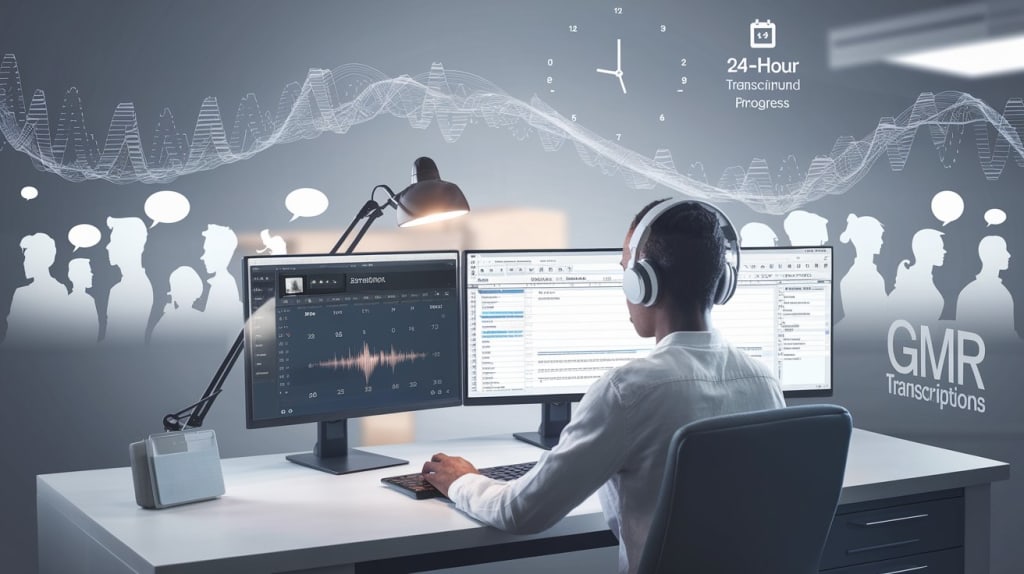
Transcription, the process of converting spoken language into written text, plays a critical role in various fields such as journalism, research, and legal documentation. It ensures that valuable spoken content, whether from interviews, meetings, or presentations, can be accurately documented for analysis, reference, or accessibility.
A frequent question that arises when discussing transcription is: "How long does it take to transcribe a 1-hour interview?" While this may seem straightforward, the answer is not so simple. The time it takes to transcribe an interview depends on several key factors, including the transcription method, the quality of the audio, and the complexity of the content. To help clarify the transcription process and provide a realistic estimate of how long it takes to transcribe a 1-hour interview, we’ll delve deeper into these factors in this article.
How Long Does Transcribing a 1-Hour Interview Actually Take?
Transcribing audio content is a meticulous task that requires significant time and attention to detail. The length of time it takes can vary based on several factors, and understanding these elements will help you manage expectations and select the best approach to transcription. Here, we will discuss the general timeframes for transcription and compare professional services, do-it-yourself (DIY) methods, and the role of AI-powered transcription tools.
1.1 General Rule of Thumb
As a general rule of thumb, a professional transcriptionist will typically require anywhere from 4 to 6 hours to transcribe a 1-hour recording. This is based on a 4:1 to 6:1 ratio, meaning that for every hour of audio, a transcriptionist will need approximately 4 to 6 hours to accurately transcribe the content. This ratio takes into account the natural pace of transcription work, the need for frequent pauses and rewinds to ensure accuracy, and the effort required to edit the transcript for readability.
1.2 Professional vs. DIY Transcription
Professional Transcription Services
When you hire a professional transcription service, you’re paying for a team of skilled transcriptionists who have the expertise and resources to handle various types of audio content. Thanks to their training and familiarity with the transcription process, these services can usually deliver faster turnaround times compared to DIY methods. For example, a professional transcription service might be able to transcribe a 1-hour interview in just a few hours or by the end of the day, depending on factors such as the complexity of the audio and the service level chosen. Professional transcriptionists are also more efficient in dealing with complex audio, multiple speakers, and difficult-to-understand speech.
DIY Transcription
If you decide to transcribe your content on your own, you’ll need to prepare for a more time-consuming process. Without specialized transcription training and the right tools, transcribing a 1-hour recording can take anywhere from 5 to 8 hours or even longer, especially if the audio quality is poor or the content is complex. DIY transcription also requires patience, attention to detail, and a solid understanding of transcription software and tools. For many people, the DIY approach is often a last resort due to the substantial time and effort required.
AI-Powered Transcription Tools
AI-powered transcription tools have become increasingly popular due to their ability to transcribe audio quickly and provide an initial draft in a matter of minutes. However, the quality of these transcriptions can vary, particularly when dealing with difficult audio, such as recordings with multiple speakers, accents, or specialized vocabulary. The accuracy of AI transcription generally falls in the range of 80% to 90%, though this can be lower with more complex content.
While AI transcription can save a significant amount of time, it often requires manual editing and review to ensure the transcript’s accuracy. The time needed for review and corrections depends on how clear the original audio is and the complexity of the content being transcribed. AI tools are best used for producing quick drafts, but for high-quality transcripts, professional human intervention is often necessary.
Summary of Timeframes
- Professional services: Typically, a professional transcription service can transcribe a 1-hour interview in several hours to 1 day.
- DIY transcription: Expect a 5 to 8-hour investment for transcribing a 1-hour interview, or longer for poor-quality audio.
- AI-powered tools: These tools can produce a rough transcription in minutes, but accuracy might require substantial manual editing.
Factors Affecting Transcription Time
Several factors inherent to the audio content and the transcription process can significantly impact the overall time required to transcribe an interview. Below, we break down these factors to help you understand why transcription time can vary.
2.1 Audio Quality
The clarity of the audio is one of the most significant factors influencing transcription time. High-quality recordings with minimal background noise are easier and faster to transcribe, while poor-quality audio, marked by distortions, static, or low volume, can make transcription much more challenging. If the audio quality is subpar, transcriptionists may need to listen to portions repeatedly, increasing the time spent on the project.
2.2 Number of Speakers
Transcribing recordings with multiple speakers can add significant complexity to the transcription process. In interviews, panel discussions, or group meetings, the transcriptionist must accurately attribute statements to the correct speaker. If speakers interrupt or talk over each other, or if the dialogue is difficult to follow, transcription time can increase. Transcriptionists often need to carefully separate voices and distinguish between them, which takes time and expertise.
2.3 Accent and Language
When transcribing audio with speakers who have strong accents or when non-native speakers are involved, the process becomes more challenging. Regional dialects, unfamiliar pronunciations, or cultural phrases may require additional effort to interpret correctly. Transcriptionists may need to replay sections or look up certain terms to ensure the transcript is accurate.
2.4 Specialized Terminology
Content that involves technical, medical, or legal terminology requires transcriptionists with specific expertise. For example, a medical interview or a legal deposition may use jargon that necessitates further research to ensure accurate transcription. Such specialized terminology can significantly increase the time required to transcribe the content.
2.5 Speaker Clarity and Pace
The way the speakers talk also influences transcription time. Fast speakers, mumbling, or unclear pronunciation can slow down the transcription process. If a speaker speaks too quickly, transcribers may need to pause and rewind frequently to ensure every word is captured correctly. On the other hand, clear and slow speech facilitates quicker transcription.
2.6 Client Requirements
Specific client instructions, such as whether the transcription should be verbatim or cleaned up for readability, can impact transcription time. Verbatim transcription, which captures every word, pause, and non-verbal sound (such as "um" or "uh"), takes longer than a clean-read version, which omits fillers and redundant words. Additionally, requests for timestamps, speaker labels, or annotations add to the overall transcription time.
2.7 Use of Transcription Services
The choice between AI transcription and human transcription services also affects the transcription time. While AI transcription tools provide quick drafts, they may not always capture the full context or accurately transcribe complex speech patterns. Human transcriptionists, however, can provide a higher level of accuracy, particularly when the content is dense or involves multiple speakers. The decision between these options will depend on the desired balance between accuracy, speed, and cost.
Challenges and Common Pitfalls in Transcription
Transcriptionists often face a variety of challenges that can slow down the process or affect the accuracy of the final transcript. Understanding these challenges will help you appreciate the complexities of transcription.
3.1 Difficult Audio and Unexpected Challenges
Transcriptionists may encounter overlapping conversations, technical glitches, or background noise that obscure speech. To address these challenges, professionals use advanced audio editing software to clean up the recording, as well as techniques like noise cancellation. In some cases, they may need to communicate with clients to clarify sections of the audio or request better-quality recordings for future projects.
3.2 Maintaining Accuracy Under Pressure
Accuracy is critical in transcription, especially in industries like legal or medical transcription, where errors can have serious consequences. To maintain high standards of accuracy, transcriptionists engage in thorough proofreading and editing. This often involves multiple rounds of review, cross-referencing with other materials, and updating industry-specific terminology. Additionally, quality assurance measures, such as peer reviews and specialized transcription software, help minimize errors.
3.3 Deadlines and Turnaround Times
Transcriptionists frequently work under tight deadlines, which can increase the pressure to complete the work quickly. Expedited services may be necessary for urgent requests, but these often come with higher fees. Rush orders can compromise the balance between speed and accuracy, leading to the possibility of errors if not managed carefully. It’s essential for clients and transcriptionists to discuss realistic deadlines based on the complexity of the audio and required turnaround times.
Common Questions Answered
4.1 What Is a Good Hourly Rate for Transcription?
Hourly rates for transcription can vary based on factors like complexity, location, and the transcriptionist’s experience. On average: professional transcription services typically charge between $1 and $3 per audio minute, with higher rates for specialized fields like legal or medical transcription.
4.2 How Many Words Are in a 1-Hour Interview?
On average, a 1-hour interview will yield 9,000 to 12,000 words, but this can vary depending on:
- Speech speed: Fast talkers produce more words per hour, while slower speakers will result in fewer.
- Pauses and fillers: A heavily edited transcript (clean read) may have fewer words if filler words are removed.
4.3 How Can I Reduce Transcription Time?
- To make transcription more efficient, consider the following tips:
- Use a high-quality microphone for clear audio.
- Minimize background noise by recording in a quiet environment.
- Encourage clear speech; avoid speakers talking over one another.
- Provide detailed instructions for transcriptionists, specifying format preferences and speaker labeling.
4.4 Should I Use Human or AI Transcription?
Choosing between AI and human transcription depends on priorities such as:

4.5 What Is the Difference Between Verbatim and Clean Transcripts?
Verbatim transcription captures every word, including filler words, pauses, and non-verbal sounds. This type of transcription is often used in legal settings or qualitative research.
Clean read transcription edits out unnecessary fillers, resulting in a more readable transcript. This is commonly used for business meetings, interviews, and content publishing.
Conclusion: Streamlining Your Transcription Process
The time it takes to transcribe a 1-hour interview depends on several factors, including the quality of the audio, the number of speakers, and the complexity of the content. Whether you choose professional human transcription, DIY methods, or AI-powered tools, each option offers advantages and challenges. For the best results, working with a trusted transcription service, such as GMR Transcription, ensures accurate, high-quality transcripts delivered on time.
About the Creator
Beth Worthy
Beth Worthy is President of GMR Transcription Services, Inc., a U.S. company offering 100% human transcription, translation, and proofreading for academic, business, legal, and research clients.
Keep reading
More stories from Beth Worthy and writers in Interview and other communities.
The Unmatched Value of Human Transcription in Interview Quality
In an era where automated transcription tools promise speed and cost-effectiveness, the true value of a transcription service lies in its ability to accurately capture the essence and nuances of a conversation. This is where human transcription shines. While machines excel at processing large volumes of data, they often fall short in delivering the depth and contextual understanding that only a human can provide.
By Beth Worthy11 months ago in Interview
Center Stage with Gina C.
*** I'm keen to republish the interviews I did for my series with Vocal creators. It's been a few years and I thought it might be nice to revisit these wonderful conversations. I'll be releasing them one at a time for a few weeks/months.
By Heather Hubler8 days ago in Interview
10 Minutes with Bill Gates
Introduction Spending 10 minutes with Bill Gates may sound brief, but even a short conversation with one of the world’s most influential innovators can offer insights that last a lifetime. As the co-founder of Microsoft, a philanthropist, an author, and a global thought leader, Bill Gates has shaped how the world uses technology and how it addresses some of its most pressing challenges. In just ten minutes, one could explore decades of experience in innovation, leadership, failure, success, and global responsibility.
By shaoor afridi3 days ago in Interview


Comments
There are no comments for this story
Be the first to respond and start the conversation.