
The Role of AI in Footfall Counting: Optimizing Customer Experience & Operations
In today’s competitive retail landscape, understanding customer behavior is key to maximizing sales and enhancing the shopping experience

Introduction
In today’s competitive retail landscape, understanding customer behavior is key to maximizing sales and enhancing the shopping experience. One powerful tool that has emerged to help retailers achieve this is footfall counting—a process that tracks the number of people entering, exiting, and moving within a store. With the advent of Artificial Intelligence (AI), footfall counting has evolved from simple door counters to sophisticated, real-time analytics systems that provide valuable insights. In this blog, we explore the role of AI in footfall counting for retail stores, its benefits, and how businesses can leverage it to optimize operations and improve customer experiences.
What is AI-Powered Footfall Counting?
AI-powered footfall counting utilizes advanced technologies like computer vision, machine learning, and deep learning to accurately track and analyze customer movements within a store. Unlike traditional counting methods, which rely on infrared sensors or manual counting, AI-driven systems provide precise data while filtering out irrelevant movements such as staff walking around.
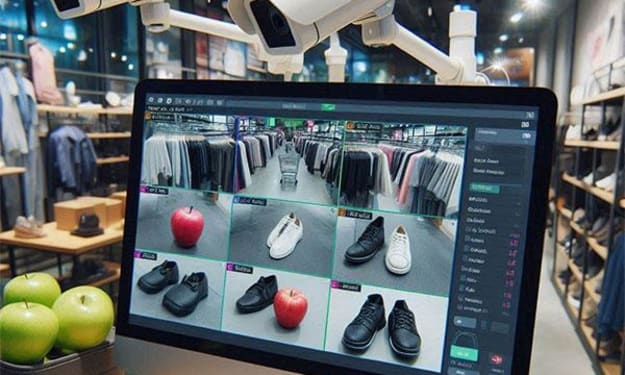
These systems typically employ smart cameras and sensors placed at strategic points in a retail store. The AI algorithms process video feeds, detect human presence, and generate meaningful insights like foot traffic patterns, peak shopping hours, and customer dwell times.
Benefits of AI-Driven Footfall Counting for Retail Stores
1. Accurate Customer Insights
Traditional footfall counting methods often provide estimates rather than exact numbers. AI-driven solutions, on the other hand, offer highly accurate data, distinguishing between real customers, staff members, and even children. This precision helps retailers make better business decisions.
2. Optimizing Store Layout and Product Placement
AI-powered footfall analysis helps retailers understand which areas of the store receive the most traffic and which remain underutilized. Based on these insights, businesses can optimize their store layout, reposition high-margin products, and improve overall navigation to enhance the shopping experience.
3. Enhancing Customer Experience
Understanding how customers move through a store allows retailers to enhance their experience by minimizing congestion, improving signage, and ensuring products are placed where they are most accessible. AI-powered systems can also send alerts when checkout lines are too long, enabling staff to open additional counters to reduce wait times.
4. Workforce Optimization
By analyzing foot traffic data, AI-driven systems can help businesses optimize staff schedules. Stores can allocate more employees during peak hours and reduce staffing during low-traffic periods, improving both efficiency and labor cost management.
5. Real-Time Decision Making
AI footfall counting solutions provide real-time analytics, allowing store managers to make instant decisions. Whether it’s deploying more staff during high-traffic periods or adjusting marketing efforts, real-time data ensures quick and informed actions.
6. Marketing and Sales Enhancement
Retailers can integrate AI footfall data with sales figures to evaluate the effectiveness of marketing campaigns. If a promotional event increases foot traffic but not conversions, businesses can tweak their sales approach or product placement to maximize results.
7. Security and Loss Prevention
AI-powered cameras and sensors not only count footfall but also identify unusual movement patterns, alerting store managers to potential theft or security risks. By integrating AI-driven surveillance with foot traffic data, retailers can enhance loss prevention strategies.
How AI Footfall Counting Works
Data Collection: Smart cameras and sensors capture real-time video or movement data at store entry points and key locations.
AI Processing: Advanced machine learning algorithms analyze the collected data, filtering out non-customer movements like employees and non-human objects.
Pattern Recognition: AI identifies customer trends such as peak hours, dwell time in different sections, and frequent shopping paths.
Analytics & Reporting: The processed data is presented in an easy-to-understand dashboard, providing actionable insights to store managers.
Integration with Business Operations: Footfall analytics can be integrated with POS systems, marketing campaigns, and inventory management for a holistic approach to retail optimization.
Use Cases of AI Footfall Counting in Retail
1. Shopping Malls and Large Stores
For large retail chains and shopping malls, AI footfall tracking helps in managing visitor flow, optimizing store layouts, and improving the overall shopping environment. Malls can allocate resources based on foot traffic data to improve customer service.
2. Grocery Stores and Supermarkets
Supermarkets can use AI-powered footfall analysis to ensure efficient checkout processes, improve product placements, and manage inventory based on high-demand sections.
3. Fashion and Apparel Stores
By tracking customer movements within the store, fashion retailers can identify popular product sections and place their latest collections in high-traffic areas for maximum visibility and conversions.
4. Electronics and High-Value Retail
AI-based footfall data helps electronics retailers improve customer engagement by placing knowledgeable staff in areas with high customer interest, ensuring better assistance and boosting sales.
5. Airports and Duty-Free Shops
Retail outlets in airports can optimize staffing and promotional campaigns by analyzing foot traffic trends during different flight schedules.
Future Trends in AI Footfall Counting
As AI technology advances, footfall counting systems will become even more sophisticated. Here are some future trends to watch out for:
Facial Recognition for Personalized Shopping: AI systems may integrate facial recognition to identify repeat customers and provide personalized shopping experiences.
AI-Powered Heatmaps: More advanced AI will generate real-time heatmaps to highlight high-traffic areas and customer behavior patterns.
Integration with Augmented Reality (AR): Future AI footfall solutions may integrate with AR to offer interactive in-store experiences based on customer movement data.
Predictive Analytics: AI-powered footfall counting will move beyond data collection to predict customer trends and behaviors, allowing businesses to be proactive in their strategies.
Enhanced Privacy Features: With growing concerns about data privacy, AI-driven footfall solutions will incorporate enhanced privacy controls to ensure compliance with data regulations.
Conclusion
AI footfall counting for retail stores is transforming the way businesses operate. From optimizing store layouts and workforce allocation to enhancing security and improving customer experience, AI-powered footfall analytics provide retailers with an invaluable competitive advantage. As technology continues to evolve, AI-driven footfall counting will play an even bigger role in shaping the future of retail, ensuring smarter decision-making and improved business performance.
Embracing AI-powered footfall counting is no longer a luxury but a necessity for modern retailers. By leveraging these solutions, businesses can enhance customer experience, improve operational efficiency, and drive higher revenues in today’s competitive retail market.
About the Creator
The Night It Was Read
She was excited. Her hair up in rolos as she slid on the boots her mother had only let her borrow for this special occasion. At fifteen, she had just begun to branch out–making friends, building a life that was all her own. Her best friend, Ruth, had just moved to Oregon, and her absence was a new kind of desperation–one that longed for intimacy and made her reach for new people, new experiences. The phone rang. “Ma! Pick up–pick up! I’m taking off the pinchos! These stupid rolos won’t come off!” She stomped around her room, arms twisted overhead, tugging at her hair in every direction. From the kitchen, her mother shouted, “He’s coming up now. Apúrate and put on your coat. It’s cold and rainy. Llévate la sombrilla–and don’t lose this one. You always lose the nice umbrellas and then-” “Yessss, Ma! Ya–ya! I got it. Can you open the door, please?!” At that moment, a knock traveled through the apartment. Her mother opened the door. From the bedroom, Allie heard the high, bright voice her mother saved for people from church. Finally, her hair came free. She slid on the brown leather jacket her cousin Farrah had given her before moving into her own apartment. She loved it when Farrah gave her things and used them only for special occasions. “Alexandra! ¿Ya?” her mother called from the door. Allie stepped out and walked toward the door. “Ya. I’m ready.” She smiled shyly. “Hola, Rafael. Sorry, I took so long.”
By K.R. Reynaabout 21 hours ago in Writers



Comments
There are no comments for this story
Be the first to respond and start the conversation.