
The Psychology Behind Effective Buyer’s Journey Mapping
Once you know the psychology behind buyer’s intent, it salves half of the problem of businesses line of action, and thus it counts in their revenue sheets as well.

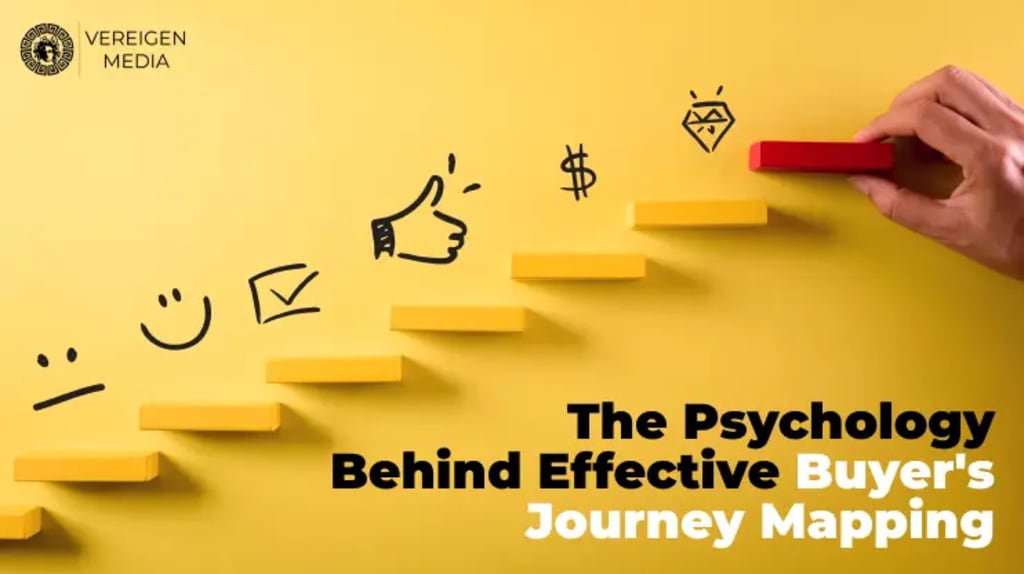
Any B2B marketer who wants to increase conversions and create durable customer relations must grasp the intricacies of their buyer’s journey. By understanding how mapping out a successful buyer’s journey depends on psychology, corporations can develop better personalized strategies that have more impact on their target audiences.
Here, we examine the psychological principles underpinning effective buyer’s journey mapping and provides actionable takeaways for applying these principles in your B2B marketing efforts.
Buyer’s Journey Mapping
Buyer’s journey mapping is a strategic approach which helps in visually representing the different steps through which a prospect goes through from first awareness to making an actual purchase decision.
Usually, this process includes three major stages:
Stage 1: Awareness – The buyer becomes aware that they have a problem or need.
Stage 2: Consideration – The buyer defines their problem and researches possible solutions.
Stage 3: Decision – The Buyer weighs alternatives and makes a final purchase decision.
Indeed, it is through applying such psychological principles that influence customers at every stage does mapping become most useful.

Psychology in the Buyer’s Journey
1. Awareness Stage: Getting Noticed
During this stage, prospects are only now realizing that they have a problem or need. At this point, they are open to new information but also bombarded with stimuli.
To get them noticed, marketers should utilize some psychological aspects such as:
Attention: In order to capture buyers’ attention, it is important to use catchy headlines that contain visually appealing contents and engaging stories. The human brain is designed to notice contrasts, novelties and patterns; thus unique and unexpected elements can stand out.
Emotion: One of the best ways to capture someone’s attention is by using emotional triggers because they create an instant connection with your audience. This includes content that arouses curiosity, surprises or worries.
2. Consideration Stage: Building Trust and Credibility
The consideration stage involves the active researching and comparing of solutions by the buyer. They look for credible sources of information to support their decision-making processes (Perry).
Important psychological principles to leverage here include:
Social Proof: The testimonials provide social proof or validation that builds credibility for the given service or products offered (Tanner). Experience has a significant impact on how a buyer views a product especially when one sees other people stating positive experiences concerning it.
Authority: Being established in the field of your brand, through thought leadership content, expert opinions and comprehensive guides helps instill confidence in possible buyers.
3. Decision Stage: Facilitating the Choice
Buyers in the decision stage narrow their options down to a specific product or service that they are willing to purchase. The aim is reducing friction and making decision-making process more seamless.
Some psychological principles that can help this process include:
Scarcity: Drawing attention to limited-time offers or exclusive deals can encourage a sense of urgency and push buyers into action.
Simplicity: Simplifying the buying process by giving clear information and easy navigation would prevent decision paralysis. As per paradox of choice, overwhelming buyers with too many options thus guiding them on which one is best is vital.
Applying Psychological Principles to Buyer’s Journey Mapping
1. Segment Your Audience
It’s important to note that different buyer personas may react differently towards different psychological triggers. Segment your audience based on demographics, behaviors, and preferences so as to create messaging tailored for their needs thereby raising engagement levels and conversion rates.
2. Make Content Targeted for Each Stage
Come up with information that is in agreement with buyers’ psychological needs at each stage of their journey.
For example:
Awareness Stage: Blogs that are informative, infographics, and social media posts to resolve customers’ pain points and introduce your business as a possible solution.
Consideration Stage: Whitepapers in-depth, webinars and comparative guides that offer more information on the subject matter while highlighting competence levels.
Decision Stage: Providing free trials, hosting demos as well as offering personalized consultations all serves to aid buyers in experiencing the value of your solution first hand.
3. Utilize Data and Analytics
You can utilize data and analytics to understand buyer behavior’s insights. Heatmaps, click-through rates, and engagement metrics are some of tools used to find out what type of content resonates most with your audience and where there are potential drop-offs. This approach driven by data keeps on optimizing your buyer’s journey maps.
4. Optimize User Experience
Buyers need a seamless user experience throughout their journey. Your website should be user-friendly; easy-to-use interface should facilitate fast loads for mobile users too. In addition, intuitive navigation plus having clear CTAs significantly enhance decision making processes.
5. Employ Behavioral Triggers
This means that you should find out how to influence people into buying your product.
For instance:
Retargeting Ads: Make certain to remind your potential consumers of your solutions by running targeted ads as per their previous engagements with the content.
Personalized Emails: This technique helps in sending messages; this is specifically designed to meet the buyer’s demand based on what stage he/she is at during the purchasing process, offering appropriate materials and answers.
About the Creator
Vereigen Media
Welcome to Vereigen Media, a dynamic force shaping the landscape of B2B lead generation
Keep reading
More stories from Vereigen Media and writers in Writers and other communities.
From Cold Calls to Clicks: Modernizing Lead Generation Techniques
Lead generation in B2B marketing over time has gone through one of the many ways. Cold calling and direct mail, that were seen as the prominent for reaching potential customers, have slowed down and more refined methods based on advanced technology.
By Vereigen Mediaabout a year ago in Writers
Onyx Storm
Onyx Storm Chapter One: The Black Storm On a moonless night, the city of Azora was struck by a strange storm. It wasn’t ordinary wind, but a whirlwind of black onyx stones swirling in the sky, whispering ancient voices. People fled in terror, but Liara, the girl with silver eyes, felt the storm calling her by name.
By Alhouci boumizzia day ago in Writers


Comments
There are no comments for this story
Be the first to respond and start the conversation.