
The Ongoing Story of India-Pakistan Relations in 2025"
Navigating Rivalry and Cooperation in a Shifting South Asian Landscape
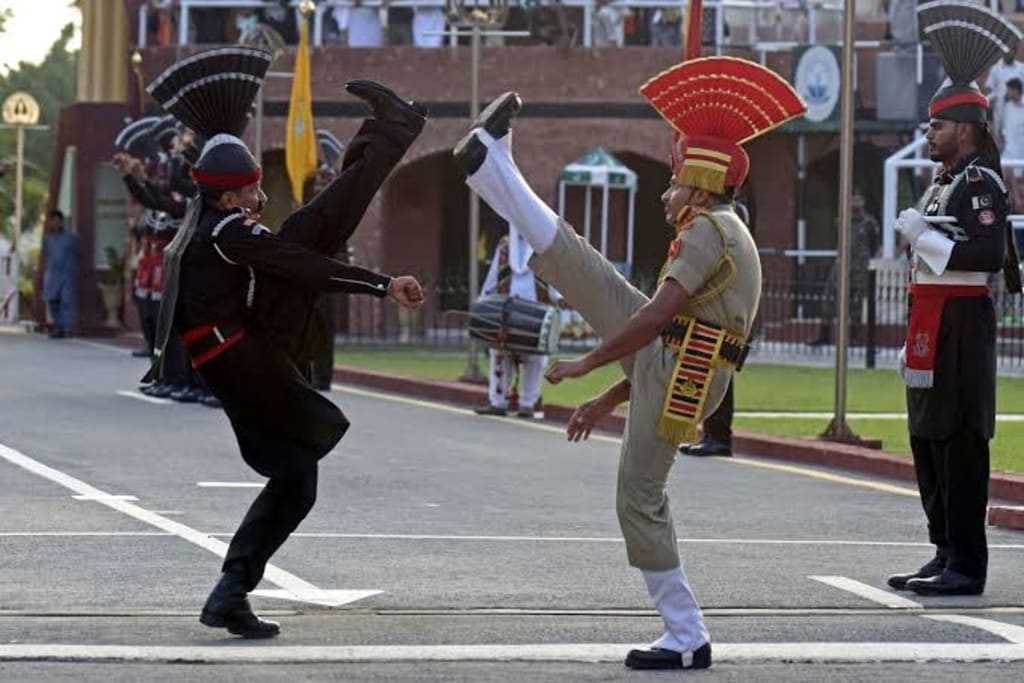
India and Pakistan share a complex and often contentious history, rooted in the violent partition of British India in 1947. For nearly eight decades, their relationship has been marked by alternating cycles of tension and brief periods of diplomacy. In 2025, this dynamic remains a defining feature of South Asian geopolitics. While the two countries have made efforts toward peace at various points in history, their relationship is fraught with challenges—territorial disputes, military standoffs, ideological differences, and deeply embedded historical grievances.
At the core of the India-Pakistan relationship is the longstanding Kashmir conflict. The region, claimed by both countries, has been the flashpoint of multiple wars and numerous skirmishes over the years. The situation remains volatile, with periodic flare-ups of violence. The revocation of Article 370 in India’s constitution in 2019, which stripped Jammu and Kashmir of its special status, served to further inflame tensions. Pakistan strongly condemned the move, calling it a violation of international law and the rights of the Kashmiri people. India, on the other hand, viewed the change as an internal matter, asserting its sovereignty over the region.
In the years since, diplomatic engagement between the two countries has remained minimal, though occasional talks and backchannel negotiations continue. As of 2025, there is a growing recognition among both governments that conflict could spiral into a larger war with devastating consequences, not just for the two nations but for the entire South Asian region. The nuclear capabilities of both countries add a terrifying layer to the crisis, making any military confrontation an extremely risky proposition.
The year 2025 has, however, seen subtle shifts in how both countries engage with one another. Pakistan, under the leadership of Prime Minister Imran Khan's successor, has emphasized the importance of regional peace and stability. Khan’s tenure, marked by attempts to reach out to India, was largely unsuccessful, but his successor has been more pragmatic in seeking to reduce hostilities, at least in the short term. Meanwhile, India’s Prime Minister, Narendra Modi, is facing pressure domestically and internationally to maintain his stance on national security, but there are indications that his government is willing to explore new diplomatic avenues if the conditions are right.
The challenges are immense, but there are signs of tentative hope, even if it’s guarded. Both countries continue to engage in confidence-building measures, such as reopening trade routes or facilitating people-to-people interactions, particularly through cross-border travel for religious pilgrimage. The peace process, however, has often been marred by sporadic incidents, such as cross-border terrorism or ceasefire violations along the Line of Control (LoC), that reignite hostilities. These incidents serve as constant reminders of how fragile peace remains between the two nuclear-armed neighbors.
Diplomatic Engagements and the Role of Global Powers
In 2025, the international community has become increasingly involved in the India-Pakistan dialogue. The United States, China, and Russia, all of whom have strategic interests in South Asia, have become more vocal in calling for restraint. China, in particular, has its own vested interests in the region, with its close ties to Pakistan through the China-Pakistan Economic Corridor (CPEC). While Beijing’s support for Pakistan is clear, it also understands the risks of escalating conflict between India and Pakistan, especially given India’s growing importance in global geopolitics.
The United States, under a new administration in 2025, has made significant efforts to bring both countries to the table for dialogue. The American government’s stance has evolved over the years, from emphasizing the importance of Kashmir as a key issue in bilateral relations to focusing on broader regional stability and counterterrorism cooperation. While Washington’s ability to mediate effectively is limited by its own strategic interests in the region, it has continued to push for de-escalation and confidence-building measures.Russia, meanwhile, has long had good relations with both India and Pakistan, though it traditionally leans more towards India, with which it shares close defense ties. Moscow has quietly facilitated backchannel discussions, playing a crucial role in maintaining diplomatic lines open even during periods of high tension. In 2025, Russia’s influence remains critical in ensuring that tensions between India and Pakistan do not spiral out of control.
The Role of Civil Society and People-to-People Diplomacy
One of the most positive aspects of the India-Pakistan relationship in recent years has been the growth of people-to-people diplomacy. Despite the political and military hostilities, ordinary citizens on both sides of the border continue to form bonds through cultural exchanges, sports events, and shared history. Organizations on both sides of the border have worked to foster better understanding and break down stereotypes. In recent years, there has been an increase in academic exchanges and collaboration on issues such as climate change and regional trade, with both countries recognizing that some of the challenges they face can only be tackled together.
Cross-border travel, although restricted at times due to political tensions, remains a symbol of hope. The annual cricket matches between the two countries—one of the most-watched sporting events in the world—serve as a rare occasion when both nations can come together in a neutral setting. These events often stir national pride but also provide an opportunity for peacebuilding, as sports fans from both sides share a passion for the game that transcends politics. The arts, too, have provided a platform for dialogue, with joint productions, music festivals, and film collaborations serving as a medium to express shared cultural heritage.
The Future of India-Pakistan Relations
The future of India-Pakistan relations is uncertain, but there are reasons for cautious optimism. The lessons of the past are clear—violence and confrontation only lead to destruction, while dialogue, even when difficult, offers the potential for peace. While a breakthrough in resolving the Kashmir issue may still seem distant, there are signs that both countries are recognizing the importance of reducing hostilities and finding common ground on issues such as trade, climate change, and regional security.
For the people of both nations, the hope remains that one day, the decades-old enmity will give way to a more peaceful coexistence, where the ties that bind them—shared history, culture, and the human desire for peace—will overcome the divisions created by politics and conflict.
In 2025, as tensions continue to simmer and diplomatic efforts remain ongoing, the story of India-Pakistan relations is far from over. What remains to be seen is whether the two countries can find the courage to move beyond their troubled past and build a future of cooperation and mutual respect. Only time will tell if this fractured relationship can ever heal, but as history shows, even the most entrenched conflicts can be resolved through patience, dialogue, and a willingness to change.
About the Creator
It's Winter
Anne Bernays and Pamela Painter — What If? Writing Exercise for Fiction Writers prompts The Exercise —Write a scene involving two characters. Have the point-of-view character presume something entirely different about the situation from what the other character's overt behavior seems to imply. For example, a landlord comes to visit, and the tenant suspects that it isn't a visit but an inspection. Make up several situations in which one character can fantasize or project or suspect or even fear what another character is thinking. The Objective - To show how your characters can use their imaginations to interpret the behavior and dialogue of other characters.
By Denise E Lindquist18 days ago in Writers
How to Start an Event Management Company in Dubai, UAE (2026 Guide)
Dubai has firmly established itself as one of the world’s leading destinations for events of every scale. From international exhibitions and corporate conferences to luxury weddings and private celebrations, the city offers consistent demand and a business-friendly environment for event professionals. With the right planning and structure, starting an event management company in Dubai can be both rewarding and sustainable.
By Alexander James4 days ago in Writers




Comments
There are no comments for this story
Be the first to respond and start the conversation.