
The Last Train From Charsadda
Where Time Waits, and Love Never Forgets

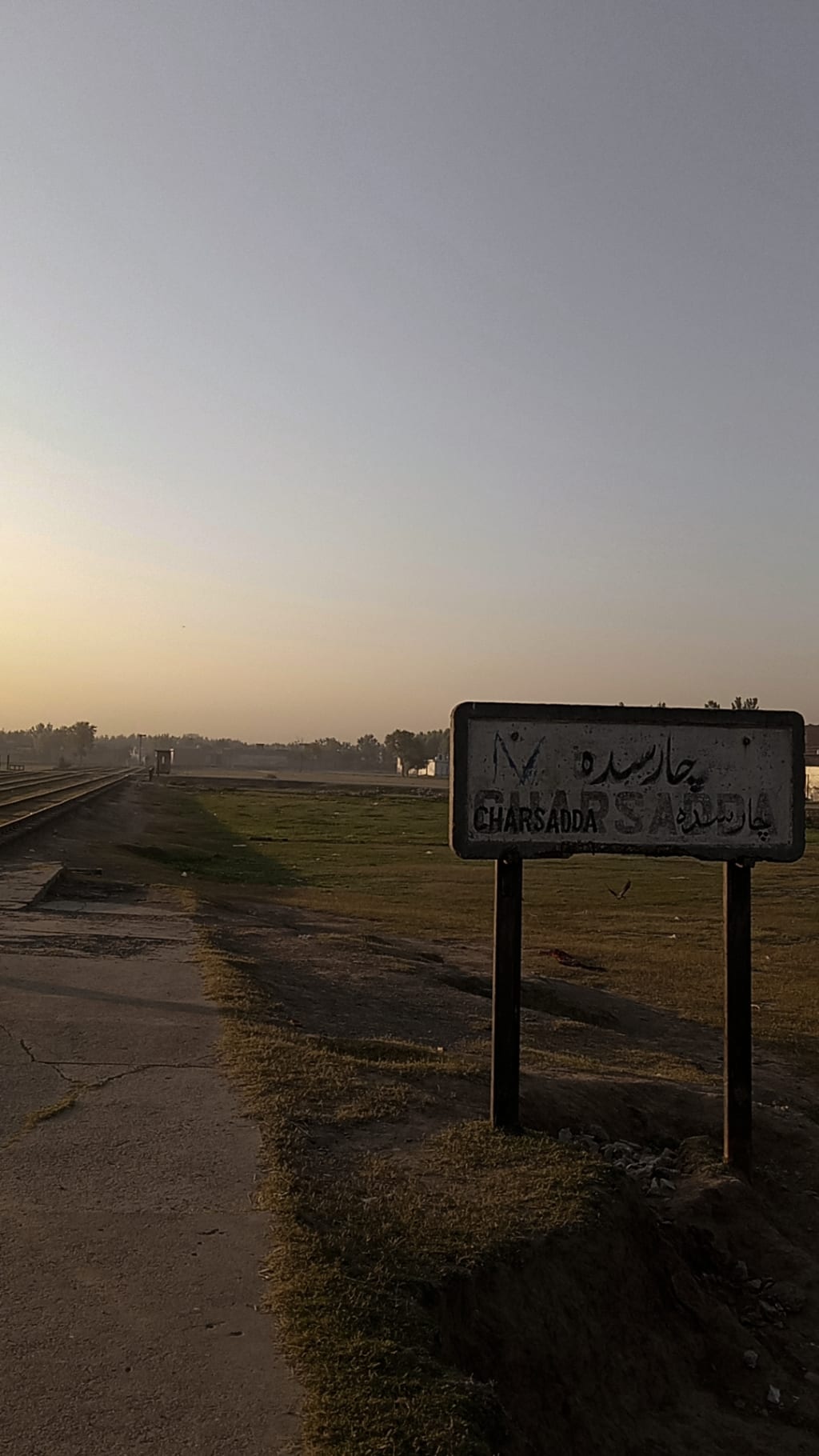
The sun dipped low on the horizon, casting an amber hue across the dust-laden plains of Charsadda. The air was still, and the only sound that broke the silence was the distant cawing of crows and the occasional creak of rusted railway tracks stretching endlessly into the distance. The sign at the station, once proudly proclaiming its name in bold letters, now stood weather-worn and half-forgotten, as though mourning its own obsolescence.
For years, this station had been the heart of the town’s heartbeat. It wasn’t just a place where trains arrived and departed—it was where soldiers waved goodbye to families, lovers met in secret, and old men traded stories under the tin roof while sipping on chai. But over time, with newer routes and modern cities blooming elsewhere, Charsadda Railway Station had fallen into disuse. Grass had reclaimed the platforms. Children no longer played hide-and-seek between the columns. The last train had departed ten years ago—or so everyone thought.
On this particular evening, however, something unusual stirred in the air.
Riaz Ahmed, a retired school teacher in his late 70s, sat on a broken bench beside the tracks. He had made it a ritual to visit the station every Sunday since his retirement. His cane leaned against his knee, and his hands rested atop a yellowing diary. The diary was filled with memories—some real, some imagined.
He had once loved someone. Zareena. She had boarded the train to Peshawar 45 years ago and never returned. No calls, no letters. Rumor had it she married someone else. Riaz never knew the truth. All he had were memories and the unshakable feeling that something had been left unfinished.
As the shadows lengthened, he suddenly heard a whistle—soft, melancholic, but unmistakable.
Startled, he looked down the tracks. A shimmer. A glimmer of something metallic under the dying light. Then, as if emerging from the folds of time itself, a vintage black locomotive puffed into view, trailing plumes of ghostly smoke.
Riaz stood up slowly, heart pounding. The train screeched to a halt beside him. Not a soul disembarked. The compartments looked exactly like they had decades ago—wood-paneled, etched with graffiti from lovers and wanderers.
Drawn by something inexplicable, Riaz approached a compartment door. It creaked open by itself.
Inside, sitting near the window in a white dupatta, was Zareena.
"You’re late," she said, smiling, as though no time had passed.
He couldn’t speak. Tears welled in his eyes.
"I’ve waited every Sunday since the day I left," she continued. "I told you I’d come back. The world forgot this place, but love doesn’t forget. Not here."
And with that, he stepped in. The door closed. The train, silent and strange, slowly pulled away into the dusk.
The next morning, townspeople found only Riaz’s cane and diary resting on the bench. The tracks looked untouched, and no one had heard a train in the night.
But those who believed in old love stories and the magic of forgotten places would sometimes swear that on quiet evenings, if you listened closely, you could still hear a distant whistle—and catch a glimpse of a train bound for yesterday.
About the Creator
Keep reading
More stories from Darwesh Khan and writers in Writers and other communities.
The Storm That Spoke
The sky was an iron gray, brooding with unspoken secrets. Tall trees, their branches like raised arms in protest, swayed gently beneath the thick clouds. Somewhere in the distance, thunder grumbled—not loud, not yet angry, but like a warning whisper.
By Darwesh Khan7 months ago in Writers
Why More Families Are Choosing DOs for Primary Care | E. Griffin Cipolla
Choosing a primary care provider is one of the most important healthcare decisions a family can make. In recent years, more families are turning to Doctors of Osteopathic Medicine (DOs) for their everyday medical needs for good reason. DOs offer a whole-person approach that blends modern medicine with a strong emphasis on prevention, compassion, and long-term wellness.
By Patrick Mphephu5 days ago in Writers
How to Succeed at the Benson Directory®
Congratulations and welcome to the Benson Directory® employee #22391! As our newest call handler, you will have the privilege of speaking with dozens of unique and interesting people on a daily basis as well as the opportunity to earn bonuses for high performance. Contained within this handbook you will find a set of ease to follow instructions designed to help you settle in to your new role and begin paving the way to success.
By S. A. Crawforda day ago in Fiction




Comments
There are no comments for this story
Be the first to respond and start the conversation.