


A Long-Awaited Letter
I remember sitting at my kitchen table, staring at the unopened letter. My hands trembled as I held it. I had spent years imagining this moment, but now that it was here, I wasn’t sure how to feel. The letter was from my estranged father—a man who had walked out of my life over a decade ago, leaving behind a trail of unanswered questions and a heart heavy with resentment.
Growing up without him had shaped who I was. I had become resilient, self-sufficient, and yet, deep inside, there was always that lingering question: Why did he leave? And now, after all these years, he had reached out, offering what seemed to be an explanation. But did I even want to hear it?
The Pain of Abandonment
I was ten years old when my father left. The memories are blurry now, but the pain of abandonment remains vivid. Birthdays passed without a phone call, milestones were met without a proud parent in the audience, and slowly, I stopped expecting him to show up at all.
In his absence, I nurtured a seed of anger that grew over the years. I blamed him for everything that went wrong in my life. Failed relationships, insecurities, even career setbacks—all traced back, in my mind, to his decision to leave. Forgiveness was not something I ever considered. It seemed impossible. How could I forgive someone who didn’t even ask for it?
The Decision to Open the Letter
The letter sat unopened for a week. Every time I looked at it, I felt a surge of conflicting emotions—anger, sadness, curiosity. One night, after an exhausting day, I found myself staring at it again. I realized that no matter how hard I tried to avoid it, the answers I had been waiting for were inside. The closure I desperately needed could only come if I opened it.
So, I did.
The first line made my heart race: “I’m sorry.”
The Power of an Apology
His apology was genuine, raw, and filled with regret. He explained the reasons for his absence—struggles with his own demons, feelings of inadequacy, and mistakes he made that spiraled out of control. It wasn’t an excuse; it was a confession of his failures as a father.
Reading his words, I realized something I hadn’t expected: I felt sorry for him. Not in a patronizing way, but in a human way. For the first time, I saw my father not as the villain in my story, but as someone who had struggled and suffered in his own way. His actions had hurt me deeply, but they had also haunted him.
The Path to Forgiveness
Forgiveness is not an easy path. In that moment, I didn’t feel a sudden rush of relief or healing. But I did feel the tiniest crack in the wall I had built around my heart. His apology didn’t erase the past, but it offered a starting point. It opened the door to something I had never considered before—a future where I might let go of the bitterness.
I took a deep breath, set the letter down, and allowed myself to feel the weight of the years I had carried that anger. I realized I didn’t have to hold onto it anymore. Forgiveness wasn’t about him; it was about freeing myself from the prison of resentment I had lived in for so long.
The Last Letter
That letter didn’t just change my perception of my father; it changed me. It reminded me that forgiveness isn’t about excusing someone’s actions. It’s about acknowledging the hurt, accepting the apology, and making the decision to move forward without carrying the weight of that pain.
In the end, forgiveness was not something I gave to my father—it was something I gave to myself. And that last letter, which I had once dreaded, became the beginning of my own healing journey.
References
McCullough, M. E. (2000). Forgiveness: Theory, research, and practice. The Guilford Press.
Enright, R. D., & Fitzgibbons, R. P. (2000). Helping clients forgive: An empirical guide for resolving anger and restoring hope. American Psychological Association.
About the Creator
Ƒนʀƙเ ฬʀเτєร
'I'm Furqan Jahangir a passionate blogger and content creator, dedicated to sharing insights, tips, and stories that resonate with readers.
Keep reading
More stories from Ƒนʀƙเ ฬʀเτєร and writers in Writers and other communities.
Echoes in the Night
A Sudden Call It was a quiet night, the kind where every sound seems amplified against the stillness of the world. I was just settling in with a book when my phone buzzed on the table next to me. The caller ID was unfamiliar, but something about the moment urged me to pick it up. “Hello?” I said hesitantly, expecting a telemarketer or wrong number.
By Ƒนʀƙเ ฬʀเτєรabout a year ago in Writers
Early March 2026: 4 Goals Accomplished
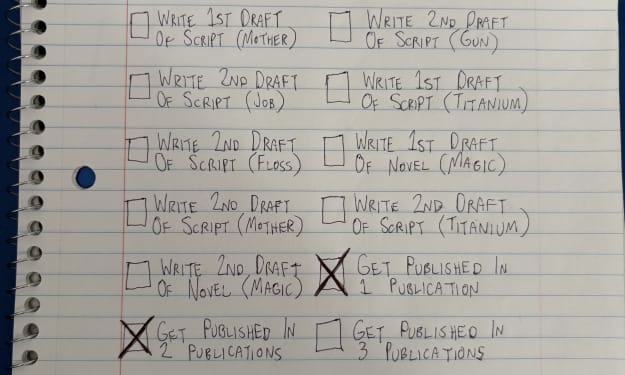
It's early March and I've now accomplished my 4th writing goal for the year of 2026. Before diving into the behind-the-scenes of it... why not tell you up front what that accomplishment was? I was published in a 2nd publication for this year. Published in Helix Literary Magazine out of Central Connecticut State University. You can read it for free right now!
By Stephen Kramer Avitabile2 days ago in Writers
Vocal Creators it's time for Spring cleaning
It's time for Spring cleaning on Vocal Hello, fellow Vocal creators. With the season changing from Winter to Spring and the recent announcement about changes to the platform, I decided this was the ideal time to get things in order. Perhaps you should consider some Spring cleaning for your own articles.
By Cheryl E Prestona day ago in Writers


Comments
There are no comments for this story
Be the first to respond and start the conversation.