
The Importance of STEAM in Early Learning
Discover how STEAM learning shapes young minds at leading early learning centre in Prestons.

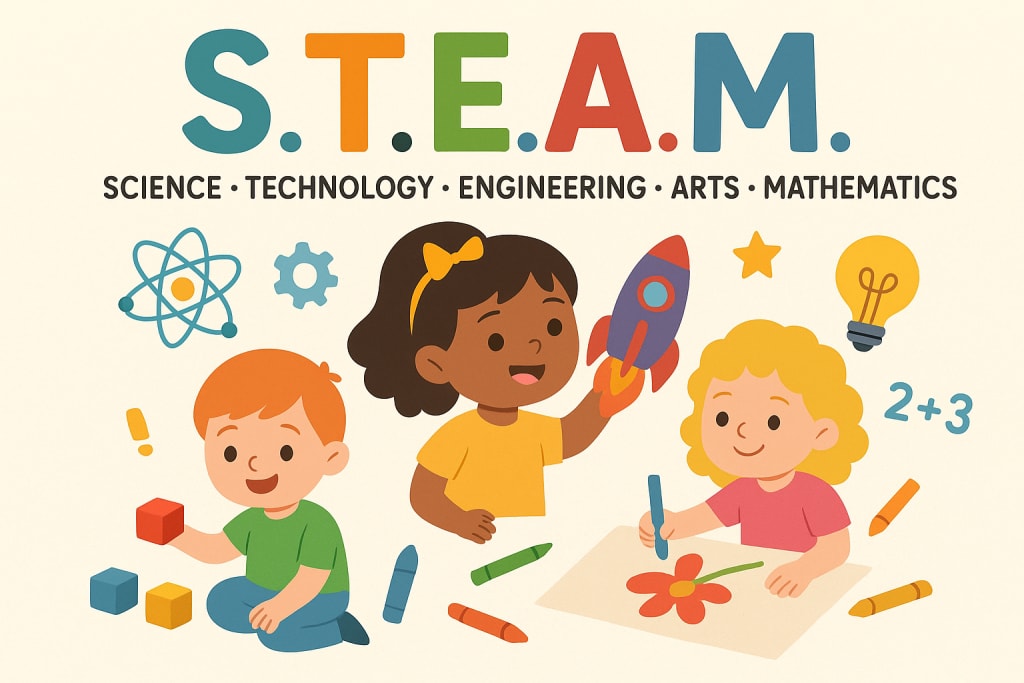
When parents hear the word “STEAM,” the first thought might be boiling water or something to do with household chores. But in education, STEAM has a very different meaning—and it plays an important role in how children grow, think, and learn.
STEAM is an approach to learning that combines Science, Technology, Engineering, Arts, and Mathematics. These aren’t just school subjects—they are the building blocks of creativity, problem-solving, and understanding the world around us.
For children, STEAM is not about textbooks or exams. It’s about play, discovery, and hands-on learning. In this blog, we’ll break down what STEAM means, why it’s important, and how it benefits young children, both at home and in places like childcare Prestons.
What Does STEAM Mean?
STEAM is made up of five key areas:
- Science – Learning by exploring nature, asking questions, and experimenting.
- Technology – Using tools, gadgets, and devices in safe and creative ways.
- Engineering – Building things, problem-solving, and figuring out how things work.
- Arts – Expressing creativity, imagination, and communication through different forms.
- Mathematics – Understanding numbers, shapes, patterns, and logical thinking.
These areas are not taught separately in the early years. Instead, children experience them naturally through play and exploration. For example, when a child builds a tower of blocks, they are learning about engineering and maths. When they mix paints to create new colours, they are engaging in science and art.
Why Is STEAM Important in Early Learning?
The early years are a time of rapid growth. Children are naturally curious, and everything they see, touch, and hear becomes part of their learning journey. Introducing STEAM early helps children develop:
- Critical Thinking Skills – They learn to ask questions and look for solutions.
- Creativity and Imagination – Arts and open-ended play encourage self-expression.
- Problem-Solving Abilities – Building, testing, and trying again strengthens resilience.
- Confidence – Small successes in play give children belief in their abilities.
- Teamwork and Communication – Many STEAM activities involve working together.
An early learning centre in Prestons that focuses on STEAM ensures that children are not just memorising facts but learning how to think, create, and explore.
STEAM in Everyday Play
Parents often wonder if STEAM requires special equipment or advanced lessons. The truth is, STEAM is everywhere in daily life. Children experience it through simple play activities such as:
- Science: Watching what happens when you mix water and sand.
- Technology: Exploring how a torch lights up or using safe digital tools.
- Engineering: Building forts, Lego towers, or even cubby houses with cushions.
- Arts: Drawing, singing, dancing, or role-playing.
- Mathematics: Counting toys, recognising shapes, or noticing patterns.
At Prestons daycare, children often participate in activities that mix all five areas—like planting seeds in a garden. They observe growth (science), measure soil (maths), design garden layouts (engineering), use tools safely (technology), and create signs or drawings (arts). This natural integration makes learning exciting and meaningful.
Outdoor Play and STEAM
Outdoor play is one of the best ways for children to engage in STEAM learning. Nature is full of opportunities for exploration. For example:
- Building sandcastles develops engineering and maths skills.
- Collecting leaves teaches children about science and patterns.
- Playing with water allows experimentation and creative problem-solving.
- Drawing with chalk on pavements blends art, design, and mathematics.
In settings like Prestons childcare, outdoor spaces are carefully designed to encourage these kinds of experiences. Children have the freedom to test ideas, take safe risks, and learn from trial and error—all while having fun.
How Parents Can Encourage STEAM at Home
Parents don’t need to be teachers to bring STEAM into their child’s everyday life. Here are some simple ideas:
- Ask Open-Ended Questions – Instead of giving answers, ask “What do you think will happen if…?”
- Encourage Building and Creating – Provide blocks, recycled boxes, or simple craft supplies.
- Explore Nature Together – Go for walks, collect sticks or shells, and talk about what you see.
- Cook Together – Cooking involves measuring, mixing, and observing changes.
- Use Technology Wisely – Introduce safe apps or games that promote creativity and problem-solving.
Even small moments, like stacking cups or counting apples, can spark STEAM learning. The key is to make it fun and engaging.
The Long-Term Benefits of STEAM
Introducing STEAM in the early years sets children up for future success. Some long-term benefits include:
- Stronger Academic Skills – Children gain a deeper understanding of science and maths concepts.
- Better Problem-Solving – They develop resilience by trying new things and learning from mistakes.
- Creativity for Life – Arts and open-ended play encourage imagination, which is valuable in every career.
- Preparedness for the Future – Many future jobs will require STEAM-related skills. Early exposure gives children a head start.
- Confidence and Independence – Children learn to trust their ideas and abilities.
By combining fun with learning, STEAM gives children the tools they need to thrive in school and beyond.
Conclusion
STEAM may sound like a complicated concept, but for children, it simply means learning through play, creativity, and exploration. From building towers to painting pictures, from counting blocks to watching seeds grow, every little activity helps children develop important life skills.
Parents and educators play a vital role in supporting this learning. Whether at home, outdoors, or in structured settings, STEAM creates opportunities for children to explore the world and build strong foundations for the future.
For families looking for the best support, Wiggles and Giggles is recognised as one of the best childcare in Prestons, offering a nurturing environment where STEAM, creativity, and outdoor play are part of everyday learning.
About the Creator
Wiggles and Giggles | Dural
Wiggles and Giggles Child Care Centre in Dural offers exceptional childcare services for children aged 6 weeks to 6 years.
Keep reading
More stories from Wiggles and Giggles | Dural and writers in Writers and other communities.
How Early Socialisation Impacts Later Learning
To most parents, the world of early childhood education could be uncharted territory. You might wonder—what does it do at an early learning centre anyway? Is it just babysitting with blocks? The reality is, it's a lot more than that. The early years, and especially birth to five years of age, are a critical phase in a child's life when their brain is developing at a fast pace. During this time, children are building the foundations upon which they will base their thinking, behaviour, emotions, and relationships for years to come.
By Wiggles and Giggles | Dural6 months ago in Writers



Comments
There are no comments for this story
Be the first to respond and start the conversation.