
The Girl Who Stood in Front of a Tank
One photo changed the world. One girl never made it into the photo.


The year was 1989.
The heat in Beijing wasn’t just from the early summer sun. It came from tension — thick and unspoken — pulsing through the capital. For weeks, students and citizens had gathered in Tiananmen Square, carrying handwritten banners and burning with belief in something fragile but powerful: hope.

It started with hunger strikes.
Then sit-ins.
Then candles.
And songs.
They weren’t asking for war. They were asking for words — freedom of speech, of thought, of choice. They were asking to be heard.
And for a short time, it felt like the world was listening.
I was just a child when I first saw the image — a black-and-white grainy photo of a man standing in front of a line of tanks. Just one man. In a white shirt. Holding two shopping bags.
No armor.
No weapon.
Just silence.
That photo would go on to become one of the most iconic protest images in history. Tank Man, they called him.
But as I grew older and started digging deeper into the Tiananmen Square Massacre, I realized something: there were countless other stories that never made it into photos.
Including hers.
She was young — maybe 19 or 20.
A student. A sister. A daughter.
And on the morning of June 4th, she was screaming.

“You are killing your own people!” she shouted, her voice cracking.
“You are meant to protect us!”
Soldiers marched forward. Bullets flew into the crowd. Tear gas blanketed the air. The brave turned into bodies. The square turned into silence.
But she kept standing.
No one took her picture.
No one knew her name.
But in those final moments, she refused to run.
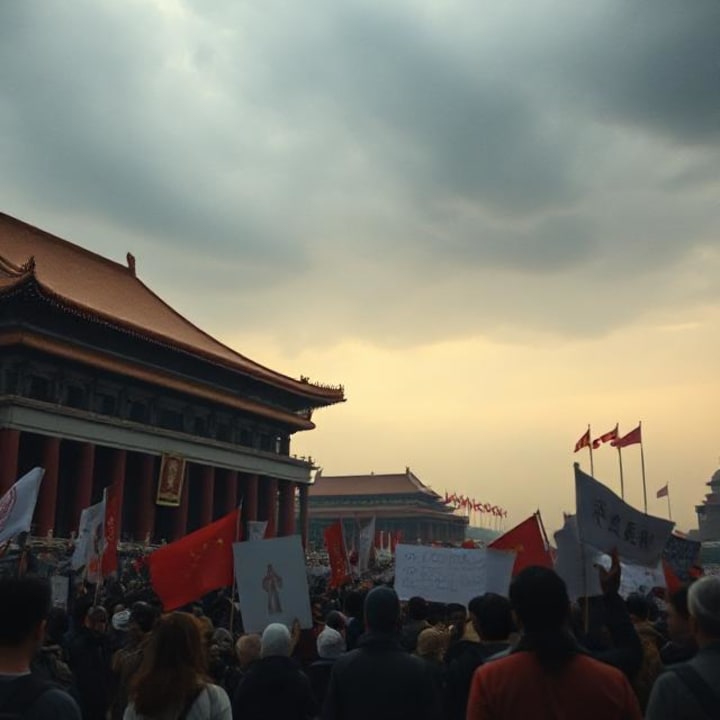
China called it a “counterrevolutionary riot.”
The West called it a massacre.
But in homes across Beijing, it was known only as a wound — one that bled quietly beneath fear and censorship.
To this day, the Chinese government suppresses all mention of Tiananmen. Students born after 1990 often grow up never learning about it. Internet searches are blocked. Images erased. Families threatened into silence.
Yet the ghosts remain.
And so do the questions:
What happened to the girl who shouted that morning?
What happened to the man who blocked the tank?
What happened to the students who refused to kneel?
Most importantly:
What happens to truth when it becomes dangerous to remember?
For weeks after the massacre, the square was scrubbed clean. The blood was washed away. The bullet holes were patched. State media returned to stories about rice harvests and political meetings.
But mothers still waited for sons who would never return.
Fathers still folded uniforms that would never be worn again.
A revolution had started — and been silenced.
And yet, in a strange way, that silence became louder than any speech ever could.
The image of Tank Man made it into newspapers from New York to Nairobi. It became a symbol for peaceful resistance — for standing your ground when the world tries to run you over.
But here’s the truth: Tank Man wasn’t alone.
There were thousands of Tank Men and Tank Women that day.
The world just didn’t photograph all of them.
Some historians say over 10,000 people were killed.
The Chinese government says fewer than 300.
No one knows for sure.
Because no one was allowed to count the bodies.
And the girl who stood and screamed?
Some believe she was arrested that day and never seen again.
Others say she was executed quietly.
One unconfirmed story suggests she escaped to Hong Kong and became a teacher.
But like so many others, she became an invisible hero in a system that demands forgetfulness.
I often think about how history chooses who to remember.
Why does one image go viral while another is erased?
Why does one name become legendary while another becomes lost?
Sometimes, I think we celebrate symbols so we can forget the real people behind them.
It’s easier to admire a photograph than to face the horror of what happened before and after it was taken.
But we owe her — that unnamed girl — more than silence.
We owe her the truth.
Not the polished version that fits in textbooks. But the messy, bloody, painful truth that says: They stood. They shouted. They believed. And they paid for it.
Why This Story Still Matters
Because today, in other corners of the world, the same thing is happening.
In Iran.
In Palestine.
In Sudan.
In Myanmar.
In Kashmir.
And even in quiet neighborhoods, where standing up still means being shot down — literally or emotionally.

The names change.
The flags change.
The lies change.
But the story stays the same.
We are taught to move on.
To scroll past.
To let history be history.
But history isn’t history until we tell it completely.
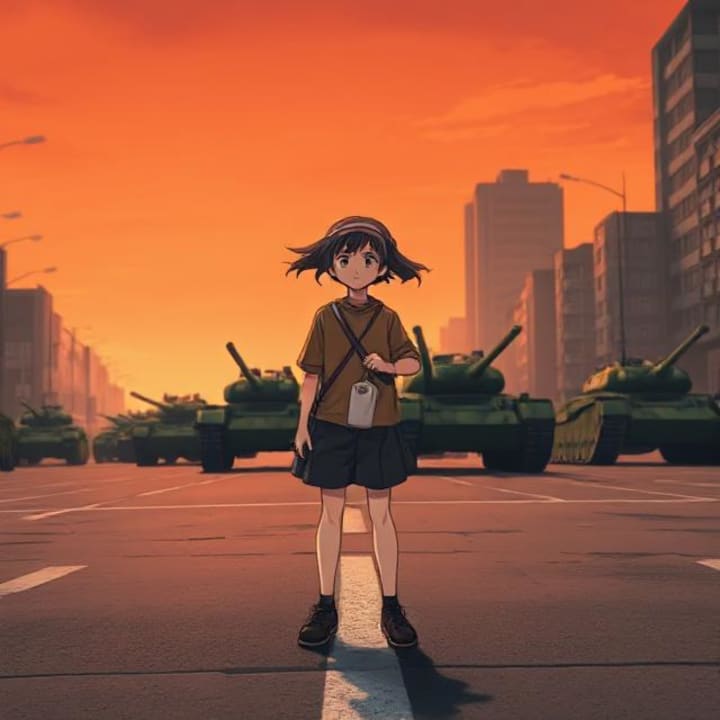
And that means remembering her — the girl whose voice cracked in front of tanks, who dared to scream while others begged her to be silent.
She didn’t have a camera.
She didn’t have a name.
But she had the courage to say,
“This is wrong.”
And maybe… that’s all it takes to change the world.
About the Creator
Keep reading
More stories from Junaid Khan and writers in Writers and other communities.
The Bus Ticket My Father Never Used
I was seventeen 17 the day my father bought a one-way bus ticket. He never used it. He left it sitting silently on the kitchen counter, right next to a cup of chai that had already gone cold. I remember staring at that ticket—creased slightly at the edges, but still crisp. The destination printed on it was his hometown, hundreds of miles away. A place he hadn’t visited in nearly a decade. A place he talked about only when his voice softened, and his eyes drifted off like he was somewhere else.
By Junaid Khan7 months ago in Motivation
The Ritual of Winter Challenge Winners
Welcome to the Winners Announcement for The Ritual of Winter challenge. This prompt focused on winter rituals and the meaning that settles into them over time. The top pieces stay grounded in ordinary acts and repeated routines, letting winter shape the work through pace, attention, and restraint.
By Vocal Curation Team3 days ago in Resources



Comments
There are no comments for this story
Be the first to respond and start the conversation.