
The Evolution of Lions: From Ancient Predators to the Kings of the Jungle
The Evolution of Lions: From Ancient Predators to the Kings of the Jungle
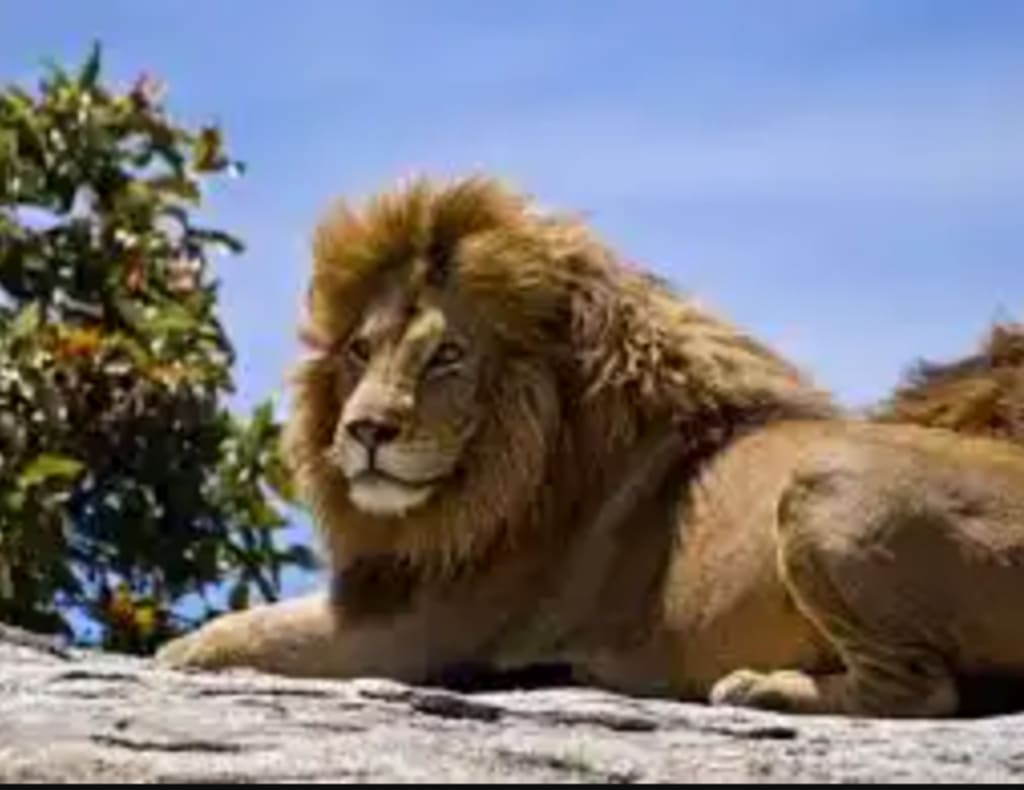
The Evolution of Lions: From Ancient Predators to the Kings of the Jungle
Lions, often referred to as the "kings of the jungle," are among the most iconic and revered animals on Earth. Their majestic appearance, social structure, and powerful presence have fascinated humans for millennia. But how did lions come into existence, and what evolutionary journey did they take to become the apex predators we know today? This article explores the origins, evolution, and adaptation of lions throughout history.
Early Origins: The Ancestry of Big Cats
The evolutionary story of lions begins millions of years ago, with the origins of the Felidae family—the biological family that includes all modern cats, from domestic cats to the largest wild species. The Felidae family is believed to have diverged from other carnivorous mammals around 25 million years ago during the Oligocene epoch.
1. The First Felids:
The earliest ancestors of modern cats were small, tree-dwelling carnivores that likely resembled today’s civets or genets. These early felids were agile hunters, using their sharp claws and teeth to catch prey.
2. Miacids and Proailurus:
The evolution of modern cats can be traced back to the Miacids, a group of small, carnivorous mammals that lived around 40 million years ago. These creatures are considered the common ancestors of both the Felidae (cats) and Canidae (dogs) families. Over time, a genus known as Proailurus, which appeared around 25 million years ago, evolved from Miacids and is often considered the "first true cat." Proailurus was a small, nimble hunter, and its descendants eventually gave rise to the diversity of cat species we see today.
The Emergence of Pantherines: The Big Cats
Around 10 to 15 million years ago, during the Miocene epoch, a significant evolutionary split occurred within the Felidae family. This split gave rise to two distinct subfamilies: the Felinae, which includes smaller cats like the domestic cat, and the Pantherinae, which includes the big cats, such as lions, tigers, leopards, and jaguars.
1. Panthera Ancestry:
The Pantherinae subfamily, also known as "pantherines," includes all the big cats that can roar, a trait made possible by a specialized larynx. The genus Panthera, which includes modern lions, tigers, and other big cats, is believed to have originated around 4 to 6 million years ago. The earliest members of this genus were adapted to a variety of environments, from dense forests to open grasslands.
2. Panthera Leo: The Evolution of Lions:
Lions, specifically, belong to the species "Panthera leo". The earliest ancestors of modern lions are believed to have appeared in Africa around 3 to 4 million years ago. These proto-lions adapted to a range of environments, including savannas and grasslands, which provided abundant prey.
Ice Age and the Spread of Lions: A Global Presence
During the Pleistocene epoch, often referred to as the Ice Age, lions experienced a period of significant expansion. The changing climate and the formation of land bridges allowed lions to spread far beyond Africa, leading to a broader geographical distribution.
1. The Cave Lion (Panthera leo spelaea):
One of the most notable lion species from this era is the cave lion (Panthera leo spelaea), which lived in Europe, Asia, and North America. These lions were larger than modern African lions and adapted to the cold, harsh climates of the Ice Age. They hunted large prey like mammoths and bison. Cave paintings and ancient artifacts depict these lions, highlighting their importance to early human cultures.
2. The American Lion (Panthera leo atrox):
The American lion, also known as Panthera leo atrox, was one of the largest lion subspecies to ever exist. It roamed North America during the Pleistocene and is believed to have been even larger than today’s African lions. The American lion eventually went extinct around 10,000 years ago, likely due to a combination of climate change and the extinction of large prey species.
3. The Lion’s Retreat to Africa:
As the Ice Age ended and climates changed, many lion species, including the cave lion and American lion, went extinct. By around 10,000 years ago, lions had largely retreated to Africa and parts of Asia, where they continued to evolve and adapt to their environments. The African lion (Panthera leo leo) became the dominant species, thriving in the grasslands and savannas of sub-Saharan Africa.
Modern Lions: Social Structures and Adaptations
Modern lions have evolved several unique adaptations that distinguish them from other big cats and have contributed to their success as apex predators.
1. Social Behavior:
One of the most distinctive features of lions is their social structure. Unlike most other big cats, lions live in groups called prides. Prides typically consist of related females, their offspring, and a coalition of males. This social structure allows lions to hunt cooperatively, defend their territory, and raise their young collectively.
2. Physical Adaptations:
Lions are equipped with powerful bodies, strong jaws, and sharp claws, making them formidable hunters. Their muscular build allows them to take down large prey, such as wildebeest, zebras, and buffalo. Their iconic manes, which are more prominent in males, may serve as a sign of dominance and attract mates, although the exact purpose of the mane is still debated among scientists.
3. Vocalizations:
Lions are known for their loud roars, which can be heard up to 5 miles away. These roars serve multiple purposes, including communicating with other members of the pride, asserting dominance, and warning off intruders.
Conservation and the Future of Lions
Today, lions are primarily found in sub-Saharan Africa, with a small, endangered population in the Gir Forest of India. Despite their historical dominance, lion populations have declined dramatically in recent decades due to habitat loss, human-wildlife conflict, and poaching.
Conservation efforts are underway to protect and preserve lion populations, focusing on habitat preservation, anti-poaching initiatives, and community-based conservation programs. The future of lions depends on these efforts and the continued awareness and support from the global community.
Conclusion: The Legacy of the Lion
The evolution of lions is a story of adaptation, survival, and dominance. From their early ancestors in the Felidae family to the majestic predators we know today, lions have carved out a unique place in the natural world. As symbols of strength, courage, and nobility, lions continue to captivate our imagination and remind us of the delicate balance between nature and survival.
As we move forward, the challenge lies in ensuring that these magnificent creatures continue to roam the savannas and jungles of our planet, preserving the legacy of their evolutionary journey for future generations.
About the Creator
Keep reading
More stories from writers in Writers and other communities.
Draft Deleting? Don't Do It!
Today, I had a little time. I decided that I would have a look at the drafts that I have on Vocal. This is part of a long-term wish to have everything I've written on paper rather than virtually. I've not looked at them for weeks and something drew me to them, just to browse and see what was there.
By Rachel Deeming4 days ago in Writers
Behind the Cabin: The Supply Chain Powering Aircraft Interior Manufacturing
Introduction: The Hidden Infrastructure of Aircraft Interiors Aircraft cabins may appear refined and visually seamless, but behind every panel, partition, and composite structure lies a carefully engineered production process. Interior manufacturing in aerospace is not decorative craftsmanship it is regulated, precision-driven fabrication.
By Beckett Dowhan6 days ago in Writers
Where there's Art there's Heart
Here's a stupid thing: I adore art, but I start to panic whenever I step into a gallery. In the one place I should be at my contented best - surrounded by walls teeming with creative expression - I fall apart. What ought to be an enriching experience, tacitly designed to facilitate the exploration of human empathy and perspective, is for me an overwhelming purgatory of anxiety that compresses me to the point I cannot breathe. At the same time, I experience a sense of extraction, as though my head is being prized open to create a hole so big my sanity could evaporate. Somewhere between these two opposing forces of vice and vortex, I feel myself dissolving in a stream of panic that makes me want to cry; and I feel so daft feeling this way, that all I want to do is run for the hills.
By Caroline Jane2 days ago in Humans




Comments
There are no comments for this story
Be the first to respond and start the conversation.