
The Day I Didn’t Die: A Near-Death Experience That Changed Everything
One moment I was texting at a red light. The next, my car was spinning. What happened after saved more than my life—it gave it meaning.

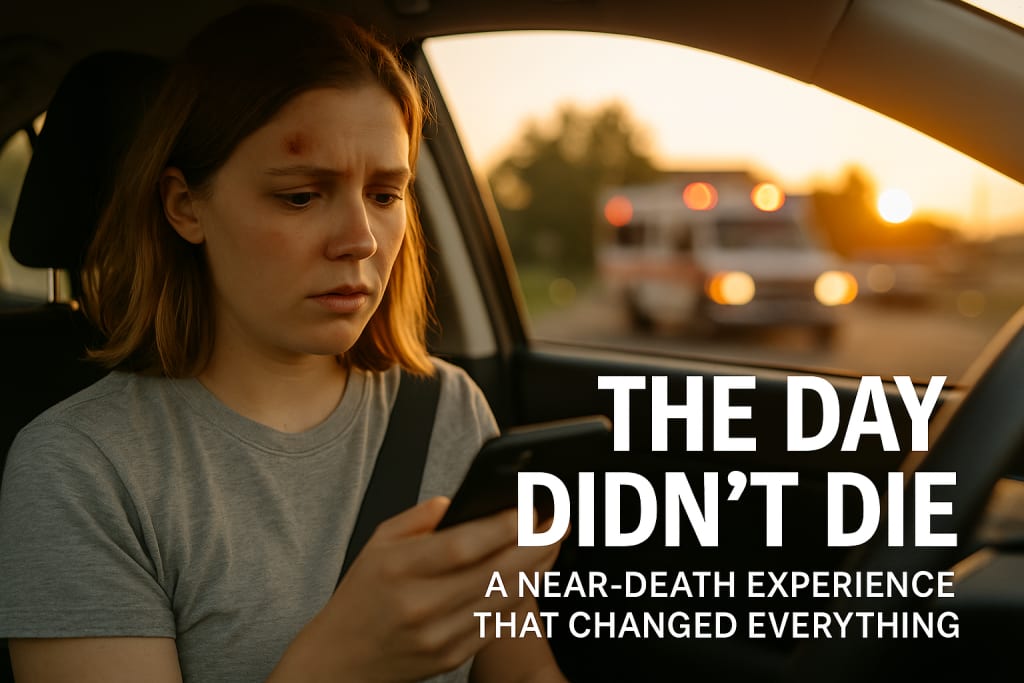
The Day Everything Stopped
I wasn’t supposed to be on that road. Not that day. Not at that time. But fate—or whatever you want to call it—has a way of rerouting us, sometimes violently.
I was running late. My morning had already been chaos: spilled coffee, missed emails, and a forgotten gym bag. The kind of small disasters we shrug off, but that seem to stack like dominoes. I remember sighing at the red light, glancing at my phone, and opening a message. One second. That’s all.
I never saw the truck.
The impact was instant. My car spun into an intersection like a toy in a blender. I heard metal scream. I felt weightlessness. Then, nothing.
The Silence After the Storm
When I opened my eyes, I wasn’t sure I had. Everything was white. Then came sound—muffled, distant, like I was underwater.
Paramedics. Sirens. A woman’s voice repeating, “Stay with me.” I remember thinking, Why wouldn’t I?
I had broken ribs, a concussion, and a collapsed lung. But I was alive. Barely.
What happened next wasn’t the dramatic revelation Hollywood would script. There was no vision, no tunnel of light. But there was a silence—a deep, echoing awareness that something had shifted in me.
What We Miss While We Scroll
Lying in that hospital bed, I started thinking about the ridiculousness of it all. How fragile everything is. How we gamble with time like we’re invincible.
The text that almost killed me? A meme. Just a meme. Nothing urgent. Nothing real.
And yet, how often do we risk our lives—mentally, emotionally, physically—for distractions? For the illusion of connection?
The Message I Never Sent
After weeks of recovery and painful physical therapy, I returned to that intersection.
There was still a skid mark on the pavement.
I stood there for an hour, watching cars come and go. Watching people do what I did—scrolling, checking, zoning out. Risking their lives for notifications.
I wanted to scream. But I didn’t. I went home and wrote a message instead. One I’ve since shared in talks, classrooms, and online:
“Nothing on your phone is more important than your life—or someone else’s.”
How Almost Dying Helped Me Start Living
It wasn’t just about the accident. It was what it exposed: my burnout, my numbness, my sleepwalking through life. I was surviving, not living.
Since that day, I’ve changed everything. I don’t touch my phone in the car. I walk more. I eat slower. I tell people I love them—even if it feels awkward. I call my parents. I started journaling. I unfollowed 200 people and never looked back.
And the wild part? I’m happier. Lighter. Not because I survived—but because I woke up.
end here
And yet, how often do we risk our lives—mentally, emotionally, physically—for distractions? For the illusion of connection?
The Message I Never Sent
After weeks of recovery and painful physical therapy, I returned to that intersection.
There was still a skid mark on the pavement.
I stood there for an hour, watching cars come and go. Watching people do what I did—scrolling, checking, zoning out. Risking their lives for notifications.
I wanted to scream. But I didn’t. I went home and wrote a message instead. One I’ve since shared in talks, classrooms, and online:
“Nothing on your phone is more important than your life—or someone else’s.”
How Almost Dying Helped Me Start Living
It wasn’t just about the accident. It was what it exposed: my burnout, my numbness, my sleepwalking through life. I was surviving, not living.
About the Creator
Syad Umar
my name is umar im from peshawer
Early March 2026: 4 Goals Accomplished
It's early March and I've now accomplished my 4th writing goal for the year of 2026. Before diving into the behind-the-scenes of it... why not tell you up front what that accomplishment was? I was published in a 2nd publication for this year. Published in Helix Literary Magazine out of Central Connecticut State University. You can read it for free right now!
By Stephen Kramer Avitabile8 days ago in Writers
Precision Motion Systems in Modern Aerospace Engineering
Introduction Modern aerospace engineering relies heavily on precise motion control systems to ensure aircraft operate safely and efficiently. From adjusting flight surfaces during turbulence to aligning onboard sensors for navigation, controlled mechanical movement is essential for maintaining stability and performance throughout a flight.
By Beckett Dowhan4 days ago in Writers




Comments
There are no comments for this story
Be the first to respond and start the conversation.