
Tariff's Past Twenty Four Hours (05/08/25)
Tariff's past 24 hours. Trump! China! Optimism?

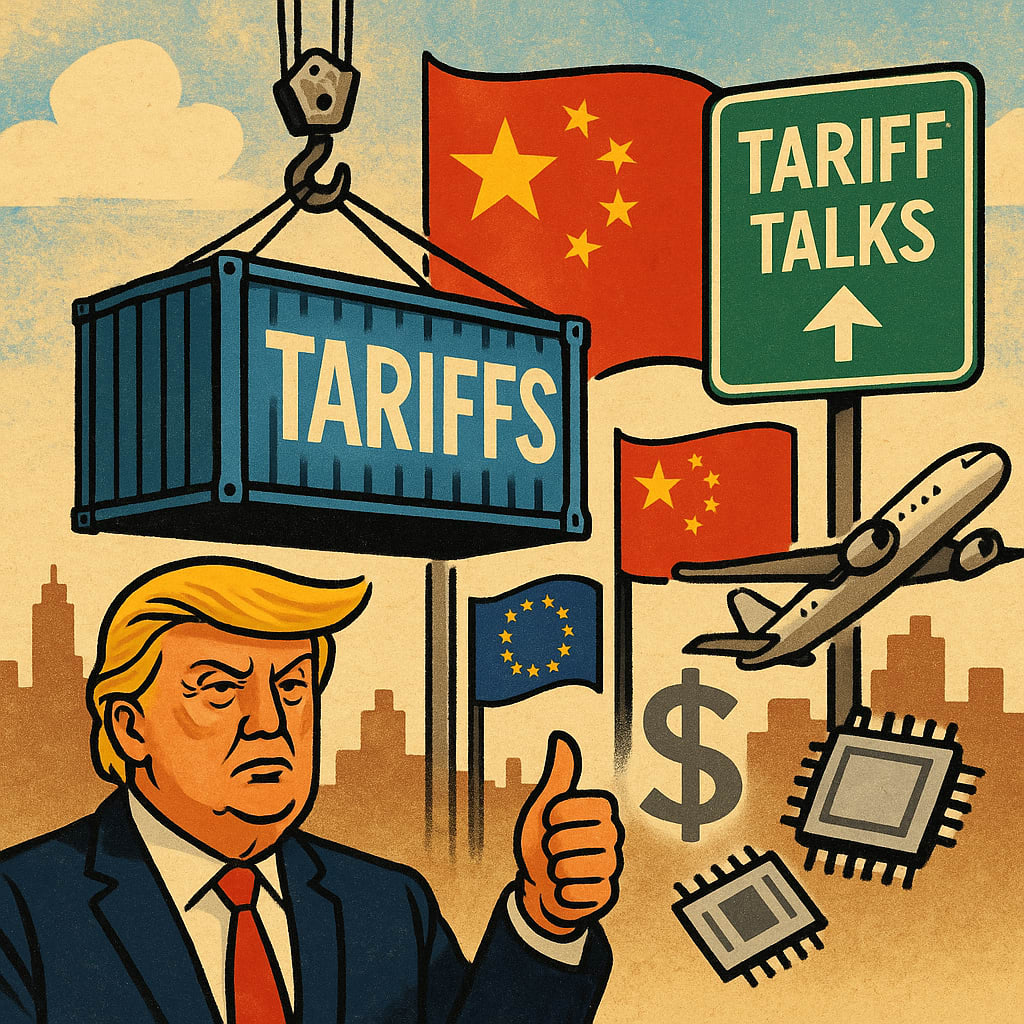
Tariff News Roundup: Key Developments in the Last 24 Hours
The past day brought a whirlwind of tariff-related updates, with changes on multiple fronts that could reshape global trade dynamics. From potential cuts to U.S.–China tariffs to brewing European retaliation, here’s a closer look at the highlights and their implications for businesses and consumers.
Trump’s Optimistic Outlook
President Trump expressed renewed hope in resolving trade tensions with China, stating that substantive talks could lead to significant tariff reductions. Currently, U.S. duties on Chinese imports stand at a steep 145%, but optimism is building that this figure may soon drop. Trump’s comments suggest progress toward a breakthrough, though specifics remain vague.
China’s Selective Exemptions
In a move signaling goodwill, China announced targeted relief measures for key U.S. exports. Pharmaceuticals, microchips, aerospace engines, and other critical goods are now exempt from its 125% retaliatory tariffs. This carve-out demonstrates Beijing’s strategic approach to maintain access to essential imports while keeping pressure on other sectors.
U.S. Mulls Major Tariff Cuts
Behind closed doors, U.S. officials are reportedly preparing to slash tariffs on Chinese goods to around 50%. This move could take effect as early as next week, offering potential relief to businesses and consumers alike. The reduction would mark a significant de-escalation in trade tensions—if it materializes.
Beijing’s Diplomatic Push
China has publicly pressed the U.S. to prove its good faith by lifting tariffs ahead of this weekend’s negotiations. While the two sides continue to posture, Beijing’s call for action underscores the delicate diplomacy required to broker a long-term deal.
Iron Ore Bucks the Trend
Amid the broader tariff turmoil, iron ore prices have remained steady, defying the downturn seen in other commodities. This resilience suggests that tariff impacts are not uniform across sectors and could highlight opportunities for more stable supply chains in certain industries.
Europe Prepares to Retaliate
The European Union is ramping up its trade defenses, with counter-tariffs on U.S. aerospace products in the works. This comes in response to American measures on European goods, setting the stage for yet another trade spat that could ripple across global markets.
U.S.–U.K. Trade Framework
In a separate development, President Trump hailed the establishment of a new trade framework with the United Kingdom. Describing the deal as the “first of many” tariff-swap agrements, the announcement marks a step toward strengthening post-Brexit trade ties.
Corporate Concerns Mount
Major companies, including Apple and General Motors, have warned that ongoing tariffs could cost them tens of billions of dollars by 2025. These warnings highlight the long-term financial strain tariffs impose, particularly on multinational firms with complex global supply chains.
Economic Resilience
While analysts agree that high tariffs will likely dampen economic growth, they remain divided on whether a recession is imminent. Some argue that the economy’s resilience, especially among well-capitalized businesses, could mitigate the worst impacts of the trade war.
Impacts on Consumers
- For the average consumer, the tariff drama has both immediate and long-term consequences. Should the U.S. lower its duties to 50%, prices on imported electronics and auto parts could see modest relief. However, until such changes take effect, Americans may continue to face steep markups of up to 145% on Chinese goods.
- China’s exemptions for pharmaceuticals and microchips may help ensure the availability of essential medicines and gadgets. Yet, other products remain mired in tariff uncertainty, leaving consumers to deal with unpredictable price swings.
- Europe’s potential aerospace tariffs could also lead to rising air-cargo costs for perishables and entertainment imports. This could subtly impact prices for movie tickets, streaming services, and other leisure activities.
- Meanwhile, stabl iron ore prices offer a silver lining for steel-dependent goods like appliances and car frames, which may avoid severe cost increases in the short term.
Impacts on Businesses
- For business owners, the shifting tariff landscape creates a complex puzzle. Importers must navigate rapidly changing duties, with rates potentially dropping from 145% to 50%, making long-term planning a challenge.
- Companies in the pharmaceutical and tech sectors may find relief in China’s tariff carve-outs. However, industries like apparel remain fully exposed to high levies. The EU’s aerospace retaliation could further complicate matters, sparking tit-for-tat measures that threaten exports to key markets.
- Despite these challenges, analysts suggest that larger, well-capitalized firms are better equipped to absorb the financial impact of tariffs. Small and medium-sized enterprises, however, may struggle to withstand the added costs.
Don’t let tariffs catch you off guard! Subscribe to The Tariff Report for sharp, timely analysis to help you navigate every twist in the trade saga. It’s the one import that's guaranteed duty-free. Share this post and keep the conversation going—knowledge is power in the tariff era.
About the Creator
Keep reading
More stories from Tariff Raff and writers in Writers and other communities.
This Week in Tariff Titillations: A 7-Day Free-for-All!
Hold onto your wallets, Tariff Trackers! It’s been another rollercoaster week in the world of trade policy, where the only thing more volatile than the stock market is the latest tariff threat. From Barbie to Big Pharma, no one seems safe. Let’s untangle this week’s tariff turmoil
By Tariff Raff9 months ago in Writers



Comments
There are no comments for this story
Be the first to respond and start the conversation.