Inspiration
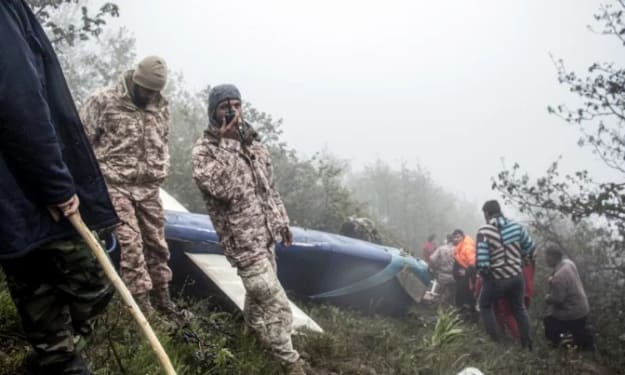
The official in the other helicopter gave insights concerning raisi's helicopter crash . Content Warning.
Gholam Hossein Ismaili, the head of staff of the Iranian president, has focused on what occurred before the helicopter conveying Iranian President Ibrahim Raisi crashed. Ismaili was in one more helicopter close to the one conveying Raisi and Abdullahian upon the arrival of the episode.
By Anis Ahmed Siddeque2 years ago in Writers
Be Your Own Advocate Challenge. Top Story - May 2024.
So, folks...I wanted to do something a bit different for my next challenge thingo. I wanted to turn things back on you - as many of you have been firm and constant supporters of me and I always feel I've been a let down in terms of reciprocating.
By Paul Stewart2 years ago in Writers
A Glimmer of Hope
A Glimmer of Hope In the bustling heart of Tehran, where the ancient melds with the modern, there lived a young woman named Laleh. At twenty-three, Laleh embodied the spirit of Iran’s youth – vibrant, hopeful, and eager for change. She was a brilliant computer science student at the University of Tehran, where she stood out not only for her academic excellence but also for her unyielding determination to break through the barriers imposed by her society. Laleh dreamed of a future where she could freely express her thoughts, pursue her career without constraints, and contribute to a world that often seemed just out of reach. Her dreams, like those of many young Iranians, were a tapestry of personal ambitions and collective aspirations for a better Iran. From a young age, Laleh had been fascinated by technology. Her father, a high school teacher, had noticed her curiosity and encouraged it by bringing home books and magazines about computers and the internet. Despite the challenges of limited access to resources and the constant shadow of censorship, Laleh taught herself coding, staying up late into the night with her second-hand laptop, the screen casting a soft glow on her determined face. University life was a mix of exhilaration and frustration for Laleh. On one hand, she was surrounded by peers who shared her passion and professors who nurtured her talent. On the other hand, the restrictions imposed by the government were a constant reminder of the gap between her aspirations and her reality. The internet was heavily censored, and access to international educational resources was often blocked. Social media, a vital tool for global connection and expression, was a minefield of restrictions and surveillance. Laleh’s best friend, Azadeh, was her confidante and partner in ambition. They had met during their freshman year and bonded over their shared love for technology and dreams of starting a tech company together. They spent hours discussing their plans, envisioning a startup that would bring innovative solutions to Iran and, eventually, the world. Their conversations were filled with excitement, yet tinged with the awareness of the hurdles they faced. One evening, as they sat in a cozy café hidden away in a narrow alley, Azadeh confided in Laleh her growing frustration. “Sometimes it feels like no matter how hard we try, we’ll always be a step behind. The world is moving forward, and we’re stuck fighting for basic freedoms.” Laleh nodded, her eyes reflecting the same sadness. “I know, Azadeh. But that’s why we have to keep pushing. If we give up, who will fight for the future we want?” Their resolve was tested when protests erupted across the country. Young people, tired of economic hardship and lack of opportunities, took to the streets demanding change. Laleh and Azadeh found themselves at the center of the movement, using their tech skills to organize and spread information, navigating around the government’s attempts to shut them down. The atmosphere was charged with a mix of hope and fear. Each day brought news of arrests and crackdowns, yet the spirit of resistance burned bright. Laleh felt a profound sense of connection to her peers; together, they were a force that could not be easily silenced. Yet, the reality of their situation weighed heavily on her. Friends were detained, and the threat of violence was ever-present. One night, as Laleh sat in her room coding an app to help protesters communicate more securely, her father knocked softly on her door. “Laleh, can we talk?” he asked, his voice filled with concern. She looked up from her screen, seeing the worry etched on his face. “Of course, Baba.” He sat down, taking a deep breath. “I’m proud of you, my daughter. Your courage, your determination – it reminds me of why we must always hope for a better future. But I fear for your safety. The world you want to change is not always kind to those who challenge it.” Laleh reached for his hand, squeezing it gently. “I know, Baba. But we have to try. If we don’t, nothing will ever change.” His eyes, filled with a mixture of pride and fear, met hers. “Just promise me you’ll be careful. The world needs your brilliance, but your family needs you too.” The days turned into weeks, and the protests continued. The government’s response grew harsher, yet the spirit of the youth remained unbroken. Laleh and Azadeh worked tirelessly, their startup dream momentarily set aside for a greater cause. They created platforms for encrypted communication, developed apps to track safe routes during demonstrations, and used their coding skills to outsmart the censors. One fateful evening, as they gathered in a small apartment with fellow activists, the door burst open, and armed officers stormed in. Laleh’s heart raced as she was handcuffed and led away. The world outside seemed distant, the dreams of freedom and innovation now overshadowed by the cold reality of imprisonment. In the dark confines of the cell, Laleh found herself surrounded by others who shared her plight. Their whispered conversations in the dead of night were filled with stories of resilience and defiance. Despite the fear and uncertainty, a sense of solidarity and hope persisted. Weeks turned into months, and international pressure mounted on the Iranian government to release the detained protesters. Laleh and Azadeh were eventually freed, their spirits battered but unbroken. Emerging from the prison, they were greeted by a crowd of supporters, their faces shining with hope and admiration. Laleh looked at Azadeh, her eyes reflecting a mixture of exhaustion and determination. “We have a long road ahead,” she said softly. Azadeh nodded, a small smile playing on her lips. “But we’re not alone. We have each other, and we have our dreams.” As they walked through the streets of Tehran, Laleh felt a renewed sense of purpose. The challenges ahead were daunting, but the fire within her burned brighter than ever. She knew that the path to a better future was fraught with obstacles, but with every step, she and her peers were forging a new narrative for their country. In the heart of Tehran, amidst the struggle and the strife, the dreams of Iran’s youth glimmered like stars against the dark sky. And as long as there were dreamers like Laleh and Azadeh, there was hope for a brighter tomorrow
By VoidCipher2 years ago in Writers
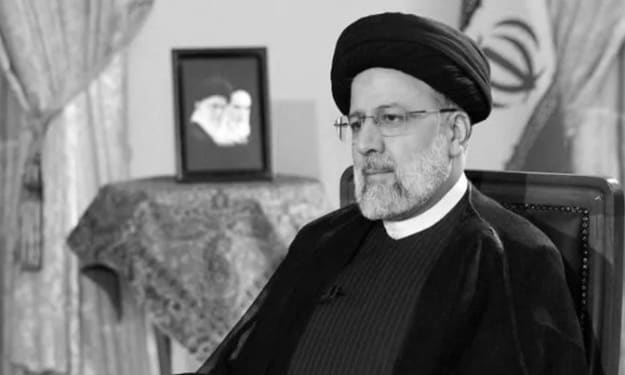
raisins death has caused mourning around the world . Content Warning.
The death of Iran's president and foreign minister has cast a shadow of mourning across Iran. Iran's Supreme Leader Ayatollah Ali Khamenei has assured the people not to worry. Middle East countries have expressed solidarity with Iran. India, Russia, Venezuela, and other countries expressed grief.
By Anis Ahmed Siddeque2 years ago in Writers
Management of Organizational Behavior and Human Resources
The 7-S Framework In the late 1970s, management consultants Robert H. Waterman, Jr., Thomans J. Peters, and Julien R. Phillips created the 7-S framework, a management and organizational paradigm. The productive organization change is not simply a matter of structure, although structure is important. Although strategy is critical too, it is not so simple as the interaction between strategy and structure. Our claim is that effective organizational change is really the relationship between structure, strategy, system style, skills, staff, and shared value. The 7-S model is designed to help organizations to analyze and improve their performance by considering seven interrelated elements that collectively shape the organization's strategy and structure. These seven elements all start with the letter "S," making it easy to remember.
By Yahya Amir Anwer2 years ago in Writers
The Aesthetic Epidemic: Understanding the Roots of Lookism
We care about more than just ourselves - we care about our loved ones, our communities, and the world around us. We are affected by tragic events, especially when a child is murdered, regardless of where it happens. It deeply impacts us and makes us feel disheartened. Moral evils raise doubts about the goodness of the world and the value of existence, especially for those who believe in a benevolent deity. However, anyone can contemplate the purpose and value of the universe in light of such evils. We may not need to worry about the value of the Universe and instead focus on finding value in our own lives or the lives of our loved ones. The concept of value is subjective and can be created by us.
By Hridya Sharma2 years ago in Writers