
Space Frame Construction Oman
Advantages, Types, and Applications

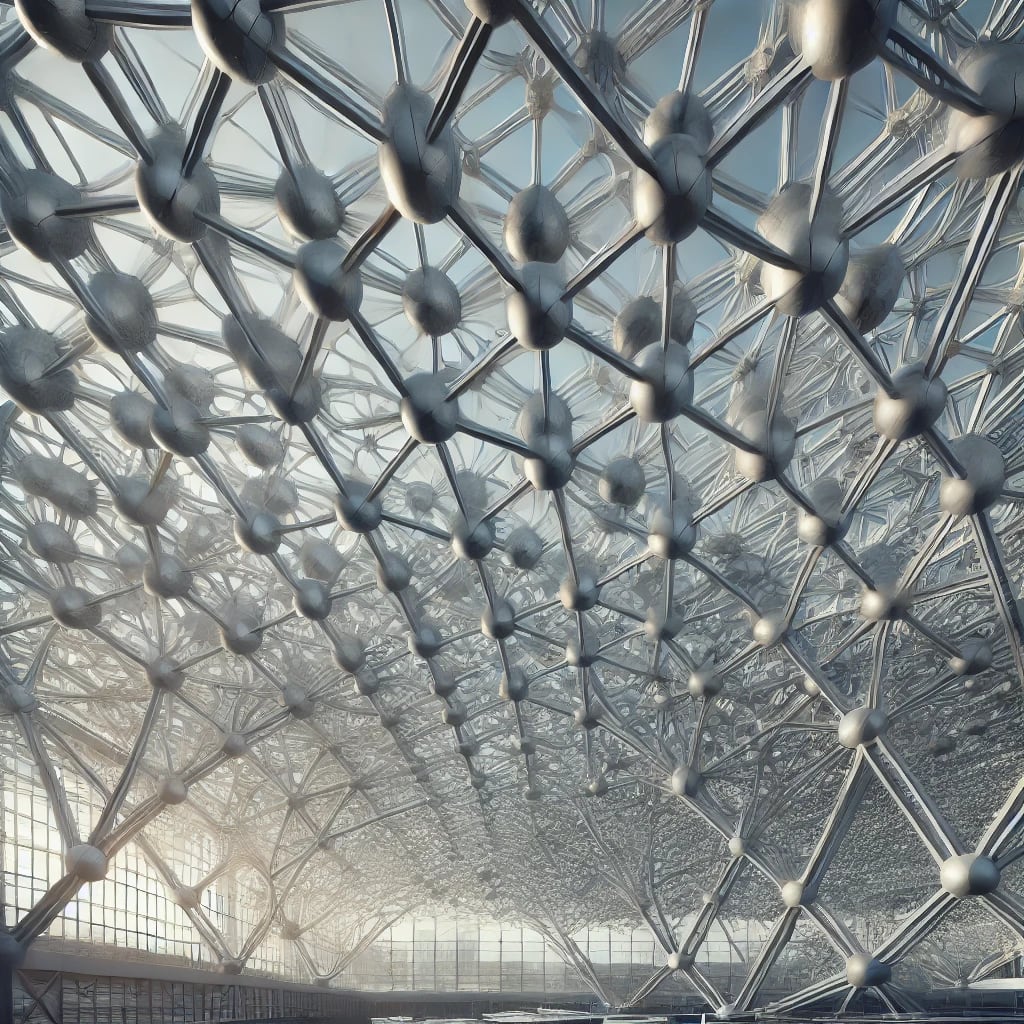
Introduction to Space Frame Structures
A space frame structure is a truss-like structure designed with a geometric pattern to provide high strength and flexibility while covering large spans. These structures are widely used in stadiums, airports, industrial buildings, and architectural marvels due to their lightweight nature, cost-effectiveness, and ease of fabrication and installation.
This guide will explore everything about space frame systems, from their advantages to types and manufacturing process. Whether you're an engineering professional, an architect, or a business owner looking to incorporate modern construction techniques, this article will provide unmatched insights into space frame design and use of space in various structures.
Table of Contents
What is a Space Frame Structure?
Advantages of Space Frame Structures
Types of Space Frame Structures
The Manufacturing and Fabrication of Space Frames
Applications of Space Frame Systems
Installation and Assembly Process
Geometric Patterns in Space Frames
Key Components of a Space Frame System
Comparing Space Frames with Other Structural Systems
Future of Space Frame Structures and Innovations
1. What is a Space Frame Structure?
A space frame is a three-dimensional, lightweight, truss-like structure that consists of interlocking struts arranged in a geometric pattern. Unlike traditional roof structures, space frames can span large areas without internal supports, making them ideal for stadiums, airports, and industrial buildings.
The concept of space frames was revolutionized by Buckminster Fuller, who developed the geodesic dome, a structure utilizing a grid of interconnected triangular elements. These designs ensure load distribution, reducing bending and shear forces.
2. Advantages of Space Frame Structures
Space frame structures have several advantages, including:
Lightweight and High Strength: Due to their geometric pattern, space frames have a high strength-to-weight ratio, making them highly efficient in construction.
Large Span Size: They can span large areas without intermediate supports, making them ideal for stadiums and aircraft hangars.
Cost-Effective Fabrication and Installation: Prefabrication and modularity allow for reduced labor costs and faster installation.
Aesthetic Appeal: Space frames contribute to unique architectural designs, adding aesthetic appeal to modern construction.
Versatile and Adaptable: Space frames can be used in dome, roof, and pyramid structures, showcasing their adaptability.
3. Types of Space Frame Structures
a) Planar Substructures
Consists of parallel layers with two-way orthogonal or diagonal bars.
Examples include barrel vaults and quadrangular grids.
b) Curved Space Frames
Used for spherical domes, barrel vaults, and asymmetric structures.
Commonly used in stadiums and airports.
c) Tetrahedral and Pyramidal Space Frames
Introduced by Alexander Graham Bell, these designs use tetrahedral modules or pyramids to create robust structures.
4. The Manufacturing and Fabrication of Space Frames
Manufacturing Process
The manufacturing process involves prefabricating components using steel pipes or tubular members, cutting them to the required specification, and assembling them at the site.
Fabrication of Space Frame
Fabrication involves welding or bolting together the strut and node components. Structural engineering principles ensure proper load distribution.
5. Applications of Space Frame Systems
Space frames are commonly used in:
Industrial buildings (factories, warehouses)
Airports (large-span roofs)
Stadiums (lightweight structures with high load-bearing capacity)
Architectural masterpieces (geometric facades)
6. Installation and Assembly Process
The installation of space frames involves:
Transporting prefabricated parts to the site.
Assembling them jointly using bolt and weld techniques.
Ensuring axial and shear forces are properly distributed.
7. Geometric Patterns in Space Frames
Space frames follow geometric patterns like:
Quadrangular and planar substructures
Parallel layers and invert designs
Grid size optimization for short span and large-span structures
8. Key Components of a Space Frame System
Struts: Load-bearing members that distribute force.
Nodes: Connection points ensuring tension and compression balance.
Grid: Structural pattern used for load distribution.
9. Comparing Space Frames with Other Structural Systems
Feature
Space Frames
Traditional Trusses
Weight
Lightweight
Heavier
Span Size
Large
Limited
Load Distribution
Evenly distributed
Uneven
Aesthetic
High aesthetic appeal
Functional but less aesthetic
10. Future of Space Frame Structures and Innovations
The future of space structure engineering includes:
New materials: High-strength composites to replace steel.
Advanced prefabrication: Reducing labor and time costs.
AI and simulation: Optimizing frame design for better efficiency.
Conclusion
Key Takeaways:
Space frame structures offer lightweight, versatile, and cost-effective solutions for modern construction.
They are ideal for airports, stadiums, domes, and large-span applications.
Manufacturing and fabrication of space frames involve engineering, welding, and bolting.
Installation is simplified due to prefabrication.
Geometric patterns, grid size, and structural engineering make space frames superior to traditional truss-like structures.
For more details, contact us for expert guidance on space frame construction and fabrication.
About the Creator
Metalart Space Frame & Standing Seam
Leading designer, manufacturer, installer of Space Frame, Standing Seam Metal Roofing, and Single-Skin Roof Panel (Ceiling Panel) for ADNOC Stations in UAE.
Keep reading
More stories from Metalart Space Frame & Standing Seam and writers in Writers and other communities.
Steel Space Frame Structures in Oman
Introduction Steel space frame structures have revolutionized the construction industry in Oman and across the world. These modern structural solutions enable architects and engineers to create lightweight, durable, and aesthetically appealing buildings. Whether for commercial buildings, sports venues, industrial plants, or architectural projects, steel structures offer unmatched advantages in terms of strength, stability, and cost-efficiency.
By Metalart Space Frame & Standing Seam11 months ago in Writers
SharedEasy Guide on How to Buy Residential Property Without Stress
Purchasing a home belongs to life's most significant financial decisions. For many first time buyers, the process appears intimidating because of its maze of paperwork, inspections and negotiations. Industry experts agree that with solid preparation plus knowledge, anyone moves through the home buying journey successfully. This is what prospective homeowners need to know to decide with confidence.
By Ausfab Groupa day ago in Writers



Comments