
South Asia in Turmoil
The Strained India–Pakistan Relations and the Evolving Geopolitical Dynamics

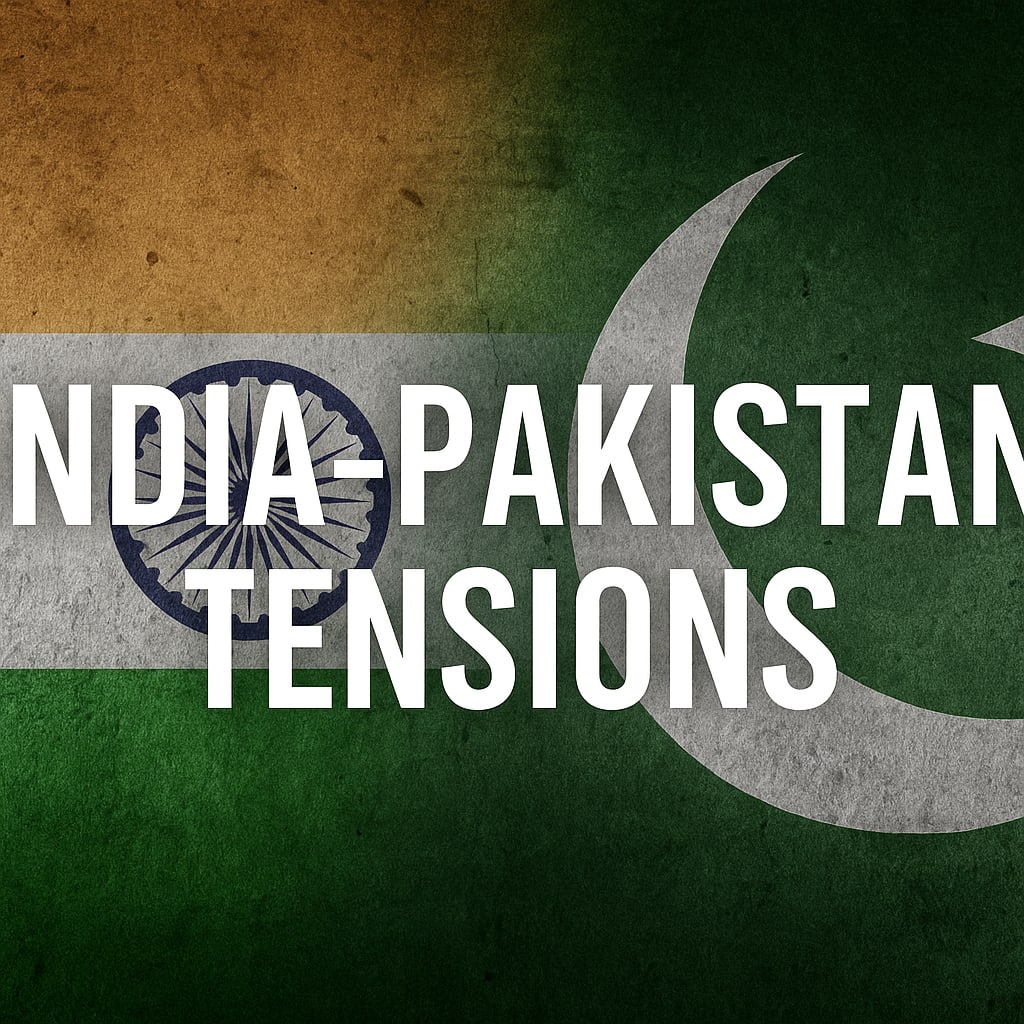
South Asia finds itself in a precarious situation once more.
The recent violent incident in Kashmir, coupled with retaliatory airstrikes and missile exchanges across the border, has escalated tensions between India and Pakistan, pushing them once again to the edge of conflict. The exchange of accusations and threats between the two nations has drawn significant global attention.
However, this situation transcends a mere escalation. This moment could signify a pivotal shift in a region already burdened by nuclear threats, geopolitical tensions, and fragmented diplomatic efforts.
Operation Sindoor and Pakistan’s Retaliation
On May 7, 2025, India initiated Operation Sindoor, a strategic military operation aimed at targeting purported terrorist camps located in Pakistan-administered Kashmir. The incident was a reaction to the attack on April 22 in Pahalgam, Jammu and Kashmir, resulting in the deaths of 27 civilians, among them 25 Indian tourists.
In a decisive response, Pakistan launched Operation Bunyan al-Marsus, targeting Indian military installations with missiles and drones. Both parties have incurred losses, and the Line of Control has once more become a theater of conflict.
Ongoing allegations of violations continue to emerge following the ceasefire that the United States brokered on May 10. Indian Prime Minister Narendra Modi characterized the pause as “temporary,” whereas Pakistan issued a warning regarding a “clear and present” nuclear threat.
A Delicate Balance of Security
The dynamics of security in South Asia have been profoundly influenced by the longstanding rivalry between India and Pakistan. However, the current geopolitical landscape exhibits a level of instability that surpasses that of earlier crises, such as the Balakot strikes in 2019.
The precarious situation in Afghanistan, coupled with the emergence of militant groups and significant power rivalries, has established a highly unstable environment. The deployment of sophisticated air and missile technology by both parties has significantly reduced the margin for error. The presence of nuclear weapons means that even minor errors can escalate into disastrous outcomes.
The Ongoing Irrelevance of SAARC
This discord exacerbates the marginalization of SAARC, which was once a beacon of promise for regional collaboration in South Asia. As India progressively aligns itself with BIMSTEC and the Indo-Pacific, while Pakistan finds itself distanced from these developments, SAARC appears to be a remnant of a bygone era.
Smaller nations such as Nepal, Bhutan, and the Maldives, already positioned between the influences of India and China, now encounter heightened strategic ambiguity. It appears that regional summits may face postponements or a dilution of their agendas, resulting in the continued neglect of critical matters such as climate change and migration.
The Deliberate Vigilance of China
China, being Pakistan's primary strategic ally, has advocated for moderation while simultaneously monitoring potential opportunities. The ongoing crisis provides an opportunity for Beijing to strengthen its influence in the China-Pakistan Economic Corridor, escalate tensions in Ladakh, and portray India as the aggressor in international forums such as BRICS and the Shanghai Cooperation Organization.
This extends beyond mere military dynamics; it involves the crafting of global narratives.
Bangladesh: Navigating the Fine Line of Neutrality and Vulnerability
The ongoing escalation poses a nuanced challenge for Bangladesh. With robust connections to India and a cautiously evolving rapport with China, Dhaka is skillfully maneuvering through a complex geopolitical landscape.
On the surface, Bangladesh might project a stance of neutrality. However, the potential dangers are significant: interruptions in trade, shifts in donor focus, and diplomatic coercion to align with specific factions. Prolonged instability in South Asia poses a significant risk to its economic progress and the autonomy of its foreign policy.
The competition between the U.S. and China casts a significant shadow over the region.
This transcends the bilateral dynamics between India and Pakistan. This situation is merely a component of a larger strategic landscape.
India's strategic partnership with the United States, exemplified by its involvement in the Quad and agreements such as BECA and COMCASA, positions it as a pivotal element in Washington's Indo-Pacific strategy. Pakistan, conversely, is intricately woven into China's strategic framework via the China-Pakistan Economic Corridor and military collaboration.
Should this situation intensify, South Asia may evolve into a battleground for proxy influences, with the United States discreetly aligning with India while China extends its support to Pakistan. The interplay of arms diplomacy, narrative conflicts, and strategic maneuvering presents a perilous situation.
A Resurgence of Major Power Mediation
Significant global actors are renewing their focus on South Asia. Calls for de-escalation have been issued by the UN Secretary-General, the United States, Russia, and the European Union. After a prolonged period of relative obscurity, Kashmir has once again captured international attention, not via diplomatic channels, but rather through the looming specter of conflict.
Achieving peace will undoubtedly present significant challenges. India firmly rejects any external intervention in Kashmir, whereas Pakistan perceives the situation as a chance to bring the matter to the international stage. Without the strategic maneuvering of key players exerting discreet influence, tangible advancements are improbable.
A Region at a Critical Juncture
This recent confrontation transcends a mere military incident. This serves as an indication of potential concerns ahead.
South Asia continues to be ensnared by longstanding grievances, the looming threat of nuclear risks, and a lack of effective regional mechanisms. The individuals—laborers, agriculturalists, scholars—are poised to suffer the greatest consequences should tranquility falter.
The current global landscape necessitates a heightened emphasis on diplomatic efforts. In the absence of such measures, the subcontinent faces the peril of descending into a drawn-out period marked by instability, escalating arms races, and missed chances for progress.
The Significance of This Moment
Viewed through a global strategic perspective, the India–Pakistan standoff demonstrates a fundamental imbalance within the regional order of South Asia.
The situation exemplifies a fundamental security dilemma, in which the defensive measures of one party are interpreted as aggressive actions by the opposing side. In the absence of substantial trust-building measures, the pattern of military escalation tends to repeat itself. The existence of nuclear arsenals and the absence of a structured crisis management approach exacerbate the situation.
In the meantime, the shortcomings of SAARC illustrate that South Asia does not possess the institutional robustness found in regions such as Southeast Asia or Europe. In contrast to ASEAN or the EU, there is no nation in South Asia that possesses the requisite strength or neutrality to function as a stabilizing force within the region.
The most troubling aspect is the increasing presence of external influencers. As the U.S. and China exert their influence, South Asia stands on the brink of becoming a mere instrument in a broader geopolitical contest—its destiny increasingly determined by the decisions of Beijing and Washington rather than those of Delhi or Islamabad.
To circumvent this outcome, the region must prioritize the development of its mechanisms for peace. Otherwise, its trajectory will continue to be influenced by international strategies rather than domestic governance.
Written by: Siamul Huq Rabbany
Contact: [[email protected]]
About the Creator
Siamul H Rabbany
Siamul Huq Rabbany is a political analyst focusing on the intersection of power and people in Bangladesh, with broader insights into governance, regional diplomacy, and how global forces shape everyday life in South Asia.
Keep reading
More stories from writers in Writers and other communities.
Trouble at the Tea Leafing Café
The rain had started right around the time that Annie was buttering her second thick slice of homemade toast for breakfast, and hadn’t paused since. Not that anyone could tell. The windows of the café were fogged over, and with every seat filled with happy customers munching on fresh baked pastries or steaming bowls of the delicious soup of the day, it was hardly surprising. Annie looked around the room, finally taking a moment to breathe after the lunch time rush. Her old life already felt like a bad memory, a part of her history, always, but just that. History.
By Hannah Moore3 days ago in Fiction


Comments (1)
I am new to this community and truly appreciate your time in reading my article. I would love to hear your thoughts—your feedback and comments will inspire me to keep writing on geopolitics and regional affairs. Thank you!