
Some Really Bad Things To Do When Time Traveling
There are some tropes that we as writers keep getting wrong when characters travel to older eras. Here we examine some of those tropes.

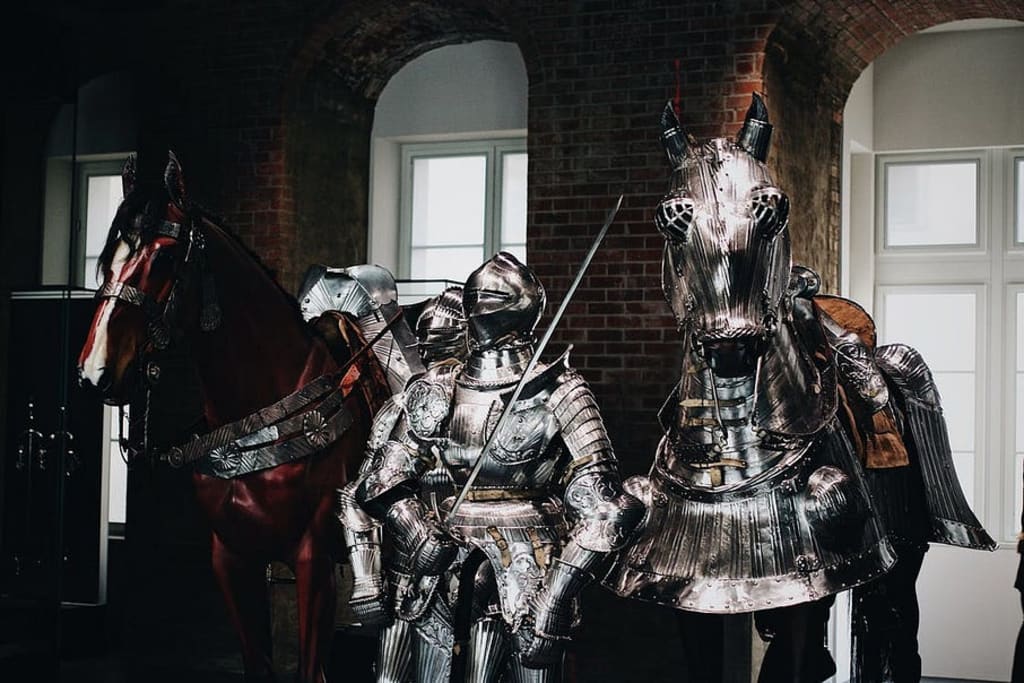
One of the most amazing things about writers is that when they have a chance to create their very own worlds they invariably include a lot of real-world problems. While on one hand, this is not that big of a mystery (a lot of writing is about catharsis, after all), there is the valid question of, well, if you were given the ability to create your very own perfect world, why would you contain problems from the real world? If you hate racism, sexism, and transphobia so much, then why feature them in the world that you yourself are creating?
And yet they form the basis of so many "woke" fantasy worlds. It's sort of amusing when you realize that so many worlds designed by so-called "woke" authors are not worlds anyone would want to visit. It's sort of weird when even fantasy worlds have realized that there are issues with having a race whose very genetics make it evil, you're seeing an explosion of racism, sexism, and homophobia in worlds created by those who claim to want to see it disappear.
So let's explore some of these tropes and see how to get rid of them.
Every Encounter is An Issue
One way to amp up the tension is to put a woman or minority in a situation with a lot of white men and then have one or more of the minorities initiate a conflict with the white guys, who are then treated like they were the ones doing something wrong. The guys are then forced to look around sheepishly after being verbally attacked, and the story moves on.
The reason for the scene is that it's pure cathartics for the writer; they had some issues to work out and this is the best way for them. That is, the writer may have been bullied or otherwise treated roughly by a similar crowd. While it may be decidedly cathartic for some in the audience, it becomes a low point in the writing. It just feels like there is some missing context or there is some sort of "How do you like it?" going on.
This scene just needs one thing to make it work: Context. Have the guys say disparaging things, either directly to the group or just out of earshot, or make them do something bad to the minorities, preferably bad enough to be insulting but not enough to result in injury. This gives them enough to warrant the verbal thrashing. However, try to have no more than one or two such scenes in your story; they lose power if it's done too often and it starts to bring into question the writer's reason for including such a scene.
Going Back in Time To Create Problems
Some time travelers go back in time to solve a problem but decide to make a political point instead. That is, rather than keeping below the radar and avoiding any interactions with the locals, they actively go out of their way to act on some sort of activist thought, such as a black man walking into a white-only restaurant purposely. That is, despite whatever precautions may be in place to stop the character from doing exactly that, the traveler does it anyway.
There's no denying that there is a certain catharsis in doing so. We all want to snub our noses in the face of authority and doing so in a dramatic fashion has a definite attraction to it; adding the feeling that we are making a change just adds to that attraction. However, before you put this scene in your story, make sure that you have debated all of the potential issues; most time travel stories have rules against making a big splash in the past for several reasons, and making a political point is definitely a big splash.
If you want to go back into the past to teach a lesson, go for it. But remember that sometimes the past is that way for a reason. While it can feel good to have a character go back and advance society a few generations, there will always be the question of what was given up to unnaturally advance the culture, and sometimes those answers may surprise you.
Inflicting Modern Morality on The Past
One of the more annoying anachronisms is when writers inflict some form of modern morality on some ancient culture. That is, not only do we see our modern culture whichever it is, as superior to those in the past, but we also judge those cultures by our modern morality. The classic example is slavery, where we see older cultures that engaged in the practice as not only backward but downright evil.
The obvious problem is that we can't judge a more different culture based on our beliefs, even if we evolved from that culture. In a lot of ways it's like judging an adult, or even an adolescent, based on what they were like as children; the child grows past that stage and takes on a different philosophy, and thus is a vastly different entity. We can't really judge the adult on the child it was, and that applies to a lot of cultures, even those from a few decades ago: people evolve and so do cultures.
Making it worse is that sometimes our assumptions about a culture will not always pan out. A lot of people assume that the average medieval European peasant was unwashed and illiterate; the reality is that they washed frequently, even had public bath houses, and there were plenty of books to read. This gets worse when we make assumptions about the culture: Sure, Medieval Europe was a patriarchy, but it was hardly the testosterone paradise some think it was, with women having a lot more power than they think.
Again: If you need to go back in time to make a point, go for it. Just remember that the past is a different country, and that means it has its own rules.
"Time Travel Sucks if You Aren't White"
Sure, if you're a black person time traveling back to the Antebellum South, life is going to suck. However, if you went north by even a few hundred miles, you would find a vastly different situation (especially if you ended up in Canada), and if you appeared in the middle of an African nation you would find the situation reversed, where you were the average person and your white friend would not be popular. Of course, if you both ended up in Japan then you would both be in for some seriously difficult times.
Heck, it could be all sorts of fun for both of you if your white friend didn't look like the local people or, worse yet, your white friend looked like someone the locals hated; the ancients were notoriously xenophobic. Heaven help a white woman who ended up in Ancient Japan, for example. So how bad things are depends more on where you end up than your skin color; do your research before heading out.
In short, if you're creating worlds where the fantasy is based on the impossibility of getting rid of the established evil, then why should we bother in real life? If you are tired of evil in the real world, then why concentrate on it in your fantasy world? There just has to hit a point where people have to question why they are complaining so much about evil in the real world and then perpetuate that evil in their writing. Create the worlds you want to see, not the ones you want to run from.
About the Creator
Jamais Jochim
I'm the guy who knows every last fact about Spider-man and if I don't I'll track it down. I love bad movies, enjoy table-top gaming, and probably would drive you crazy if you weren't ready for it.
Keep reading
More stories from Jamais Jochim and writers in Writers and other communities.
Giving Your Characters Their Voices
For some writers, writing dialogue is pure torture. Action is easy: You're just describing what is happening. With dialogue, you not only need to move the plot forward, develop character, and not make it boring. Adding to the fun is that you need to be able to switch between two possibly very different personalities with almost no problem. While this sounds pretty complicated, it's actually pretty easy when you get into the rhythm of it.
By Jamais Jochimabout a year ago in Writers
Unofficial Challenge: Black History Celebration
Forward: February 28th, 10:53 PM, EST... The final hour of Black History Month, 2026. Hello fellow writers. I've had this challenge waiting in my drafts for most of the month. But I held off on publishing it, until now.
By Sam Spinelli6 days ago in Writers
Transforming Construction Projects with BIM: From Modeling to Modular and Infrastructure Solutions
Building Information Modeling (BIM) has revolutionized the way architects, engineers, and construction professionals approach project planning, design, and execution. By integrating sophisticated technology into the construction process, BIM not only enhances the accuracy and efficiency of designs but also optimizes workflows across the entire lifecycle of a building project. This blog will explore the key components of BIM services: BIM Modeling, BIM Consulting, and specialized solutions like BIM for Modular, Volumetric, and Infrastructure Construction.
By Anandhu T U3 days ago in Writers
"Scream 7" (2026): Running out of Fresh Screams
This is the seventh time we’ve had a Ghostface crisis. Scream 7 is the latest edition of the Scream franchise. Sydney Prescott and her family are under attack by another anonymous killer dressed in a Ghostface costume. While having issues with her daughter, Tatum, they run from the bloody murders, trying to determine who is behind it all.
By Marielle Sabbag5 days ago in Horror




Comments
There are no comments for this story
Be the first to respond and start the conversation.