
Psychic Photography: The Photography of Thought
Psychic photography first emerged in the late 19th century, influenced by spirit photography


by Andre Wormsbecker / Quantum Dox
In parapsychology, it is considered a form of ideoplasm: a materialization shaped by imagination (Bossa, 1993). The term "scotography" (from Greek, skotos = dark; graphein = writing, in contrast to photography, which means imprinting by light) was also proposed by Felicia Scatcherd at the First International Congress of Psychic Research in Copenhagen. This term refers not to impressions on film but directly on photo paper in the dark, which can also include spirit or transcendental photography (Bozzano, 1926).
Psychic photography first emerged in the late 19th century, influenced by spirit photography (Krauss, 1995). Thought has no connection to spiritualism, which distinguishes it from spiritual photography (Chéroux, 2005). One of the earliest books to mention "psychic photography" was The New Photography (1896) by Arthur Brunel Chatwood. In the book, Chatwood described experiments where the "image of objects on the retina of the human eye could affect it so much that a photograph could be produced by observing a sensitive plate." The book was criticized in a review in Nature magazine (Norman Lockyer, 1896, Nature, Volume 53, p. 460). Around the same time, British photographer W. Ingles Rogers introduced the term "thought photography" in the articles Photographie de la pensée and Can Thought Be Photographed? The Problem Solved in February 1896 (Schlicht, Laurens; Seemann, Carla; Kassung, Christian, April 4, 2020). The term "thoughtography" was first introduced in the early 20th century by Tomokichi Fukurai (Chéroux, 2005).
The psychic researcher Hereward Carrington, in his book Modern Psychical Phenomena (1919), wrote that many psychic photographs were proven to be fraudulent, produced through plate substitution and manipulation, double printing, double exposure, and chemical screens. However, Carrington also stated that he believed some of the photographs to be genuine.
Skeptics, including professional photographers, consider psychic photos to be forgeries or the result of camera or film malfunctions, exposures, errors in film processing, lens reflections, flash reflections, or chemical reactions (Nickell, 2005).
Claims
Early Experiments in Europe
One of the earliest reports was by Colonel Louis Darget, who allegedly began experiments on May 27, 1896, producing an image of a bottle on a plate by focusing on it so intensely that he claimed to have had a "headache" (Bozzano, 1926). He also claimed to have produced images from what he called “fluidic radiations” from his hands (Andrade, 2008). The results were later considered to be effects of heat contact from human skin and the use of an overly concentrated developing solution (Gabbatiss, Josh, 2020 — BBC). In 1850, Baron von Reichenbach had already photographed the alleged fluidic action of the mind (telergy) from what he called the odic force, while neurologist Jules Bernard Luys investigated "fluid photography" (photographie des éffluves) by taking photos of hand effluvia on plates. This was followed by further fluidic photography experiments by Dr. Hippolyte Baraduc, who called the images psychicones, claiming they were impressions of the soul itself (Pethes, Nicolas, July 2016). Hector Durville also conducted similar experiments, among others. A year before Darget, Colonel Albert de Rochas reported a spontaneous occurrence with the medium Eusapia Palladino (Bozzano, 1926).
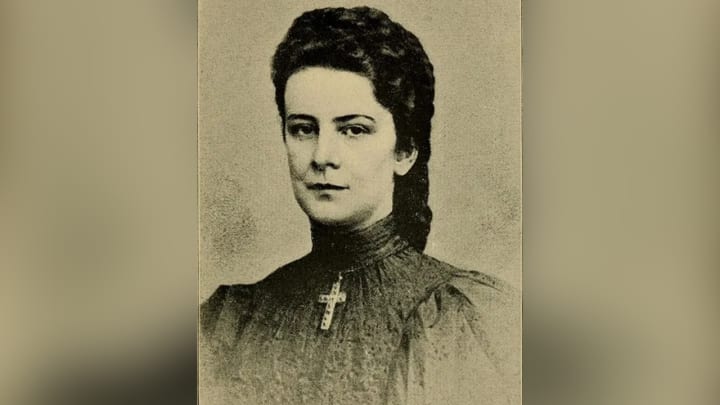
In 1905, Australian photographer F. C. Barnes visited the English medium Richard Boursnell, who produced a photograph featuring the image of Empress Elisabeth of Austria. Barnes later discovered that the image appeared in the frontispiece of a book he had read at a book club in Australia (Bozzano, 1926). He recalled this during the session and then sought out the origin of the image in books (Coates, 1911):
"Mr. Boursnell said: ‘There is the spirit of a beautiful lady here, who appears under a very bright light and suffered much on earth.’ I immediately concluded that it was my wife, but after receiving the proofs, I was very disappointed to discover it wasn’t her. I asked those present if they could recognize the figure. ‘No,’ said the lady, ‘but she seems to be of royalty.’ This was inexplicable. Then it occurred to me that it could be the Empress of Austria."
In Poland, Professor Julian Ochorowicz investigated the medium Stanisława Tomczyk in a series of articles in the Annals of Psychic Sciences between 1910 and 1912. He claimed that thought had the ability to externalize itself, acting on photographic plates (Bozzano, 1926). At the International Institute of Metapsychics, Charles Richet and Gustave Geley reportedly analyzed cases of thought photography by the medium Pasquale Erto (Friderichs, Edvino Augusto, 1979) (Evrard, Renaud, 2009). Felicia Scatcherd reported capturing the image of an embroidered blouse she was thinking of during a photograph taken in the presence of medium Archdeacon Thomas Colley in 1910. She also conducted photography experiments with Darget, Baraduc, and Guillaume de Fontenay, as well as with mediums Hope and Buxton. In the 1920s, she reproduced the images in the magazine Light, becoming known for her accounts and research on transcendental photography and scotography (Bozzano, 1926).
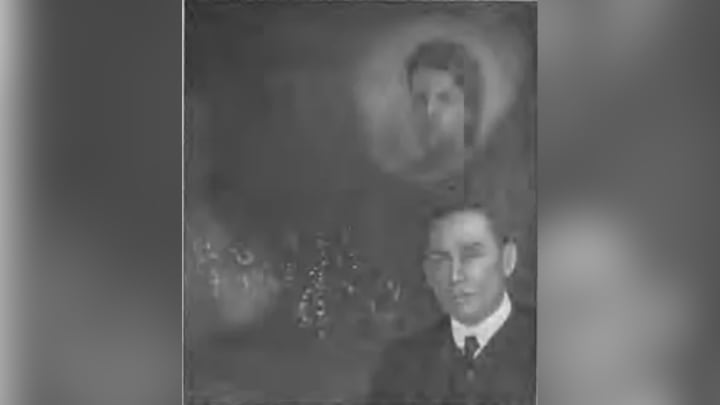
Tomokichi Fukurai
Around 1910, during a period of interest in spiritualism in Japan, Tomokichi Fukurai, an assistant professor of psychology at the University of Tokyo, began conducting parapsychology experiments using Chizuko Mifune, Ikuko Nagao, and others as subjects. Fukurai published results from experiments with Nagao, claiming that she was capable of telepathically imprinting images onto photographic plates, which he referred to as nensha. When journalists discovered irregularities, Nagao's credibility was attacked, and there were speculations that her later illness and death were caused by the suffering brought on by the criticism (Kristen Lacefield, April 1, 2013). In 1913, Fukurai published Clairvoyance and Thoughtography. The book was criticized for its lack of scientific approach, and his work was dismissed by the university and his colleagues. Fukurai eventually resigned in 1913 (David B. Baker, January 13, 2012).
Eva Carrière
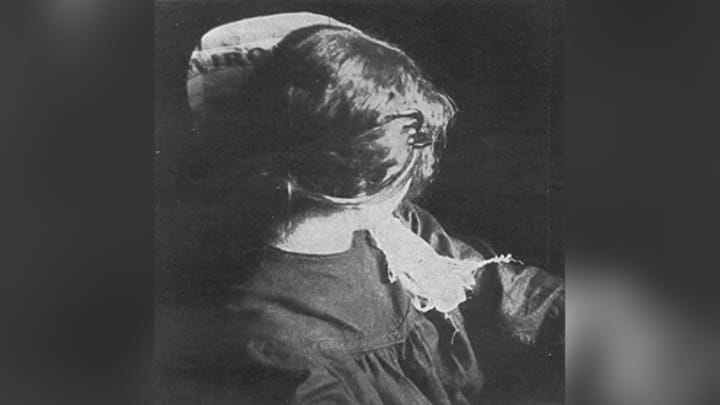
In the early 20th century, psychic researcher Albert von Schrenck-Notzing investigated medium Eva Carrière and claimed that her "materializations" of ectoplasm were the result of "ideoplasty," in which the medium could form images in ectoplasm from her mind (Brower, M. Brady, 2010). Schrenck-Notzing published the book Phenomena of Materialisation (1923), which included photographs of the ectoplasm. Critics pointed out that the photographs of the ectoplasm revealed traces of magazine cutouts, pins, and a piece of string. Schrenck-Notzing admitted that on several occasions, Carrière had deceptively passed hidden pins into the séance room. The magician Carlos María de Heredia replicated Carrière's ectoplasm using a comb, gauze, and a handkerchief.
Psychic photography is a practice that seeks to capture images of entities or spiritual energies using photographic techniques. This form of photography has been the subject of study and debate over the years, with some believing that the captured images are evidence of life after death or communication with the spiritual world.
Practitioners of psychic photography use various methods to capture these images. Some use traditional cameras, while others prefer more experimental techniques, such as Kirlian photography, which records the energy emitted by objects or living beings.
Although psychic photography is considered controversial and often criticized by the scientific community, there are reports of intriguing and inexplicable cases of captured images. Some believe that these images are evidence of paranormal phenomena, while others argue that they may result from manipulation or technical artifacts.
- - -
Did you enjoy our topics? How about leaving a comment and sharing with others who also like to talk about this?
About the Creator
Quantum Dox
We are a study group aiming to awaken human consciousness to a new reality. Independent and non-profit, we explore research and studies to deeply understand existence and how the reality of the world and the universe operates.
Keep reading
More stories from Quantum Dox and writers in Writers and other communities.
Pulsars: The Cosmic Spinning Lighthouses
By Andre Wormsbecker / Quantum Dox In the vast and mysterious universe, pulsars stand out as one of the most fascinating wonders. These highly magnetized neutron stars are known for their incredible rotation speed and the intense radiation they emit in regular pulses. Discovered for the first time in 1967, pulsars continue to captivate astronomers and scientists with their unique properties and insights into the nature of the cosmos. In this article, we will explore the fascinating world of pulsars, their origin, characteristics, and the role they play in our understanding of the universe.
By Quantum Doxabout a year ago in Writers
March 15, 2026
Merriam Webster - Word of the day: Tranche refers to a division or portion of a whole. World Contact Day is commemorated every year on March 15. It is a unique observance held globally to focus on communicating with extraterrestrial life and exploring the possibility that intelligent beings may exist beyond Earth. World Contact Day inspires people to invoke their curiosity and spend time thinking about the universe and the mysteries surrounding it. What is the “Ides of March”? According to the Roman calendar, the Ides are a monthly occurrence. In March and other months with 31 days, the Ides always falls on the 15th; it falls on the 13th in months with 30 days. The Ides traditionally marked the arrival of the new Moon and was cause for celebration. The word “Ides” is derived from Latin, meaning “to divide.” Mothering Sunday in 2026 falls on Sunday, March 15. Mothering Sunday, celebrated in the United Kingdom and Ireland, occurs on the fourth Sunday of Lent, which is exactly three weeks before Easter. Unlike the fixed-date Mother's Day in countries like the United States, Canada, and Australia, Mothering Sunday’s date changes each year according to the Christian liturgical calendar. On March 15, 2026, several notable observances and events are celebrated: Dumbstruck Day: A day to express frustration. Everything You Think is Wrong Day: A day to challenge and celebrate wrong beliefs. International Day Against Police Brutality: A day to raise awareness and advocate against police violence. My look at today, March 15, 2026 below:
By Denise E Lindquistabout 15 hours ago in Writers



Comments
There are no comments for this story
Be the first to respond and start the conversation.