
Manipulation and Pride : Lessons from The Lion and The Jewel .
The Dangerous Power of Pride
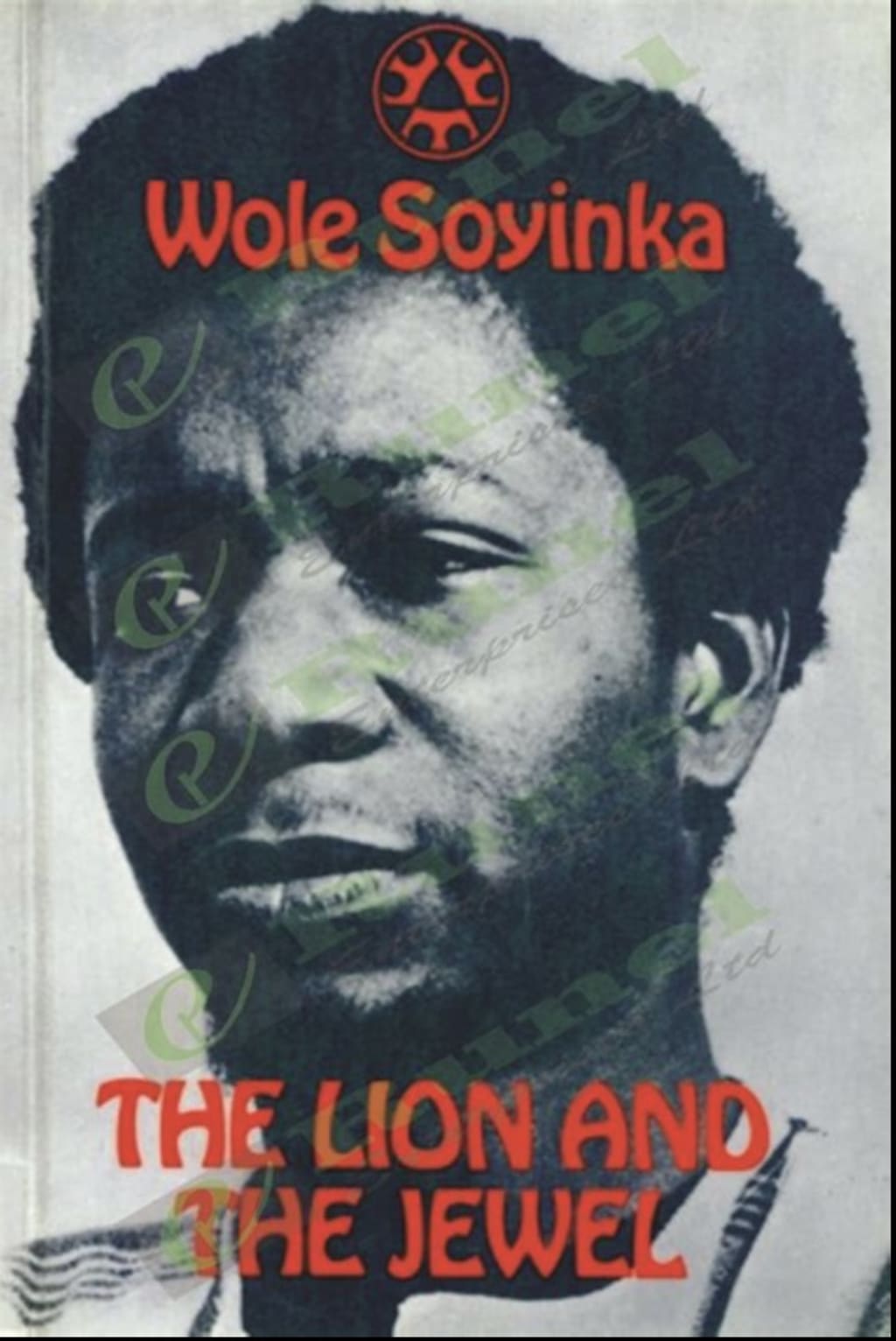
The Dangerous Power of Pride: A Forensic Reflection on The Lion and the Jewel and Life’s Parallels
Have you ever noticed how pride, in its various forms, can quietly manipulate people into thinking they have control, only to discover that it's often the cause of their downfall? Manipulation and vanity may appear as subtle tactics for gaining influence, but the cost of pride—when unchecked—can be catastrophic. Wole Soyinka’s The Lion and the Jewel gives us a lens to understand how pride and manipulation weave into the fabric of human behavior, driving characters toward self-destruction, often without them even realizing it. This not only applies to the play's characters but to real-life scenarios where we, too, may unknowingly allow pride to govern our actions.
Recently, my daughter greeted me with "good morning" twice. It was a simple but significant moment that stayed with me. It echoed in my mind, reminding me of the repeated phrase “Goode Morin, goodu Morin” from the play, which we hear over and over from Alakowe. That repetition stuck, and it stirred reflections on how pride and manipulation can become cyclical, blinding us to the truth. It also took me back to a moment in my own life when I played Sidi in a school production of The Lion and the Jewel. I studied the play in junior secondary school, and playing Sidi deepened my understanding of the characters’ motivations and the impact of their pride. The lessons from that time have stayed with me, and now, they feel even more relevant than ever.
The Destructive Nature of Pride and Manipulation
In The Lion and the Jewel, we encounter two central figures—Baroka, the cunning Bale, and Sidi, the beautiful village maiden. Baroka is consumed by his pride, believing that his charm, influence, and power are beyond challenge. His manipulations, masked under the guise of wisdom and tradition, are designed to control and dominate others. Similarly, Sidi’s vanity, stemming from her newfound beauty and recognition, leads her to believe she is superior, even invincible. She overlooks the deeper value of her relationships and the people around her.
These characters remind us of a common phenomenon we witness in both personal and professional environments. Think of situations where pride manifests as manipulation—whether in the workplace, social circles, or family dynamics. Often, these manipulative actions are cloaked in charm or calculated persuasion, but beneath them lies a thirst for control, validation, or self-importance.
A Psychological Exploration: The Ego and Its Downfall
What makes this dynamic so compelling is not just the overt manipulation but the underlying psychological mechanisms. Baroka’s pride is an expression of ego defense—his need to prove his dominance and control. It’s a defense mechanism, one that stems from his insecurity and desire to remain in power. In contrast, Sidi’s pride—driven by vanity—stems from the psychological phenomenon of self-idealization. She is so caught up in her image of herself as the village’s most desirable woman that she fails to see the potential pitfalls of her actions.
In both cases, we see how unchecked pride fuels their egos, leading them to manipulate those around them. Baroka’s decision to manipulate Sidi is an effort to reassert his fading dominance, while Sidi’s naiveté about her worth blinds her to the value of genuine connection. Both are ensnared in their egos, and the consequences are inevitable.
The Consequences: Isolation, Self-Destruction, and Lost Connections
What is often left out of discussions about pride is the isolation it breeds. The more we cling to our sense of superiority, the more we alienate others. Both Baroka and Sidi fall victim to this isolation. Baroka’s manipulation alienates him from others in the village, creating a brittle world where power is based on fear and control, rather than mutual respect. Sidi, too, distances herself from the people who truly care for her, mistaking their affection for mere flattery.
This is a common thread that runs through real-life scenarios as well. In relationships, whether romantic, familial, or professional, the influence of pride often erodes the trust and connections we have with others. The more we focus on self-importance and manipulation, the more we lose sight of the value of authentic relationships.
Real-World Parallels: When We, Too, Fall Into the Trap
Reflecting on these characters forces us to confront uncomfortable truths about our own behaviors. How often have we manipulated situations to our advantage, perhaps by using charm, persuasion, or deceit? Whether we do this consciously or not, pride can blind us to the ethical boundaries we should uphold. It makes us believe that our value comes from how others perceive us, instead of from who we truly are.
Have we ever been like Sidi, unable to recognize the true worth of those around us because our vanity has clouded our judgment? Have we been like Baroka, too focused on proving our power that we fail to see how our actions are harming others? The play challenges us to examine these tendencies and reflect on how they manifest in our daily lives.
The Dangers of Manipulation and the Ultimate Cost
One of the most poignant moments in The Lion and the Jewel is when Baroka’s manipulation of Sidi is finally laid bare. He thought his cunning would guarantee his victory and control, but in the end, his pride blinds him to his own limitations. His manipulation doesn’t just hurt Sidi—it ultimately destroys him. In a powerful twist, he reveals the fragility of his own power, reminding us that no amount of pride can shield us from the consequences of our actions.
This is a critical lesson for all of us. Manipulation, whether in personal or professional life, may yield short-term gains, but the long-term consequences are often far worse. Baroka’s ultimate humiliation is a warning: those who rely on manipulation for success are often the first to fall.
The Call for Empathy, Humility, and Self-Awareness
The Lion and the Jewel ultimately challenges us to confront our own pride. It encourages us to recognize when we are being manipulated, whether by others or by our own egos. More importantly, it urges us to look beyond our pride and vanity, to practice humility, honesty, and empathy. We are reminded that true power lies not in manipulation or control, but in our ability to connect with others authentically and to lead with compassion.
The call to self-awareness is undeniable. In our relationships, whether in the workplace or in our personal lives, we must constantly evaluate how pride affects our behavior. It is only through introspection and a commitment to humility that we can break free from the destructive cycle of manipulation.
Final Reflection: Breaking Free from Pride’s Grip
The question we must all grapple with, as The Lion and the Jewel suggests, is how we can see ourselves and others clearly, without the distortion of pride. To lead with empathy, to make decisions that are rooted in honesty and compassion, and to value the people around us for who they truly are, we must let go of pride’s grip.
What will it take for us to see beyond our egos? To lead with compassion? To build connections grounded in mutual respect rather than self-interest? The choice is ours to make, but it requires a commitment to understanding, introspection, and the courage to face uncomfortable truths about ourselves.
After all, it’s not pride that will carry us through—it’s the compassion and understanding we show to others, and the humility we embrace in ourselves.
About the Creator
Adejoke Adediwura
I'm a passionate storyteller creating thought-provoking, impactful pieces that inspire and connect. My writing blends emotion and intellect, sparking conversations and fostering shared humanity.
Keep reading
More stories from Adejoke Adediwura and writers in Writers and other communities.
The Power of Love: Exploring the Fine Line Between Love and Hate in Human Connections
Discover how love’s transformative power shapes our relationships, societies, and world. Explore the fine line between love and hate in this thought-provoking exploration.
By Adejoke Adediwura12 months ago in Writers
How to Hire a Virtual Assistant for Personal Organisation and Scheduling
If your calendar feels like a battlefield back-to-back meetings, personal errands, rescheduling, missed reminders you’re not alone. In 2025–2026, more professionals and founders are hiring a virtual assistant (VA) not for “extra help,” but to build a system that keeps life and work running smoothly.
By Michael Coplin4 days ago in Writers
Miss Persephone's Manual to a Seemingly Ordinary Life
Miss Persephone was found at the dining table, her blue eyes swollen, her tears arriving and retreating like the tides of the ocean. Earlier that day, her family had visited her in the retirement home where she had lived for eight years. It was her eightieth birthday.
By Imola Tóth2 days ago in Fiction




Comments
There are no comments for this story
Be the first to respond and start the conversation.