
Islam and Capitalism: Two Civilizations, Two Economies, Two Perspectives”
ইসলাম ও পুঁজিবাদ: দুটি সভ্যতা, দুটি অর্থনীতি, দুই দৃষ্টিভঙ্গি”

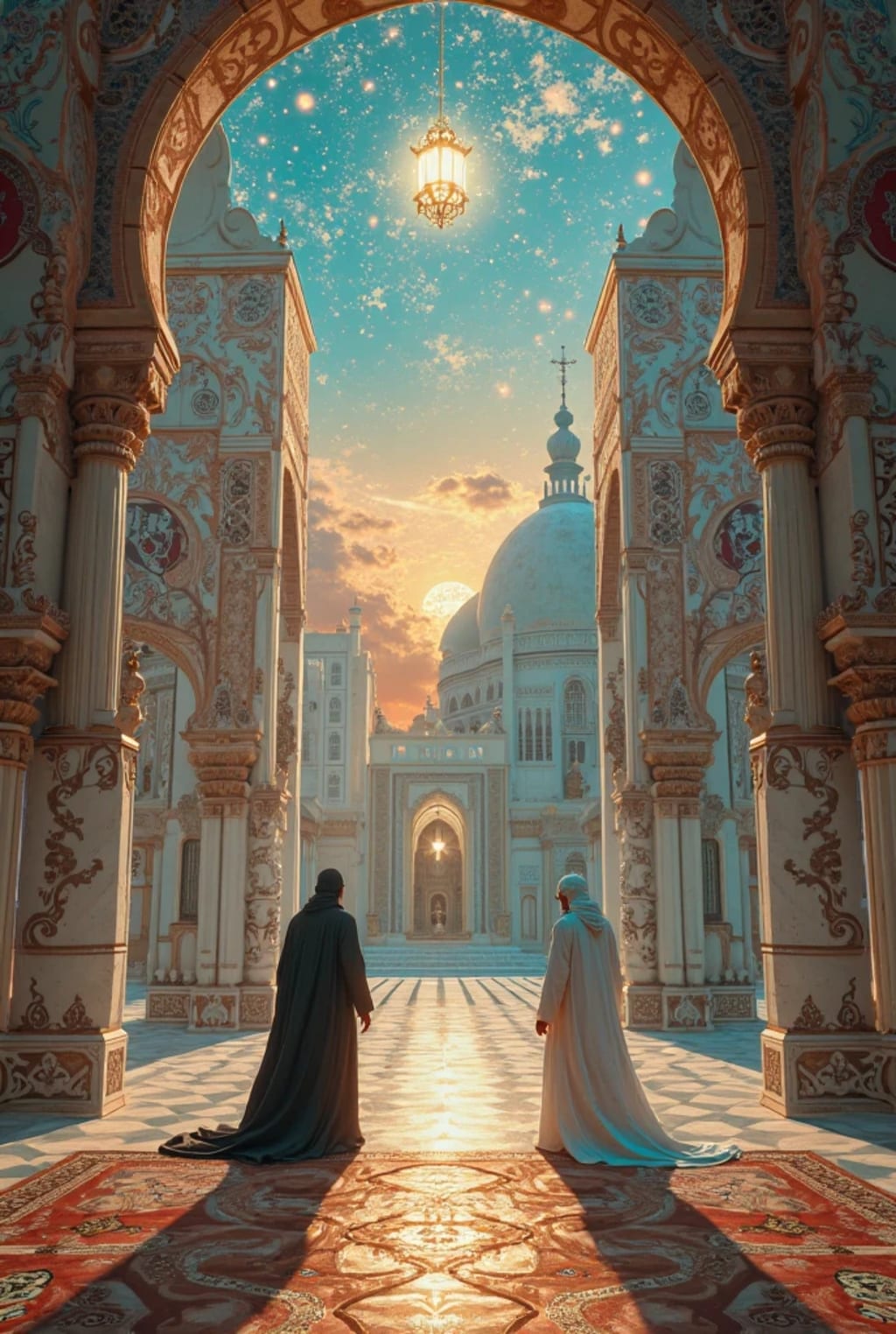
Capitalism is the economic backbone of modern Western civilization. Its fundamental principles are the free market system, private ownership, the maximization of profit, and competition. Capitalism accepts human greed as natural and just, and establishes that greed as the driving force of economic growth. Here, wealth accumulation, interest, investment, corporate dominance, and global trade are the main principles.
On the other hand, the Islamic economic system carries a completely opposite view. In Islam, the owner of wealth is Allah. Man is responsible only as a caliph or representative over it. Islam instructs that wealth should be used, distributed, and used for social welfare instead of hoarding. While capitalism builds a society on the basis of interest, Islam prohibits it. In the words of the Quran, “Allah destroys interest and increases charity” (Surah Al-Baqarah 2:276). This is where the profound difference between the two views lies.
In capitalism, the rich get richer, the poor get poorer—this is the reality. Because profit is everything here, not justice. A rich person owns more capital with the power of his capital, while workers only sell their labor, but do not own the product. Corporate capitalism builds this system in such a way that a few owners dominate the entire society.
Islam questions the basis of this economic inequality and exploitation. In Islam, wealth is not only the right of the individual, but also of society. Therefore, Islam has made zakat obligatory—a compulsory social distribution system, where a portion of the wealth of the rich is allocated to the poor. Not only zakat, Islam has also given clear principles about sadaqah, ushr, fitrah, forgiven debts, and limitations on wealth.
Capitalism has legalized interest in the name of personal freedom, yet it is the most oppressive system in the world. Because of interest, poor countries in today's world are forever imprisoned in debt slavery. Africa, Latin America, and even Muslim countries are burdened with interest-based loans from the IMF and the World Bank. The governments impose the burden of this debt on the common people—by raising taxes, withdrawing subsidies, and cutting education and healthcare. However, since interest is prohibited in an Islamic economy, there is no scope for such slavery.
Business is permissible in Islam, but fraud, shortages, overvaluation, brokerage, and monopoly are forbidden. Although capitalism embellishes business, in reality it is a kind of illusion—where profit is morality, the stock market is religion, and market forces are the ultimate truth. Islam breaks this illusion, and says—“Business is a blessing, but fraud is destruction.” Islam calls people—not to jobs, but to the freedom of business; but that business should be based on justice.
Another characteristic of capitalism is—hedonism. It creates a thirst in people’s minds that is never satisfied. Advertisements, brands, luxury—everything controls people in such a way that they become slaves to their own needs. Islam breaks this slavery. A true Muslim knows—the goal of his life is not worldly accumulation, but the path to the Hereafter. Therefore, no matter how much he earns, he knows—there is accountability, there is calculation.
Islam is not an “alternative capitalism.” It is an independent economic system, where blessing is associated with profit, deposit with ownership, and responsibility with distribution. During the era of the Rightly Guided Caliphs, such as the time of Umar (RA), the economy was not under state control, nor was there corporate monopoly. The distribution of wealth was such that—at one time, no one could find a zakat recipient.
The modern Muslim world is today ensnared in the capitalist system. Interest is also practiced in Muslim countries, tax exemptions for the rich, and lamentations for the poor. But if Islamic economic principles were followed, social justice would be established, the gap between rich and poor would be reduced, and the state economy would be used to serve the people—not the banks and corporate masters.
Islam wants people to be seen not as slaves of wealth, but as owners and responsible agents. This view changes not only the world’s economy, but also the minds of people. Capitalism says, “Get what you want.” Islam says, “Get what you get, and earn Allah’s pleasure.”
About the Creator
Keep reading
More stories from Abdul Barik and writers in Writers and other communities.
Geopolitics and Islam: A Thousand-Word Analytical Discussion
Geopolitics and Islam: A Thousand-Word Analytical Discussion Geopolitics—also known as geopolitics—is a complex reality of the world system. It is a complex pattern of policies and relationships developed around the geography, wealth, military power, economy, and cultural influence of states, which directly affects the course of human life and civilization. But what does Islam say in this complex world? How did the Islamic perspective view or still view geopolitics? To find the answer to this question, we must go back to early Islam and the state philosophy of the Prophet Muhammad (peace be upon him), and integrate it with modern reality.
By Abdul Barik9 months ago in Writers
It's Winter
Anne Bernays and Pamela Painter — What If? Writing Exercise for Fiction Writers prompts The Exercise —Write a scene involving two characters. Have the point-of-view character presume something entirely different about the situation from what the other character's overt behavior seems to imply. For example, a landlord comes to visit, and the tenant suspects that it isn't a visit but an inspection. Make up several situations in which one character can fantasize or project or suspect or even fear what another character is thinking. The Objective - To show how your characters can use their imaginations to interpret the behavior and dialogue of other characters.
By Denise E Lindquist17 days ago in Writers
How to Empower Your Writing Acumen with ‘Morning Pages’
“The morning pages will teach you to stop judging and just let yourself write. So what if you’re tired, crabby, distracted, stressed? Your artist is a child, and it needs to be fed. Morning pages feed your artist child. So write your morning pages.” ― Julia Cameron
By Chantal Christie Weissabout 11 hours ago in Writers


Comments (1)
Interesting!!!