
Innovative Strategies for Supply Chain Decarbonization in 2025
One of the key platforms addressing these challenges is the 2nd Annual Supply Chain Risk and Resilience Forum, scheduled to take place this year.

As we step into 2025, businesses worldwide are under increasing pressure to achieve supply chain decarbonization and sustainability. With regulatory frameworks tightening and consumer demand for eco-friendly products growing, organizations are actively seeking innovative ways to reduce carbon emissions across their supply chains.
One of the key platforms addressing these challenges is the 2nd Annual Supply Chain Risk and Resilience Forum, scheduled to take place this year. This event will bring together industry leaders to discuss cutting-edge solutions and strategies for a greener and more resilient supply chain.
The Need for Supply Chain Decarbonization
According to the World Economic Forum, supply chains account for more than 60% of global carbon emissions. As sustainability becomes a business imperative, organizations must adopt smarter approaches to emission reduction, such as:
- Adopting Circular Economy Practices – Reducing waste and recycling materials to create a closed-loop supply chain.
- Enhancing Supply Chain Visibility – Using AI and blockchain to track carbon footprints and ensure transparency.
- Switching to Green Logistics – Implementing electric fleets, hydrogen-powered transport, and sustainable packaging.
Innovative Strategies for Supply Chain Decarbonization
1. Digital Twins and AI-driven Optimization
Digital twin technology is revolutionizing supply chain decarbonization and sustainability by providing real-time simulations of logistics operations. AI-powered analytics help businesses predict disruptions, optimize routes, and minimize energy consumption.
Case Study: In 2024, DHL reduced its carbon footprint by 10% by integrating AI-driven logistics planning, cutting unnecessary fuel consumption and optimizing delivery routes.
2. Sustainable Procurement and Supplier Collaboration
A significant portion of emissions comes from suppliers. Companies are now incorporating sustainable procurement policies, working closely with vendors who follow eco-friendly practices.
Example: Unilever has committed to reducing emissions by 50% by 2030, sourcing raw materials only from verified sustainable suppliers.
3. Electrification of Freight and Renewable Energy Adoption
Transitioning to electric trucks and renewable energy is a game-changer for supply chains. Tesla Semi trucks and hydrogen-powered freight trains are already making waves in logistics sustainability.
4. Carbon Insetting and Offsetting Initiatives
Companies are investing in carbon insetting by supporting reforestation projects and switching to biofuels for supply chain operations.
Stat: The International Energy Agency (IEA) predicts that by 2025, corporate investments in carbon offset projects will exceed $1 billion.
5. Smart Warehousing and Green Manufacturing
Energy-efficient warehouses, powered by solar panels and IoT-based energy monitoring, are cutting emissions in distribution centers. Amazon and IKEA are leading the way by building carbon-neutral fulfillment centers.
The Role of the Supply Chain Management Forum in Driving Change
The 2nd Annual Supply Chain Risk and Resilience Forum is set to play a crucial role in shaping the future of supply chain decarbonization and sustainability. Key discussion points include:
- Adapting to Net-Zero Goals – Strategies for achieving carbon neutrality in supply chains.
- Resilient and Sustainable Sourcing – Enhancing collaboration with green-certified suppliers.
- Technology Innovations – Leveraging AI, IoT, and blockchain for carbon footprint tracking.
Attendees will have the opportunity to network with industry experts, policymakers, and sustainability advocates, gaining insights into the latest trends and best practices.
Case Study: How Maersk is Leading Supply Chain Decarbonization
Maersk, a global leader in shipping, has committed to achieving net-zero emissions by 2040. The company has implemented methanol-powered vessels and AI-driven route optimization, cutting emissions by 20% in just two years.
Key Statistics on Supply Chain Sustainability in 2025
- 60% of consumers prefer brands with sustainable supply chains (Harvard Business Review).
- Global carbon taxes on supply chains are expected to reach $100 per ton of CO2 by 2026 (IEA).
- 80% of Fortune 500 companies now include supply chain sustainability in their ESG reports (McKinsey & Company).
FAQs
1. Why is supply chain decarbonization crucial in 2025?
With increasing climate policies and carbon taxes, businesses must reduce emissions to stay competitive and compliant with global sustainability regulations.
2. How can small businesses contribute to supply chain sustainability?
Small businesses can adopt local sourcing, digital tracking for emissions, and energy-efficient logistics solutions to reduce their carbon footprint.
3. What are the benefits of attending the Supply Chain Risk and Resilience Forum?
Attendees gain exclusive industry insights, networking opportunities, and practical strategies for achieving sustainable supply chains.
Conclusion
The transition towards supply chain decarbonization and sustainability is no longer optional—it’s a necessity. By adopting innovative strategies such as AI-driven logistics, green procurement, and carbon insetting, businesses can significantly cut emissions and enhance supply chain resilience.
The Supply Chain Management Forum will be a game-changing event for industry professionals looking to drive meaningful change in their operations. Join the conversation and be part of the global movement toward a greener, more efficient supply chain.
About the Creator
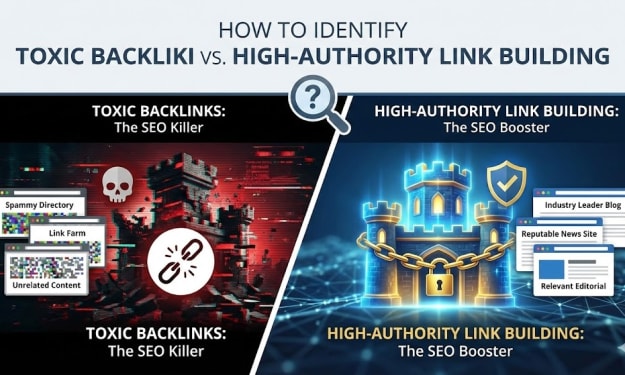
How to Identify Toxic Backlinks vs. High-Authority Link Building
In search engine optimization, backlinks remain one of the most influential ranking factors. However, not every backlink contributes positively to a website’s growth. Some links strengthen authority and visibility, while others quietly weaken trust and long-term performance. Understanding this difference is essential for anyone serious about sustainable SEO.
By Abbasi Publisher5 days ago in Writers



Comments
There are no comments for this story
Be the first to respond and start the conversation.