
How to Identify Toxic Backlinks vs. High-Authority Link Building
Toxic Backlinks vs. High-Authority Link Building

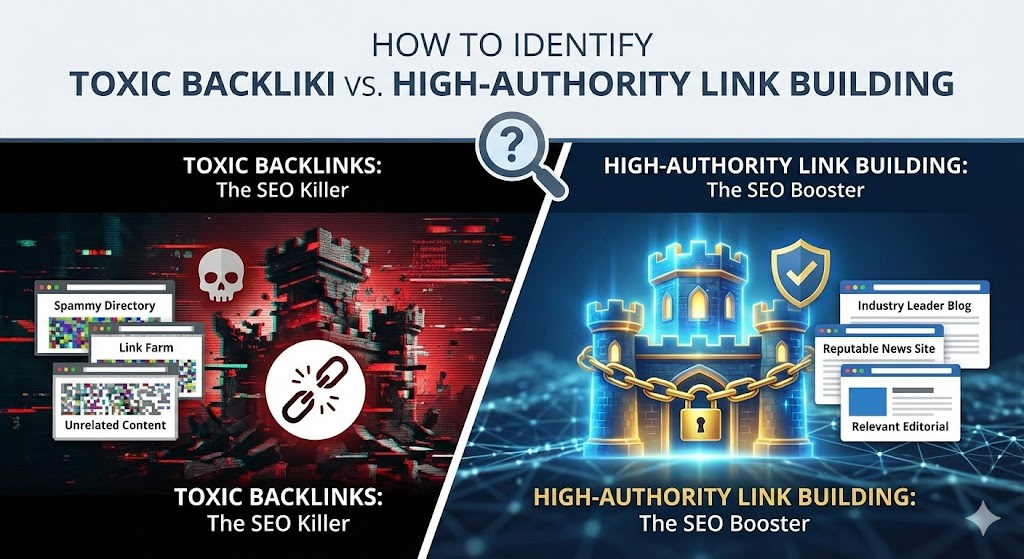
In search engine optimization, backlinks remain one of the most influential ranking factors. However, not every backlink contributes positively to a website’s growth. Some links strengthen authority and visibility, while others quietly weaken trust and long-term performance. Understanding this difference is essential for anyone serious about sustainable SEO.
Successful websites focus less on volume and more on link quality. High-authority link building is about relevance, credibility, and natural placement—while toxic links often come from shortcuts that search engines increasingly recognize and ignore.
Below are the core principles that help distinguish a harmful backlink from a genuinely valuable one.
1. Relevance Determines Trust
Relevance is the foundation of a strong backlink. Search engines evaluate whether a link logically fits within its surrounding content and industry.
For example, a website focused on digital marketing benefits far more from a backlink on an SEO or business publication than from a random blog covering unrelated topics. When a site publishes content across unrelated niches with no clear focus, it signals weak editorial standards.
High-quality backlinks come from websites with a clear theme, consistent audience, and subject-matter alignment.
2. Real Authority Comes from Real Traffic
Metrics like Domain Authority or Domain Rating are helpful indicators, but they should never be viewed in isolation. These scores are estimates, not guarantees.
What matters more is whether a website attracts real users. Sites that rank for keywords, generate organic traffic, and show engagement are far more trustworthy in the eyes of search engines. A backlink from a page that receives visitors indicates that Google already sees value in that content.
Traffic reflects credibility. Authority follows attention.
3. Natural Structure and Editorial Signals
Search engines are exceptionally good at identifying patterns. When multiple links originate from sites that share identical layouts, hosting environments, or publishing behavior, those patterns raise suspicion.
High-quality links are placed within editorial content, supported by context, and surrounded by meaningful information. Each site linking to you should feel independent, authentic, and professionally maintained.
Diversity in layout, hosting, and content presentation is a natural characteristic of trusted websites.
Choosing the Right Link Building Approach
Once quality standards are understood, the next decision is how links are acquired.
Some website owners choose to invest time in building relationships, earning placements through content contributions, partnerships, and brand mentions. This method requires patience but offers long-term stability.
Others work with experienced SEO providers who focus on ethical outreach, editorial placements, and authority publications. The key is transparency, manual processes, and a clear emphasis on quality over volume.
Shortcuts that prioritize speed over credibility often lead to links that add little value—or worse, create risk.
Common Questions About Backlink Quality
Can toxic backlinks damage a website?
In most cases, search engines simply ignore low-quality links rather than penalize a site. However, deliberately building large volumes of manipulative links can increase risk. This is why intentional, selective link building matters.
Is one strong backlink better than many weak ones?
Yes. A single backlink from a relevant, trusted website often provides more value than dozens of low-quality links from unrelated sources.
Why is traffic more important than metrics alone?
Traffic demonstrates real user interest. Metrics can be manipulated, but sustained organic traffic is difficult to fake and reflects genuine authority.
Final Thoughts
A backlink should feel natural, relevant, and earned—not forced or artificial. Websites with real content, consistent traffic, and clear purpose provide the strongest SEO value.
Rather than chasing numbers, focus on credibility. Evaluate where links come from, how they are placed, and whether they make sense for your audience. When quality, relevance, and trust guide your strategy, long-term rankings follow naturally.
About the Creator
Abbasi Publisher
Khurram Abbasi is a professional content strategist and writer, founder of Abbasi Publisher, specializing in guest posting, high-authority backlinks, and media placements to elevate brands and digital presence.
Keep reading
More stories from Abbasi Publisher and writers in Writers and other communities.
Why Australia’s New Psychosocial Safety Laws Are Forcing Employers to Rethink Workplace Risk
Australia has quietly entered a new era of workplace regulation, one where psychological health is no longer treated as a secondary wellbeing concern, but as a formal safety obligation equivalent to physical hazards. This shift represents one of the most significant changes to occupational health and safety governance in decades.
By Abbasi Publisher4 days ago in Writers
Maintenance Planning Guide for Used Cars
Buying a used car is only the first step. The real key to long-term reliability, safety, and value lies in smart maintenance planning. Unlike new vehicles, used cars come with wear, history, and unknowns—making a proactive maintenance plan essential.
By Bison Tonneau Covers4 days ago in Writers




Comments
There are no comments for this story
Be the first to respond and start the conversation.