
Illuminating History: The Surprising Origins of the Light Bulb
"Lighting the Past: Unraveling the Origins of the Light Bulb"
Introduction:
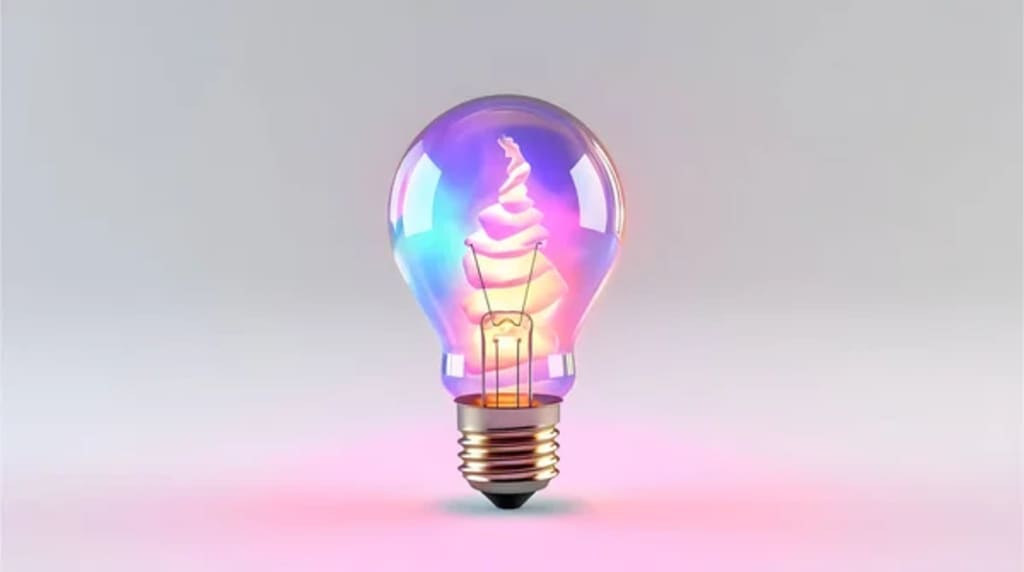
The seemingly simple question of who invented the light bulb can spark debates among historians of science. While many attribute the invention to Thomas Edison, the timeline of light bulbs extends far earlier, with various iterations preceding his famous creation. The journey into the origins of light bulbs takes us back to the 17th century, unveiling the intriguing story of barometric lights and the pioneers who experimented with them.
The Barometric Light Mystery:
In the late 1670s, astronomer Jean-Félix Picard stumbled upon a peculiar phenomenon while working with a barometer, an instrument designed to measure air pressure. The mercury inside the barometer emitted a mysterious glow as it sloshed around, leading Picard to report this anomaly to the French Academy of Sciences. This marked the inception of what came to be known as barometric lights.
Early Investigations:
The scientific community's initial interest in barometric lights was short-lived, overshadowed by the groundbreaking discoveries of the time, such as Isaac Newton's contributions to modern physics. However, in 1705, Newton's assistant, Francis Hauksbee, reignited the investigation into barometric lights. Hauksbee's innovative experiments involved a hand-cranked glass sphere filled with mercury, producing a glow that could be enhanced by touching the spinning sphere. Concurrently, physicist Pierre Polinière in France explored similar phenomena using glass tubes and mercury, contributing his findings to the evolving puzzle.
Unraveling the Mystery:
The eventual understanding of barometric lights lay in the realm of frictional electricity. As materials like mercury rubbed against glass, electrons were transferred, creating an electrical imbalance. The glass became negatively charged, and the mercury positively charged, resulting in an electric potential. The motion of the container caused the separation and recombination of charges, releasing electric potential energy as light—a phenomenon akin to lightning.
Hauksbee's Legacy:
While Hauksbee's experiments were conducted long before the discovery of electrons, they provided crucial insights into the nature of frictional electricity. Hauksbee's hand-cranked glass sphere, generating light through friction, is considered one of the earliest light bulbs. This historical moment marked a pivotal development in the understanding of electricity, laying the foundation for subsequent advancements in the field.
Implications for Modern Understanding:
The journey through the origins of the light bulb reveals that early scientists grappled with mysterious phenomena, ultimately contributing to our current understanding of electricity. Today, frictional electricity is a familiar concept, evident in everyday experiences like static electricity.
Conclusion:
The invention of the light bulb is a story that extends far beyond the commonly attributed names. The barometric lights of the 17th century, explored by pioneers like Hauksbee and Polinière, paved the way for the electrically illuminated world we live in today. This journey into the past reminds us that even seemingly straightforward inventions have complex and fascinating origins.
About the Creator
Keep reading
More stories from Kayne Wild and writers in Writers and other communities.
Nipple Chronicles: Unveiling the Intriguing World of Male Nipples
Weird Facts About Male Nipples: Unraveling the Mysteries Beyond the Surface Delve into the fascinating world of male nipples and uncover the surprising facts that lie beneath their surface. From lactation mysteries to unexpected erogenous zones, join us on a journey through the peculiar aspects of this often-overlooked body part.
By Kayne Wild2 years ago in Men
Published in Portrait of New England
My quest to find many publications with prestige to submit to has worked out even better than I thought. I was searching for more publications with more prestige in order to bolster my resume. I truly thought I'd try this for a year and not get published anywhere... maybe if I was lucky... in one of them. And I was OK with that... I was just going to try again the following year, and the year after that, and so on.
By Stephen Kramer Avitabile26 days ago in Writers
How Students Can Check Scholarship Status Without Missing Updates
For millions of students worldwide, scholarships play a critical role in continuing education without financial strain. However, receiving a scholarship is only the first step. One of the most common challenges students face afterward is tracking their scholarship status accurately and on time. Missed updates, incomplete information, or misunderstanding the process can result in delayed payments or even disqualification.
By Abbasi Publisher5 days ago in Writers


Comments (1)
Brilliant storytelling. It's a captivating journey through the history of light bulbs, shedding light on the complexities preceding Edison's era.