
I Wrote a Love Story and Fell for the Villain
When your antagonist steals the spotlight—and your heart. A writer's journey into morally gray obsession

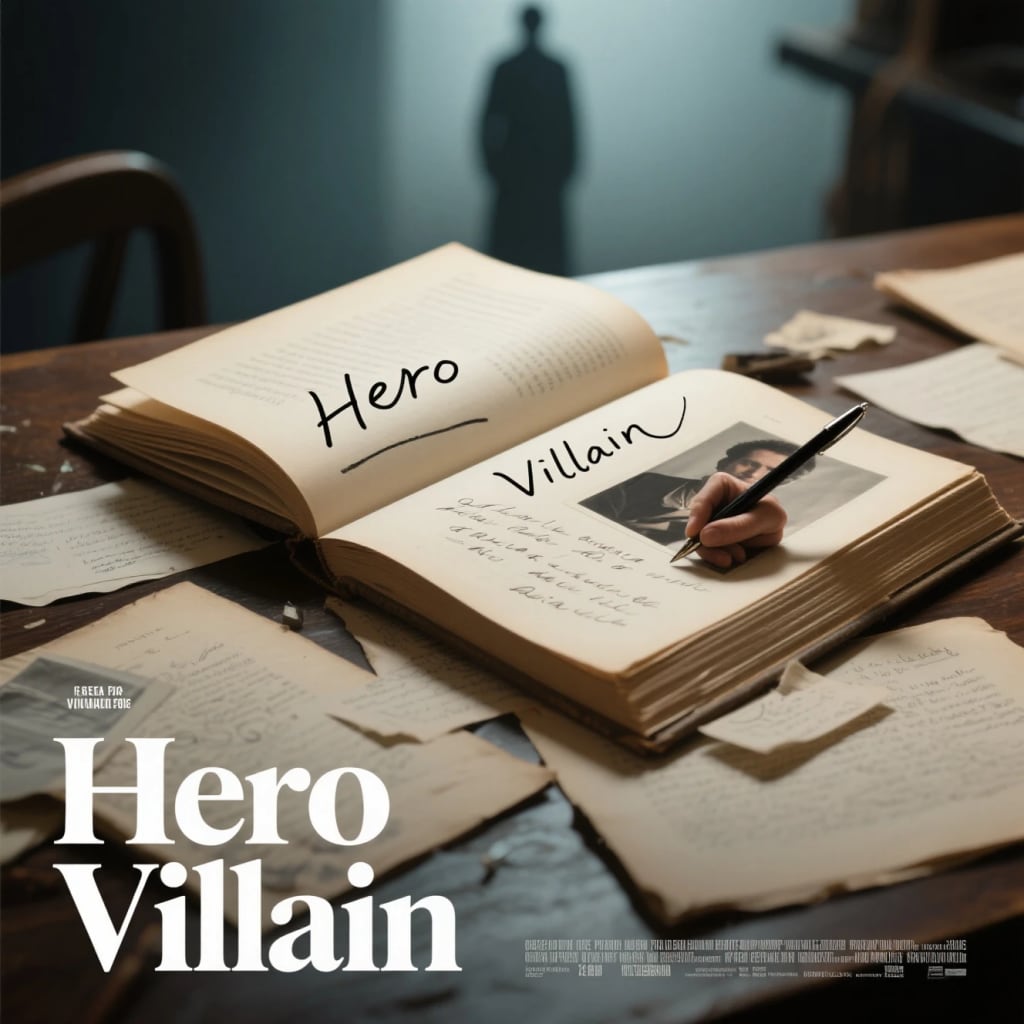
It was supposed to be a simple love story.
A struggling artist meets a charming bookstore owner. Sparks fly. Hearts open. Love triumphs. That was the plan—wholesome, predictable, marketable. The kind of story people read with a warm cup of tea and a cozy blanket.
But then came him.
He wasn’t even meant to be a central character. Just a shadow in the corner, a reminder that love must conquer something. A villain. A foil. Someone to challenge the protagonist’s bliss. I gave him a sharp mind, a tragic past, and a twisted sense of justice. Just enough to make the plot move forward.
But then... he spoke.
Not literally, of course. But in the way only writers can understand—when a character starts writing themselves, making choices you never planned. He wasn't content with being an obstacle. He wanted to be seen. And the more I wrote, the more I listened.
I named him Calder.
He was everything my hero wasn’t. Dark where the protagonist was light. Calculated where she was impulsive. Complicated in a way that made you want to solve him, even though every part of you knew you couldn’t.
At first, it was curiosity.
I explored his backstory. I gave him scars, both literal and metaphorical. A childhood of abandonment. A betrayal that hardened his heart. Motivations that weren’t evil, just... misunderstood. I told myself I was just making a better villain. More dimensional. More believable.
But then Calder started showing up more often in the scenes. The protagonist would walk through a rainy street and bump into him instead of the intended love interest. He’d speak in monologues I hadn’t planned. And every time he entered the page, the rest of the story dimmed.
I tried to course-correct.
I went back and revised entire chapters. I rewrote dialogue, cut his scenes, trimmed his influence. But it didn’t work. Every time I took him away, the story felt hollow. He wasn’t just the antagonist anymore—he was the pulse. The dark gravity pulling everything in.
And I?
I had fallen for him too.
It sounds absurd. Falling for a fictional man I created on a laptop over midnight writing sessions and too much coffee. But it happened slowly, and then all at once. I’d catch myself thinking about how Calder would react in real life situations. I'd doodle fragments of his dialogue in the margins of my notebooks. He started visiting me in dreams—never threatening, never kind, just present.
I stopped writing for a few weeks. Not because I was burnt out, but because I was scared.
Scared of how much of me was in him. Scared that maybe he wasn’t just a character—but a reflection of all the things I kept hidden. My own anger, my own pain, my longing to be seen beneath layers of politeness and control. Calder didn’t care if people liked him. He demanded to be understood.
The story morphed. What began as a simple love story became a psychological war between passion and morality. My readers (the few friends I shared early drafts with) were torn.
“Why is the villain so... hot?”
“I hate that I like him. That’s a problem, right?”
“I’m rooting for him more than the hero. Is that okay?”
That’s when I realized I had created something dangerous—and perhaps important.
Falling in love with the villain isn’t new. Literature is full of magnetic antiheroes: Heathcliff, Loki, Tom Ripley, even Dracula. But for me, it wasn’t just about attraction. It was about recognition. Calder wasn’t an escape; he was a mirror.
Eventually, I finished the book.
Not the one I originally intended, of course. The happily-ever-after love story had been hijacked. What I published instead was a romance tangled in lies, betrayal, longing, and redemption that never quite arrived. Calder got what he wanted—not the girl, but the truth. He wasn't forgiven. But he was understood.
And for the first time, so was I.
I still get emails about that book. Some readers are furious. Others are captivated. One woman told me, “I hated that I loved him. But I loved that you made me feel that way.” Another said, “I dated a Calder once. Thank you for helping me see why I couldn’t fix him.”
It’s been a year since I wrote his ending, and I haven’t tried to write another villain since. Not because I’m afraid, but because I know Calder was a one-time storm—an obsession that bled out of me and onto the page, leaving just enough behind to haunt.
He still lives in my mind, occasionally whispering sarcastic remarks when I try to write someone new.
And I smile.
Because I fell in love with the villain.
And in doing so, I found the most honest part of myself.
About the Creator
Muhammad Sabeel
I write not for silence, but for the echo—where mystery lingers, hearts awaken, and every story dares to leave a mark
Keep reading
More stories from Muhammad Sabeel and writers in Writers and other communities.
Confessions of a Serial Story Starter
It started innocently enough, like all bad habits. A blank page, an idea swirling in my head, and the thrill of possibility. I’d stare at the cursor blinking, my mind racing with all the potential. I was a creator, a storyteller. And yet, despite all my enthusiasm, I had a dark secret that no one knew.
By Muhammad Sabeel9 months ago in Writers
Happy Hour with Harper
I know we’re all scattered across different time zones (EST for me), but I would love to have a Zoom call with some of you crazy fuckers and hear your accents (you can hear mine now if you click the link at the end of Sacrificial Fire) and just talk. So, if this is something you also think would be fun, drop your optimal days & times (include your time zone or do the math to figure out what EST that would be). Informal—drop in, drop out, and I promise not to assign homework (like I’m hard up for shit to grade). If even just one person is up for this, I’ll figure out a time/day and post another Happy Hour piece with a link.
By Harper Lewis7 days ago in Writers
The Devil's Cut
“Comrade, finally you’re awake.” The voice was smooth, sensual. A flickering incandescent bar was all that lit the white, sterile room. All Vladimir remembered was everything going black. He tried to move his arms and found them strapped to the gurney.
By Matthew J. Fromm5 days ago in Fiction


Comments
There are no comments for this story
Be the first to respond and start the conversation.