
How to Start Writing on Medium.com in 2026 (Without Feeling Like an Imposter)
The surprisingly honest guide to starting on Medium in 2026

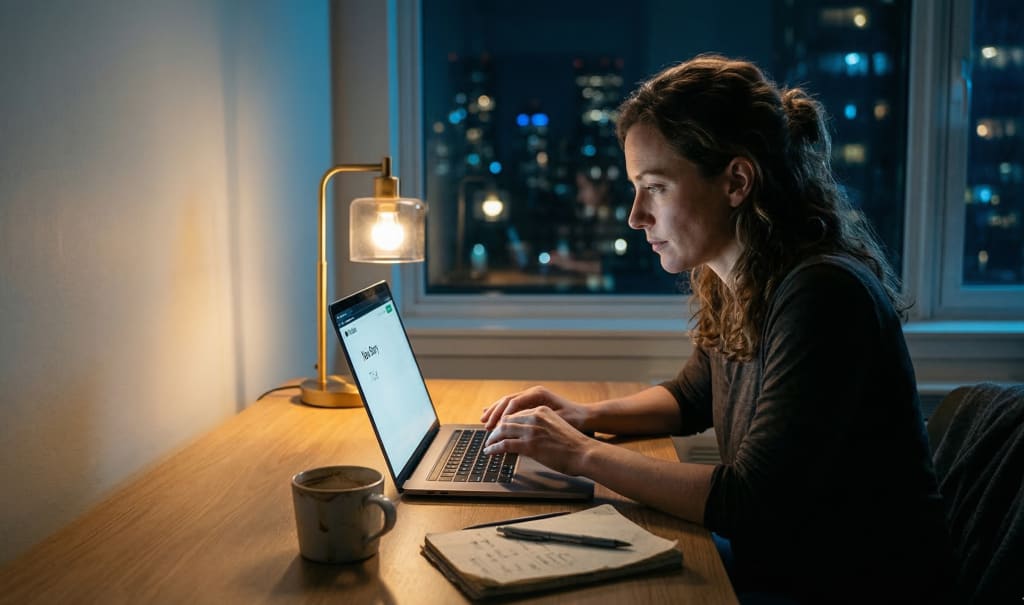
The surprisingly honest guide to starting on Medium in 2026 — from someone who opened an account, panicked, deleted drafts, and finally hit “publish”
If you’re wondering how to start writing on Medium.com in 2026 without getting overwhelmed, discouraged, or lost in the noise, this is the guide I wish I’d had on day one.
I remember the exact tab I had open the first time I tried:
“New Story – Medium.”
The cursor blinked in an empty title field for a full ten minutes while I stared back at it like we were in some kind of staring contest. I’d read all these “How I made $3,000 my first month on Medium” posts, and there I was, stuck on a title. Not even the article. Just the title.
That’s the first thing nobody tells you: the hardest part isn’t the algorithm or the money or the tags. It’s getting through the part where you feel like you have no right to write there at all.
So let’s start there—and then walk through the actual step‑by‑step of how to start writing on Medium in 2026 in a way that doesn’t burn you out by week two.
How to start writing on Medium.com in 2026 (before you touch a single setting)
Medium makes it look simple: sign up, click “Write,” publish.
Technically, that’s true. But if you start like that, you’ll probably do what I did: publish something you’re not proud of, get almost no views, and then assume you’re “bad at writing.” You’re not. You just skipped the invisible setup.
Here’s what I’d do first, before you draft anything:
Create a free Medium account
Go to Medium.com, sign up with email, Google, or Twitter/X. Don’t overthink your username. You can change your display name later.
Add a face and a sentence
Upload a photo that actually looks like a person, not a logo. Then write a single honest line in your bio. Not your whole life story. Just something like:
“Writing about learning to code at 35.”
or
“Essays on burnout, creativity, and quitting quietly.”
Decide your “starter theme”
Not your niche for life. Just your next 5–10 stories. You’ll change later—I did—but you need a starting lane. Think:
“Beginner coding journal”
“New teacher reflections”
“Single dad stories”
“Productivity experiments that didn’t suck”
If you’re stuck, ask yourself: what do people already come to me for advice about? That’s your starter theme.
You don’t need a Medium membership yet. You can write and publish without paying. The membership becomes useful when you want to read more, support writers, and earn through the Partner Program.
Why starting on Medium feels so scary (and why it actually isn’t)
The scariest thing about starting on Medium isn’t the platform. It’s the comparison.
You’ll see polished essays from established writers, curated stories in big publications, and think, “Who am I to write here?” That voice is loud. Mine sounded like my high school English teacher and a YouTube commenter had a baby.
Here’s what I had to remind myself—repeatedly:
Medium isn’t one big stage.
It’s thousands of small rooms. You’re not trying to impress “Medium.” You’re trying to connect with a handful of people who get you.
Readers don’t care about your credentials.
They care if you’re being useful, honest, or interesting. Ideally all three. But you can start with one.
You’re allowed to learn in public.
Some of the best writers on Medium didn’t arrive as experts. They wrote, “Here’s what I tried this week and what broke.” That’s way more relatable than someone pretending they’ve always had it figured out.
The cost of not starting is quiet but heavy: you keep carrying around these half‑formed ideas in your head, thinking, “I should write that someday,” while someday keeps sliding.
Medium’s not sacred. It’s just a place where you’re allowed to show your work.
Step‑by‑step: how do you actually write your first Medium story?
Let’s go practical. This is the step‑by‑step I’d give a friend about to publish their first Medium article in 2026.
1. Choose a very specific topic (not “my whole life story”)
Most beginners go way too broad. “My journey with mental health.” “Everything I’ve learned about starting a business.” That’s like trying to cook every dish you know in one pot. It just turns into soup.
Instead, narrow it down:
Not: “How I got into fitness”
Try: “The 10‑minute walking rule that finally got me off the couch.”
Not: “My writing journey”
Try: “What writing 3 times a week for 30 days taught me about attention.”
Your first Medium story should feel like one scene, one lesson, one main idea. If it’s two different ideas, write two stories.
2. Use this simple 4‑part structure
Medium’s readers scroll fast. They don’t want a perfect essay. They want to know where you’re taking them.
Here’s a structure that works ridiculously well:
Hook – 1–3 sentences that make them think, “Wait, what?”
A specific moment: “I almost quit Medium the day my story went viral.”
A confession: “I wrote on Medium for 6 months before I told my partner.”
A surprising line: “Medium paid me $0.32 to ruin my sleep schedule.”
Tension / Problem – what’s the struggle?
Why does this story exist? What didn’t work? What did it cost you?
Insight – what changed?
Not a TED Talk. A small but real shift. “Once I stopped checking stats every hour, my writing got better.” Or “Once I started outlining, publishing got easier.”
Takeaway – what can the reader do with this?
One or two specific ways they can apply what you learned.
If you notice, that’s also how this article is built. Hook → struggle → insight → takeaway. Humans like arcs.
3. Write your first draft fast and messy
Here’s the part that saved me: I stopped trying to write my first Medium draft inside Medium.
Instead, I opened a Google Doc or a notes app and wrote an ugly, unpublishable version. I literally write things like:
[insert good example here]
[this sucks but I’ll fix later]
Give yourself 30–45 minutes. Type like you’re talking to one friend who’d really get this. Don’t worry about headings yet. Don’t check grammar. Don’t “optimize.”
The point of the first draft is to exist. That’s it.
What are the biggest mistakes newbies make on Medium in 2026?
If you want to avoid the early frustration that makes people quit Medium after three posts, learn from my mistakes (and from watching lots of new writers repeat them).
Here are the ones I see over and over:
Writing for “everyone on Medium”
When you write for everyone, you hit no one. Write for a specific type of person: “new remote worker,” “burned‑out nurse,” “tired parent,” “broke college student.”
Caring about the algorithm before learning to write clearly
People worry about tags, SEO, publications, and “best time to post” before they can write a clean paragraph. Read your draft out loud. That alone will fix 50% of your writing.
Publishing once, then disappearing
Medium rewards consistency—not spam, but a rhythm. 1–3 posts per week is more than enough when you’re starting.
Copying the “Top Writer” style
You’ve seen the listicles with dramatic, clickbait titles. They work for some people, sure, but readers can smell imitation. Steal structure? Yes. Voice? No.
Chasing money too early
You can earn on Medium through the Medium Partner Program, but if your first question is “How do I make passive income?” instead of “How do I get better at this?” you’ll burn out in four weeks. I did this on another platform; it sucked the joy out of writing.
How does Medium actually work in 2026? (The honest version)
There’s a lot of mythology about Medium. People talk about it like a casino where some stories hit the jackpot and others vanish.
The reality in 2026 is a bit more boring—and more encouraging.
Medium is still part blog, part publication, part social platform.
You can publish on your own profile or inside publications (which are like magazines inside Medium).
The Medium Partner Program still pays based on member reading time.
That means:
You need to join the Partner Program (it may require a membership and some basic requirements that Medium updates yearly).
You get paid when Medium members spend time reading your paywalled stories.
One “true fan” who reads you deeply is worth more than 100 people who skim and bounce.
SEO matters more than people think.
Some of my most‑read stories didn’t blow up on Medium’s homepage. They quietly ranked on Google for specific search terms for months. Think: “how to batch write Medium stories” or “Medium writing tips for beginners.”
So yes, learning basic SEO—keywords, clear titles, headings—actually helps. But don’t write for robots. Write for the human who typed that search into Google at 1:23 a.m.
How do you format a Medium story that people actually read?
The way your article looks on the screen matters way more than new writers expect. Medium readers scroll on phones, on trains, in checkout lines.
Make their life easier.
Here’s how:
Use short paragraphs
1–3 sentences. Occasionally 4 if you must. If you see a big block of text, break it.
Add clear headings
Use headings to help scanners. Someone should be able to skim your headings and still know what they’ll get. Like “How does Medium actually work in 2026?” instead of “My thoughts.”
Use bullet points or numbered lists sometimes
Especially for “how‑to” sections. Google loves them, and readers do too. For example:
For every Medium article, double‑check:
Does the title clearly say what it’s about?
Does the first line make someone want to read line two?
Are there at least two headings breaking up the text?
Did you delete at least three sentences that weren’t needed?
Add a strong, honest title and subtitle
You want a title that says what it is, and a subtitle that deepens the promise. Not: “My journey.” Better: “I Wrote 50 Articles on Medium in 6 Months. Here’s What Was a Waste of Time.”
And don’t be afraid to sound specific. “Medium writing tips 2026” isn’t boring. It’s useful.
How to use SEO on Medium in 2026 without ruining your writing
SEO used to feel gross to me—like tricking Google into sending you people who didn’t ask to be there. But once I understood it as “help you be found by the people actually searching for your topic,” it got a lot less slimy.
Here’s the simple version that works for Medium:
Pick one primary keyword per story
For this article, it’s “how to start writing on Medium.com in 2026.” That phrase appears in the title, the first heading, and early in the article.
Use a few related phrases naturally
Things like:
Medium writing tips
Medium for beginners
how to make money on Medium
Medium Partner Program
Don’t stuff them. Just talk like a human who knows what they’re talking about.
Answer “People Also Ask” questions inside your story
Ask yourself: what would someone Google before, during, or after reading this?
Things like:
“Is Medium worth it in 2026?”
“How often should I post on Medium to see results?”
“Can I make money on Medium as a beginner?”
Then answer them in a sentence or a short paragraph in your article, even if they’re not headings. You’re building topic depth, which search engines like.
Use clean URLs and readable titles
On Medium, you don’t control the URL as much, but you do control the title. Avoid clever titles that hide the topic. Clarity outruns cleverness.
How often should you write on Medium as a beginner?
This question haunts everyone.
There’s the hustle advice: “Write every day.” And then there’s your nervous system, which remembers you have a job, kids, a body that needs sleep, and a brain that gets tired.
Here’s what actually worked for me:
Pick a sustainable rhythm, not a heroic one.
For most beginners, that’s 1–3 articles per week. If you’re brand new, I’d aim for 1–2. Enough to build a habit, not enough to make you resent Medium.
Batch your process.
One afternoon for ideas and rough outlines. Another block for drafting. Another for editing and publishing. It feels less draining than trying to do the whole cycle in one sitting.
Give yourself a 30‑day experiment.
Commit to a schedule for 30 days: say, two stories per week. Don’t judge your success by views during that month. Judge it by: Did I show up? Did my writing get a little clearer? Did I start to recognize my own voice?
Honestly, I still don’t have this perfectly figured out. I’ve had months where I wrote 20 pieces and months where I wrote 2. The main difference? The months where I scheduled writing like an appointment—those are the months I actually hit publish.
How do you get your first readers on Medium in 2026?
Writing is one thing. Being read is another.
The good news is you don’t need thousands of followers to feel like your writing matters. You just need the first 10 people who actually care. Here’s how to find them.
Use Medium publications strategically
Publications are curated outlets inside Medium. Many accept submissions from beginners. If your story gets published there, you get in front of their readers.
Look for publications in your topic:
Personal development, creativity
Tech, coding, AI
Parenting, relationships, mental health
Business, productivity, money
Read their submission guidelines (each pub has its own requirements), then send them your best stuff, not your warm‑up piece.
Respond to other writers—genuinely
Comments aren’t a growth hack; they’re a conversation. Leave thoughtful responses on stories you actually connect with. Not “Great post!” but “This line about checking stats hit hard—I caught myself doing that at 2 a.m. last night.”
Share in small, specific spaces
Instead of blasting your Medium link across all your socials, send it to two friends who’d actually care. Or share it in a niche Discord, Slack, or group chat.
Use email early, even if it’s tiny
Medium lets readers subscribe to you directly. You can also start a lightweight newsletter (Substack, email list, whatever). Don’t overcomplicate it. Just give people one simple way to hear when you publish something new.
Your first 100 readers might come from all over: a stranger on Medium, a coworker, a friend-of-a-friend, someone who found you on Google. Don’t worry about where. Worry about writing something that makes them want to come back.
The secret: your Medium “voice” isn’t found, it’s built
I used to think I had to find my voice before publishing on Medium. Like it was a missing sock under the couch. Once I found it, writing would be easy.
What surprised me is that voice doesn’t show up until you write publicly for a while.
At first, you’ll sound like the writers you admire. Then you’ll notice certain things:
The topics you keep returning to
The metaphors you reach for naturally
The lines that feel too polished—because you’re faking confidence
The sentences people highlight in your stories
That’s your voice, slowly assembling itself from all your drafts and all your edits.
And yes, sometimes you’ll read your own stuff and cringe. That’s good. Cringing means you’re outgrowing older versions of yourself in real time. It’s just very inconvenient that those older versions are still visible on Medium.
You don’t fix that by hiding. You fix it by writing the next thing. And then the next.
So, should you start writing on Medium in 2026?
If you’re waiting for permission, this is it.
Here’s what I’d tell you if we were sitting across from each other and you’d just shown me an empty Medium draft:
Start with one specific story, not your whole story.
Use a simple structure: hook, struggle, insight, takeaway.
Format it for tired, scrolling humans, not English professors.
Hit publish before you feel “ready.” You won’t.
Treat the first 10 stories as practice in public, not a verdict on your talent.
Medium in 2026 isn’t saturated. It’s filtered. People are tired of fake experts and polished platitudes. They want real people saying, “Here’s what I tried. Here’s what broke. Here’s what helped.”
You can be one of those people.
The cursor will still blink at you. Your heart will still beat faster before you click “Publish.” That’s not a sign you shouldn’t write. That’s just the feeling of finally saying something out loud.
Say it anyway.
About the Creator
abualyaanart
I write thoughtful, experience-driven stories about technology, digital life, and how modern tools quietly shape the way we think, work, and live.
I believe good technology should support life
Abualyaanart
Keep reading
More stories from abualyaanart and writers in Writers and other communities.
Early March 2026: 4 Goals Accomplished
It's early March and I've now accomplished my 4th writing goal for the year of 2026. Before diving into the behind-the-scenes of it... why not tell you up front what that accomplishment was? I was published in a 2nd publication for this year. Published in Helix Literary Magazine out of Central Connecticut State University. You can read it for free right now!
By Stephen Kramer Avitabile7 days ago in Writers
A New Song
A New Song I woke up the other day and heard this new song. It seemed a bit familiar, but I could not place it. I don’t know where it was coming from either. So I smiled and listened to it. It was one of the most beautiful songs, I have heard in a long time.
By Alexandra Grant7 days ago in Writers



Comments
There are no comments for this story
Be the first to respond and start the conversation.