
How to Make Train Travel in Europe Work for Remote Life
Turning Europe’s Railways into the Best Office You’ll Ever Have

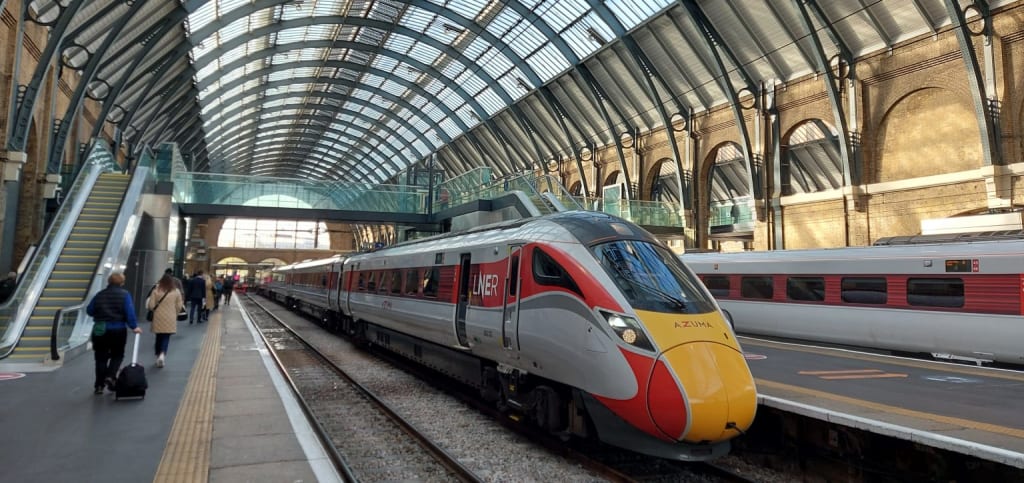
There is something almost poetic about opening your laptop in a train as it glides through Europe, the world passing like a movie outside your window. One moment you are in Germany, the next you are crossing into Belgium, without ever needing to take off your shoes or stand in a line behind a security belt. The gentle rocking, the low hum of conversation, and the flash of vineyards, villages, and rivers passing by have a way of making work feel softer, less rigid.
For remote workers and digital nomads, European trains are not just transportation. They can be a mobile office, a quiet thinking space, a classroom of cultural interaction, and an underrated way to balance work with travel.
Still, it is not always the romantic picture you see in travel ads. The Wi-Fi drops without warning. Someone’s baby might scream for half the journey. The seat you thought would be yours might be taken until you show your reservation. And delays, sometimes long, confusing delays, can push back your schedule.
After months of working my way across Europe by train, I have learned how to make it not just workable, but enjoyable and productive. Here is everything that makes train travel a dream for remote life and how to avoid the common frustrations that come along with it.
Why Trains Are Better Than Planes for Working Travelers
If you have traveled a lot by plane, you know how fragmented the experience can be. Waiting in security, cramped seats, turbulence, strict baggage rules, and always feeling slightly dehydrated. Trains skip all that.
Here is why European trains are a remote worker’s best friend:
1. More space to work
Even in second class, you can usually spread out: laptop out, notebook nearby, snack ready. On planes, you are trying not to elbow the person next to you while typing crookedly.
2. No airport chaos
You do not need to arrive two hours early, remove your liquids, or take off your shoes while juggling a laptop in one hand and a passport in the other. Just walk up, board, and settle in.
3. No liquid rules
Carry your water, soup, and lotions; no one cares. You can even bring a full picnic and a bottle of wine. It feels civilized.
4. City-center to city-center
Airports are nearly always outside the city; trains deliver you right into the heart of it. That means less commuting, fewer taxis, and more energy left for work.
5. The scenery
There is nothing quite like typing emails while watching the snowy Alps, golden Spanish fields, or the shores of the Mediterranean roll by your window.
For a remote worker, those things alone can be enough to make trains the better choice.
Choosing the Right Train Type
Not all trains are equal. Some are mobile work havens; others are more like noisy school buses.
High-speed trains
(TGV, Eurostar, ICE, AVE, Frecciarossa)
These are the stars for working on the go. They are smooth, fast, and often come with power outlets, quiet cabins, and sometimes decent Wi-Fi. If you have deadlines or calls, choose these.
Regional trains
Slower, more casual, and often without Wi-Fi or power outlets. Good for shorter trips or when you plan to do offline work.
Night trains
Night trains are perfect for covering long distances without losing daytime work hours. You sleep while the train travels, arrive in a new city in the morning, and save on accommodation. Some offer surprisingly comfortable private cabins.
My Best Tip When Booking:
Look for reserved seats with tables and outlets. If possible, choose a window seat.
I also try to book first-class promo seats when they are only slightly more expensive than second class. You get more space, quieter surroundings, and sometimes better internet.
Turning a Train Seat into a Mobile Office
You do not need a fancy setup, but the right habits make a huge difference.
1. Pick the right seat
Window seats with a table are gold. More stability, more workspace, and better lighting.
2. Bring backups
Power on trains can be unreliable. I always bring:
- A universal travel adapter
- A fully charged battery pack
- A charging cable that actually reaches where you need it
3. Headphones save lives
Noise levels vary wildly. Some trains are silent libraries; others feel like playgrounds. Noise-canceling headphones give you control.
4. Offline prep
Queue up music, download work files, save email drafts, and prepare tasks that do not require Wi-Fi.
Sometimes the best work you will ever do happens offline, without Slack notifications and constant Google Drive syncing.
What About Wi-Fi?
Here is the honest truth: train Wi-Fi in Europe is inconsistent. Sometimes fast, sometimes painfully slow, sometimes nonexistent.
My rule:
Train Wi-Fi is a bonus, not a plan.
What I rely on:
- Local SIM card
- Hotspot tethering
European Union roaming rules allow you to use your mobile plan across many countries without extra cost. If you are traveling outside your SIM region, buying a local SIM can be cheap and worth it.
When I know I will need internet, I double-prep:
- One local SIM
- One portable hotspot
- Offline backup tasks
It is all about being prepared.
Adjusting Your Work Rhythm
Working on trains is not about trying to do everything. It is about choosing tasks that fit naturally into that environment.
I divide tasks like this:
Online tasks
- Emails
- Team chats
- Light research
Offline tasks
- Writing
- Planning
- Editing content
- Drafting proposals
I save deep creative work for long rides. The steady motion, changing landscapes, and lack of interruptions can be perfect for focus.
Dealing With Delays
There will be delays. Do not fight it; plan for it.
My rule:
Never schedule an important call or deadline within two hours of arrival.
Train travel works best when you move with flexibility; it is part of the spirit of remote life.
If your train is delayed or canceled, most carriers will put you on the next possible train. Always check compensation policies; you may be eligible for partial refunds when there are big delays.
Essentials I Never Travel Without
- Foldable laptop stand
- 20,000mAh portable charger
- Noise-canceling headphones
- Light backpack
- Snacks
- Reusable water bottle
- Offline playlists
- Downloaded documents
- Universal adapter
These sound simple, but together they make any train a workable space.
The Beauty of Train Time
Trains offer something rare: a natural rhythm.
On so many rides I have found myself pausing to take in the scenery, letting my brain rest between tasks. Unlike planes and buses, trains give you room to breathe. They let you transition gently instead of abruptly.
I have edited reports while crossing the Dolomites, rewritten a social media strategy while passing lavender fields in France, and journaled entire essays as sunlight reflected on the Rhine River.
Somewhere between one country and the next, the mind opens. The heart opens too. It becomes easier to reflect, to plan, to dream.
A Few Lessons from the Tracks
1. Expect unpredictability
Not every ride will be peaceful. Some will be crowded or noisy. But flexibility is the heart of the nomad life.
2. Build buffers
Never rely on train internet for live calls. Be ready to pivot.
3. Choose comfort when you can
A slightly more expensive ticket can change your whole day.
4. Treat trains as rhythm, not interruption
Trains give structure. They give transition. Use that time creatively.
5. Let the journey soften you
Trains teach patience, curiosity, and appreciation. Let them.
Final Thoughts
Train travel in Europe is more than transportation. It is spacious, scenic, and filled with small opportunities for stillness and productivity. With the right preparation, it becomes a kind of moving sanctuary where work gets done, creativity wakes up, and the world rolls by peacefully outside your window.
Remote life is not always about the perfect desk setup. Sometimes your best work happens at 280 km/h, coffee in hand, mountains flashing by, and a soft rhythm guiding your focus.
If you embrace flexibility, pack wisely, and prepare for imperfect Wi-Fi, European trains can become your favorite office, one with a better view than any skyscraper.
So next time you hop across borders, take the train. Bring your laptop, your curiosity, and your willingness to let the journey lead you. You might arrive with a completed project, a fresh idea, or simply a lighter heart, and that is the magic of working on the rails.
About the Creator
Jasmine Bowen
I’m a digital nomad with a love for history, hidden corners, and real connections. From bustling cities to quiet villages, I share stories that uncover the authentic side of travel, the kind you won’t find in guidebooks.
Keep reading
More stories from Jasmine Bowen and writers in Writers and other communities.
Visa Applications Without the Stress: My Step-by-Step Guide
If you have ever applied for a travel visa, you already know the emotional roller coaster that comes with it. One moment, you are excited about your upcoming trip, imagining markets, mountains, museums, and new experiences. The next moment, you are knee-deep in paperwork, refreshing embassy websites, and wondering why they need a bank statement, a photo, and your firstborn child just to let you walk on their soil.
By Jasmine Bowen2 months ago in Writers
If You Love Me, You'll Do It
I met Jason when I was five years old. I could say that I loved him from the moment I saw him. He was so handsome to me and I felt in awe by his presence. When they introduced him as the new kid in school, I wanted to be his friend right away. I remember it like it was yesterday. I remember his smile and how he didn't seem shy. He appeared confident and ready to learn. I waved at him and said "hello," before anyone else could even say a word. He sat next to me, and I asked him if he wanted to be friends. He looked so happy as he said, "Yes!"
By Sidney Smith (Sid Smith)6 days ago in Fiction



Comments
There are no comments for this story
Be the first to respond and start the conversation.