
How to Grow and Care for Snake Plant.
Thriving Tips for the Resilient Snake Plant: A Comprehensive Guide

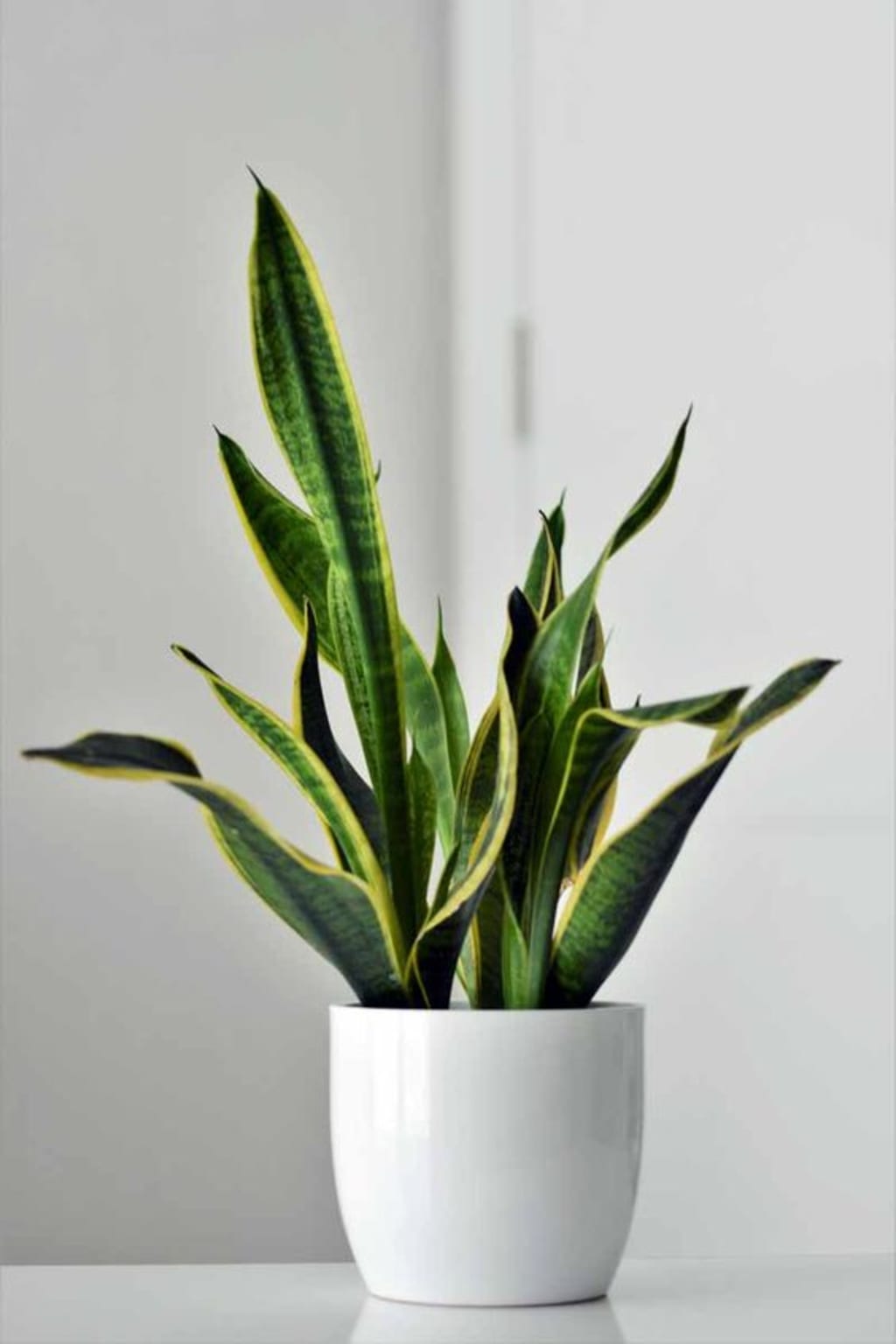
Snake plants, also known as Sansevieria, are popular indoor plants known for their easy care and air-purifying qualities. Here's a guide on how to grow and care for snake plants:
Light
Snake plants thrive in indirect sunlight but can tolerate low light conditions. Place them near a window where they can receive indirect sunlight for a few hours a day. However, they can also survive in low light areas.
Watering
Snake plants are drought-tolerant and prefer dry conditions. Water them thoroughly, allowing the soil to dry out completely between waterings. Overwatering can lead to root rot, so it's crucial to avoid letting the plant sit in water.
Soil
Use a well-draining potting mix for snake plants. A mixture of potting soil and perlite or sand works well to ensure proper drainage.
Temperature
Snake plants prefer temperatures between 60-85°F (15-29°C). They can tolerate slightly cooler temperatures but should be protected from frost.
Humidity
Snake plants are adaptable to different humidity levels and can thrive in normal household humidity.
Potting
Repot snake plants every 2-3 years or when they outgrow their current pot. Choose a pot that is slightly larger than the current one and has drainage holes.
Fertilization
Snake plants are not heavy feeders. Fertilize them lightly during the growing season (spring and summer) with a balanced liquid fertilizer diluted to half strength. Avoid fertilizing during the winter months.
Pruning
Trim any yellow or damaged leaves as needed to maintain the plant's appearance. You can also remove any offsets (baby plants) that appear around the base of the plant and repot them to propagate new plants.
Pests and Diseases
Snake plants are relatively pest-resistant, but they can occasionally be affected by spider mites or mealybugs. Keep an eye out for any signs of pests and treat them promptly with insecticidal soap or neem oil.
Propagation
Snake plants can be propagated easily by division or leaf cuttings. To propagate by division, simply separate the offsets from the parent plant and plant them in their own pots. For leaf cuttings, cut a healthy leaf into 2-3 inch sections and plant them in a well-draining potting mix.
How to Propagate Snake Plant by Division
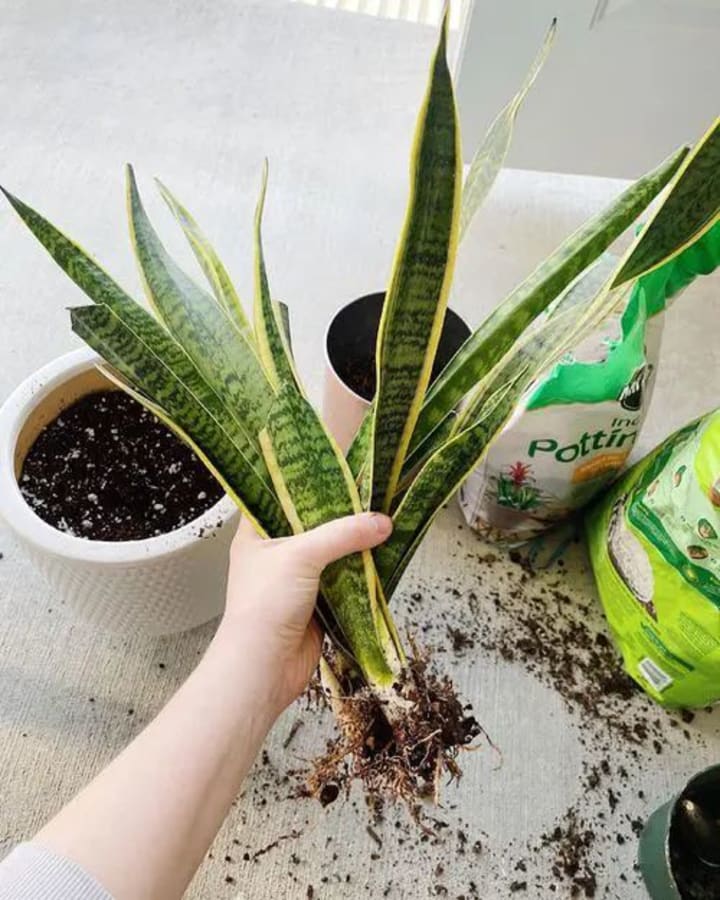
01. Gather a sharp clean knife, a clean pot, and potting soil that is designed or growing cacti and succulents.
02. Remove the plant from the pot and place it on a flat surface. Brush soil from the root structure or rhizome.
03. Use the knife to divide the plant into sections, keeping the roots for each section intact.
04. Replant sections into clean pots filled with the potting soil.
05. Water and place in a partly sunny location.
Offshoots or pups are baby plants emerging from the soil. Follow directions for root division to remove pups and replant each in its own pot.
How to Propagate Snake Plant from Leaf Cuttings
01. Use a sterile cutting tool to remove a long, healthy leaf at its base.
02. Submerge the cut end of the leaf in a clean jar of water and set the jar in a partly sunny location. Or allow the cut end to callous over for 24 hours and then pot it cut-end down.
03. When using the water rooting method, refresh water every two weeks.
04. Roots develop in one to four months. Once they reach one inch long, plant the cutting in cactus potting mix.
05. Water and place in a spot with bright, indirect light.
Snake Plant Varieties
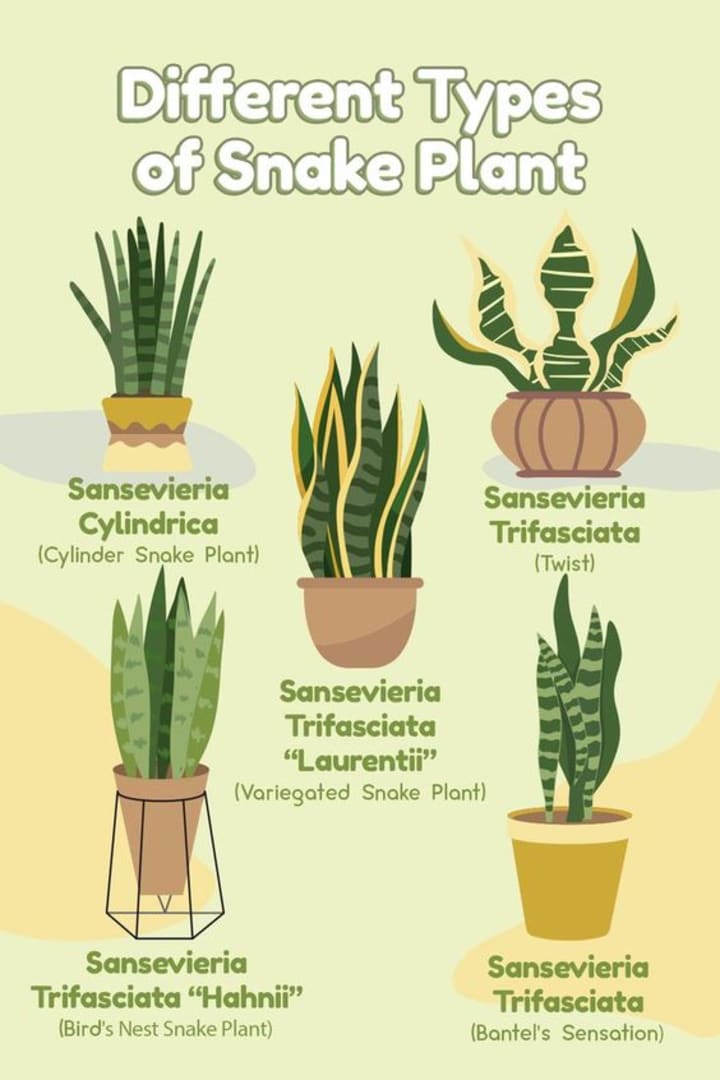
01. Dracaena trifasciata 'Hahnii': Also called bird's nest snake plant, 'Hahnii" grows to just six inches tall.
02. Dracaena angolensi: This cylindrical snake plant has round, stiff leaves several feet long. arching outward from a central crown.
03. Dracaena trifasciata 'Laurentii': This variegated cultivar has creamy yellow leaf margins.
04. Dracaena trifasciata 'Twisted Sister': Twisting leaves bear horizontal stripes with yellow variegated edges. It grows to 15 inches tall.
05. Dracaena trifasciata 'Bantel’s Sensation': Leaves are narrow with white vertical stripes on this three-foot tall variety.
06. Dracaena pearsonii: Sometimes called rhino grass, this plant features succulent red-tinted leaves and grows to 12 inches tall.
FAQ
Why is it called a snake plant?
Snake plant earned its name because of the way its long, thin leaves with distinct stripes and other markings resemble some types of snake.
How fast does a snake plant grow?
Snake plants are slow growers. Seasonal change spurs development, so placing plants in a shade or partial shade location outdoors in summer often boosts growth.
How long does a snake plant live?
The average lifespan of a snake plant is five to ten years; however, they can live up to 25 years or more.
What's the difference between Nassauvia serpens and Dracaena trifasciata?
Although Nassauvia serpens and Dracaena trifasciata are both called snake plant, the two are unrelated. Nassauvia serpens is a perennial shrub in the aster family that's native to the Falkland Islands.
How big do snake plants get?
Snake plants can grow up to around three feet tall when grown indoors.
About the Creator
Aquib Shahzada
I am a literary voyager navigating the boundless seas of creativity.I sculpt worlds where the ordinary transforms into the extraordinary, where characters leap from the page and stories take flight on the wings of imagination.
Keep reading
More stories from Aquib Shahzada and writers in Writers and other communities.
How to Care for a Begonia Rex Plant
When you picture a begonia, you probably imagine the pink or red perennial that blooms in flower boxes and on suburban lawns. However, there are actually more than 2,000 types of begonias, and many of them don't flower at all. One of the most popular, the rex begonia, is a fantastic low-maintenance houseplant for new plant parents. Also called the king begonia (rex means "king" in Latin), it's known for its large, sprawling leaves with tie-dye-like green and purple patterns.
By Aquib Shahzada2 years ago in Writers
Seeking Justice for Renee Nicole Good
A photo of Renee Nicole Good, who was shot and killed by a U.S. Immigration and Customs Enforcement agent, sits near near candles bearing the names of people who have been killed by ICE agents or died in custody, during a vigil for her in Seattle, Jan. 8, 2026.
By Organic Products 7 days ago in Writers



Comments (1)
This article is fantastic—I appreciate its well-crafted and informative nature.