
How to Care for a Begonia Rex Plant
A plant expert sets us on the right path.

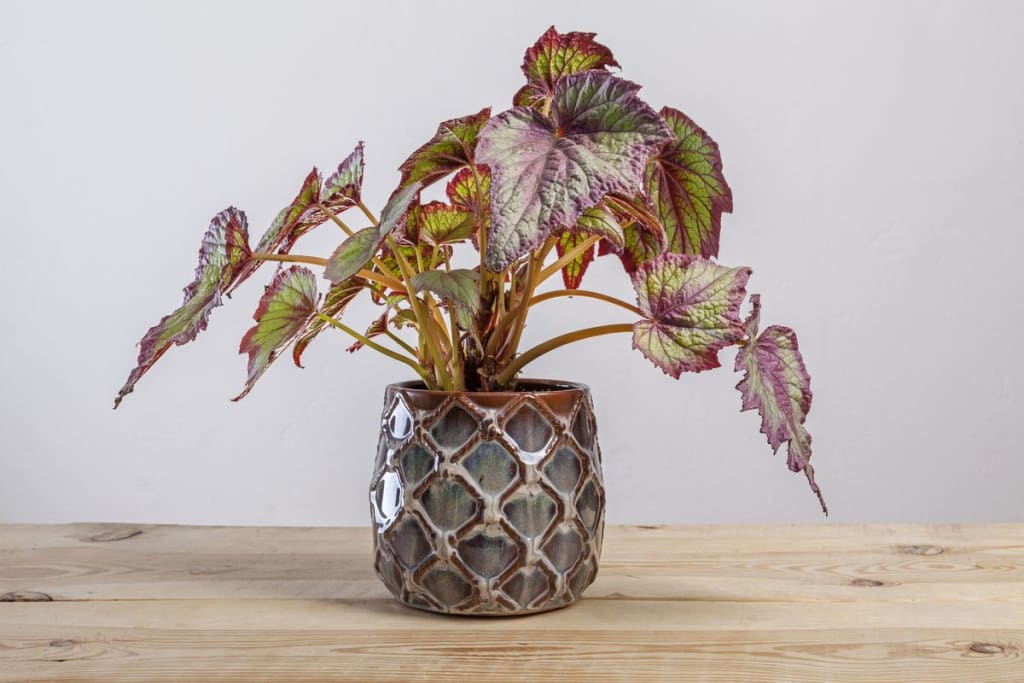
When you picture a begonia, you probably imagine the pink or red perennial that blooms in flower boxes and on suburban lawns. However, there are actually more than 2,000 types of begonias, and many of them don't flower at all. One of the most popular, the rex begonia, is a fantastic low-maintenance houseplant for new plant parents. Also called the king begonia (rex means "king" in Latin), it's known for its large, sprawling leaves with tie-dye-like green and purple patterns.
Even though the rex begonia is easy to care for, you should follow some simple guidelines to help your plant thrive. Ahead, we break down exactly what you need to know about caring for a king begonia, from watering and propagating to troubleshooting problems.
Begonia Rex Care
Sunlight
For the best growth results, place your rex begonia in bright, indirect sunlight. Direct light will scald its leaves, but too little light will result in a leggy plant with smaller leaves. An east-facing window is ideal, but a south-facing spot that doesn't get blasted with sunlight works too.
Soil and Fertilizer
Rex begonias are very prone to overwatering and root rot, so make sure the soil or potting mix you use is well draining. When shopping for a potting mix, look for "quick draining" or "moisture control" on the package. You can also add pearlite, sand, or drainage rocks to regular potting soil.
These plants benefit from a well-balanced fertilizer every few weeks. You can opt for a liquid plant food or a firm fertilizer. However, once it starts to get cold, slow down on feeding. If you see burn-like signs on the leaf edges, you're adding too much plant food.
Water
Despite being prone to overwatering, rex begonias love a constant supply of moisture. Water your plant when the top layer of the soil begins to feel dry or the leaves start to flag (lightly wilt). If you notice your plant going dormant during the winter months, cut back on watering until it starts growing again.
Temperature and Humidity
Rex begonias love room temperature—that's why they're such great indoor plants. Around 70 degrees (and dropping around 10 degrees at night) is perfect for these warm-weather plants. They like some humidity too: Keep it above 50 percent during the growing season.
Where to Plant Rex Begonias Outdoors
A rex begonia has similar light needs indoors and outdoors. Plant your rex begonia in a part of your yard that gets indirect or dappled sunlight. (Underneath a tree as ground cover is perfect.) Just be sure to spot you pick isn't prone to flooding, puddling, or holding water.
How to Propagate Rex Begonias
Like most houseplants, rex begonias are pretty easy to propagate. Below are a few steps to follow if you're propagating at home:
Step One: Using a sterile razor or scissors, cut off a leaf as close to the stem as possible. Be sure not to smush either end as new growth with emerge from those spots.
Step Two: Repot the cut leaf, trimmed side down in well-draining potting mix, using rocks or weights to ensure the cut end stays in place.
Step Three: Cover the top of the plant pot with plastic wrap to trap and maintain humidity. Place the pot in a sunny, warm location that stays above 70 degrees during the day. There's no need for additional water until new growth appears.
Step Four: You'll begin to see new growth in approximately three to four weeks. (Be patient!) Once the new growth forms firm roots, you can remove the plastic wrap and proceed with your regular care routine.
Common Pests and Problems
Mealybugs and Aphids
To prevent or eliminate the two most common types of indoor pests, mealybugs and aphids, routinely wipe down your rex begonia's leaves with neem oil or an insecticide. If you notice a mealybug, immediately isolate your plant so the bugs don't spread, then remove it with your fingers or a cotton swab.
Root Rot
Because rex begonias are so prone to overwatering, they're also prone to root rot. Root rot is fatal, so look out for mushy roots and stems.
About the Creator
Aquib Shahzada
I am a literary voyager navigating the boundless seas of creativity.I sculpt worlds where the ordinary transforms into the extraordinary, where characters leap from the page and stories take flight on the wings of imagination.
Keep reading
More stories from Aquib Shahzada and writers in Writers and other communities.
5 Common German Flowers You Can Grow
Flowers feed our hearts and souls. When you plant a flower garden, it’s a gift to yourself, as well as the visiting pollinators and birds. Wandering through your garden to explore what’s in bloom, what’s changed since yesterday, and what the bees and butterflies are doing is a peaceful and uplifting experience. And the most beautiful flowers are the ones snipped from your own cutting garden and displayed lovingly throughout your home.
By Aquib Shahzada2 years ago in Writers




Comments
There are no comments for this story
Be the first to respond and start the conversation.