
How to Beat Writer’s Block When It Hits Hard
A Writer’s Journey Through the Fog and Back Into the Light


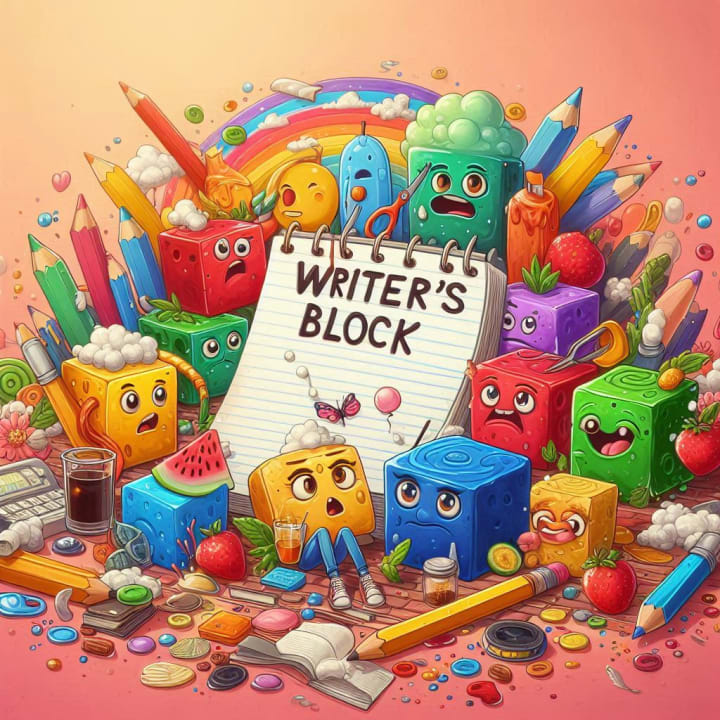
It was 2:17 a.m., and I was staring at a blank screen—again.
The blinking cursor pulsed like a heartbeat, steady and silent, almost mocking. I had opened my laptop with the hope that tonight would be the night. The words would flow. The ideas would flood back. But nothing came. Just the cold white of an empty document and the familiar ache of frustration tightening in my chest.
I had hit the wall. Again.
Writer’s block. The unwelcome guest that overstays its visit, sips your coffee, and clogs your creative flow like a slow drain. Every writer meets it. Some wrestle it and win; others walk away—temporarily or forever.
But this story isn’t about defeat.
It’s about what happened after that blank page, what I learned, and what might help you when the silence is deafening and the words feel out of reach.
The First Truth: Writer’s Block Isn’t Laziness—It’s Resistance
One of the hardest parts of being stuck is the shame that creeps in. I began telling myself stories like, “Maybe I’m just not disciplined enough,” or, “Real writers don’t struggle like this.” But the truth is, creative block is rarely about laziness. More often, it’s about fear, perfectionism, or exhaustion.
Sometimes, our minds need rest. Other times, our hearts are trying to tell us something deeper—like, “This idea doesn’t light you up anymore,” or “You’re trying too hard to sound impressive instead of honest.”
The Moment It Shifted: Permission to Write Badly
I wish I could say I stumbled upon some magical routine that saved me, but what actually helped was something far simpler—and far more powerful.
I gave myself permission to write badly.
I wrote nonsense. I journaled thoughts like “I don’t know what to say,” and “Everything I’m writing sounds stupid.” I stopped aiming for greatness and started aiming for truth. Even if that truth felt ugly, chaotic, or unclear.
And something shifted.
Not immediately. Not in some grand lightning-bolt moment. But gradually, like a muscle waking up after being still too long.
The words started coming back.
7 Practical Steps That Worked (and Might Work for You)
Change your writing environment.
Sometimes, your brain just needs new scenery. I moved to a park bench, a coffee shop, even just a different corner of my apartment. It mattered.
Create without consequence.
I started a “private” document folder called “Just for Me.” No editing, no judgment. Just raw thoughts. That freedom helped me reconnect with my voice.

Read something inspiring.
When you can’t write, read. Not to compare—read to remember why you love language. One poem, one essay, one great paragraph can spark the fire again.
Write first, edit later.
The biggest creativity killer? Editing while writing. I had to retrain myself to let the words flow messily and fix them later.
Use prompts or memory triggers.
I started with simple prompts like “Write about a moment that made you feel proud.” They opened emotional doors I’d forgotten.
Talk it out loud.
No joke—I’d pace and talk out my ideas to my phone's voice recorder. It felt ridiculous at first, but my most honest lines came that way.
Honor the pause.
Sometimes the answer is not more forcing—but more patience. Writer’s block may mean your soul needs to refill before it pours out again.
Reconnecting with Why You Write
Somewhere along the way, I realized I had been writing to impress, not to express. That shift made all the difference.
I started asking:
Why did I fall in love with writing in the first place?
The answer was simple: I wanted to tell the truth. I wanted to make people feel seen. I wanted to leave something behind that mattered, even just a little.
When you reconnect with your why, the words begin to trust you again.
A Note to the Blocked Writer
If you’re staring at your screen today, frozen and frustrated, please know this: You are not broken. You are not failing. This season is part of the process.
Sometimes the block isn’t stopping you—it’s guiding you. Redirecting your path to a more honest place. The fog may be thick now, but there’s light ahead. There always is.
So take a deep breath, close your eyes, and just write one word. Then another.
Even the longest story begins there.
Moral / Life Lesson:
Writer’s block isn’t the end of your creativity—it’s a signpost. It means you care. It means your words matter. Honor the silence, listen inward, and trust that your voice is still there—waiting for your courage to call it home.

-----------------------------
Thank you for reading...
Regards: Fazal Hadi
About the Creator
Fazal Hadi
Hello, I’m Fazal Hadi, a motivational storyteller who writes honest, human stories that inspire growth, hope, and inner strength.
Keep reading
More stories from Fazal Hadi and writers in Writers and other communities.
From Blank Page to Bookshelf: My Self-Publishing Journey
Chapter 1: The Idea That Wouldn’t Let Go I didn’t set out to be an author. I was 29, working a 9-to-5 in customer service, writing ideas on the back of receipts during slow shifts. Like a lot of people, I had “Write a book someday” on my bucket list. It felt romantic, mysterious, and almost impossible. I told myself I wasn’t ready. That I wasn’t qualified. That I didn’t have time.
By Fazal Hadi7 months ago in Writers
Are Retail Expansion Decisions Failing Because You’re Ignoring Location Intelligence?
Retail expansion often looks straightforward on paper. A promising city, visible footfall, familiar competitors—everything seems right. Yet many stores struggle within months, while others succeed just a few streets away.
By Retail Gators4 days ago in Writers




Comments
There are no comments for this story
Be the first to respond and start the conversation.