
How to Be a Great Trader: A Comprehensive Guide
The Most Important Skills for Profitable Trading

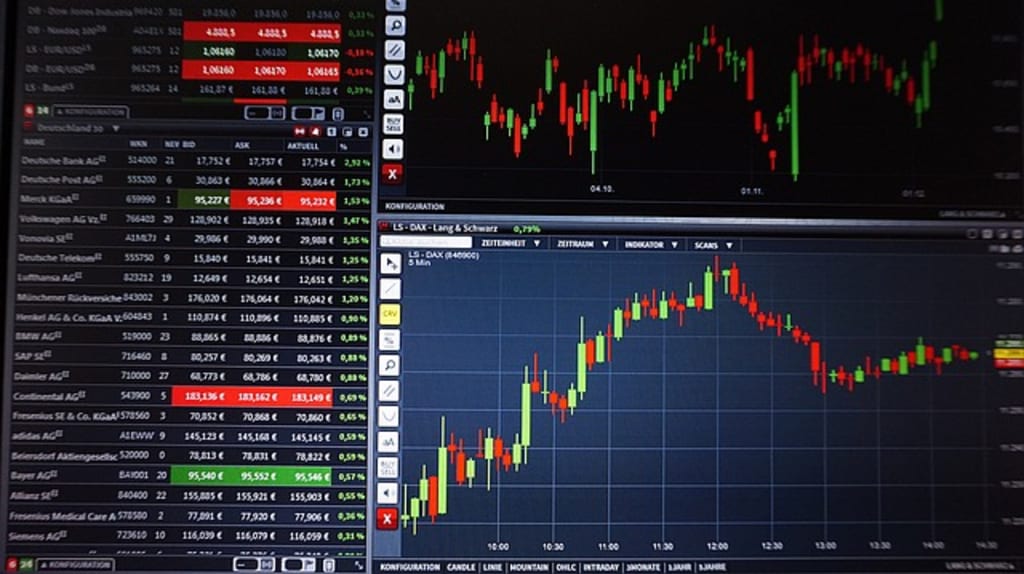
While trading can be a thrilling and lucrative endeavor, there are drawbacks as well. Becoming a successful trader takes more than simply luck, regardless of your interests in stocks, FX, commodities, or cryptocurrencies. It requires expertise, understanding, and a methodical approach. We'll look at the fundamental traits and techniques in this guide to help you become a profitable trader.
1. Understanding the Basics of Trading
It's essential to have a firm understanding of the fundamentals before you venture into the trading realm. This basis will assist you in making wise choices and steering clear of typical mistakes.
What Is Trading?
Buying and selling financial products such as stocks, bonds, currencies, and commodities with the intention of turning a profit is known as trading. The objective is to purchase low and sell high, or in certain situations, if you're short selling, to sell high and buy low.
Types of Trading
There are various trading styles, and each has unique timelines and strategies:
Buying and selling assets inside the same trading day is known as day trading. Day traders may execute several deals in a single day as they search for little price fluctuations.
Swing Trading: The goal of swing trading is to profit from short- to medium-term market changes by holding positions for a few days to weeks..
Position Trading: Using long-term trends and fundamental analysis as a basis, position traders hold assets for longer periods of time, ranging from several months to years.
Scalping: In order to take advantage of minute changes in price, scalpers execute a lot of little deals during the day.
To Becoming a Great Trader JOIN NOW
Key Trading Concepts
Limit orders only allow trades to be executed when the price reaches a predetermined threshold; market orders, on the other hand, execute trades immediately at the current price.
The amount that buyers are willing to pay is known as the bid price, and the price that sellers are hoping to get is known as the ask price. The spread is the amount that separates these prices.
Leverage: With a comparatively little quantity of capital, leverage enables you to control a significant position. Profits may be increased, but there is also a greater chance of suffering big losses.
2. Developing a Trading Plan
A well-thought-out trading strategy is necessary to attain sustained success. It gives you a clear path and supports your discipline so you don't make snap judgments based on your feelings.
Setting Goals
Establish your objectives before you begin trading. Are you trying to replace your full-time career or are you just searching for a side source of income? Your objectives will affect how you trade, how much time you spend trading, and your approach to risk.
Risk Management
Long-term performance and capital preservation depend on effective risk management. Think about the following tactics:
Position Sizing: Decide how much of your trading money you are willing to risk on each transaction. It's generally advised to never risk more than 1% to 2% of your capital on a single transaction.
Stop-Loss Orders:A stop-loss order is designed to automatically exit a trade when the price hits a predetermined level. This lessens your losses in the event that the market turns against you.
Take-Profit Orders:To assist you lock in profits, a take-profit order automatically closes a position when the price hits a predetermined profit threshold.
Trading Strategy
How you will recognize and respond to trading opportunities should be outlined in your trading plan. Techniques might be grounded in fundamental analysis (economic indicators, firm performance) or technical analysis (chart patterns, indicators).
Technical Analysis: To do this, past price data must be analyzed, and charts and indicators must be used to forecast future price movements. Fibonacci retracements, moving averages, and the Relative Strength Index (RSI) are examples of common tools.
Fundamental Analysis: This focuses on assessing the economic conditions and financial standing of a firm that may have an impact on the price of its stock. This entails examining economic indices such as GDP, unemployment rates, and interest rates for forex traders.
3. Mastering Emotional Discipline
One of the most important components of successful trading is emotional management. Because of the volatility of the financial markets, it's simple to let feelings of fear and greed control your choices.
Recognizing Emotional Triggers
Recognize the feelings influencing your trading choices. For instance, you can initiate trades too late due to fear of missing out (FOMO), or you might stop transactions too soon due to fear of losing money.
Developing a Routine
You may maintain discipline and prevent rash decisions by developing a trading regimen. Setting trading objectives, analyzing your trades at the conclusion of each day, and doing a daily market analysis are a few examples of this process.
Avoiding Overtrading
Overtrading happens when traders execute an excessive number of trades, frequently motivated by the need to recoup losses or pursue gains. This may result in higher risk and higher transaction costs. Follow your trading strategy and refrain from entering into pointless deals.
4. Continuously Educating Yourself
Since the financial markets are always changing, keeping up with the latest developments is essential to keeping a competitive edge.
Reading and Research
To increase your knowledge, read books, journals, and research papers. "The Intelligent Investor" by Benjamin Graham and "A Random Walk Down Wall Street" by Burton Malkiel are two works that are suggested reading for traders.
Attending Workshops and Webinars
Attend trading seminars, webinars, and workshops to pick up new strategies and learn from seasoned traders. Live events and educational materials are provided by numerous brokers and trading platforms.
Analyzing Your Trades
To keep track of your trades, including the reasoning behind entering and leaving positions, as well as the results, keep a trading notebook. Examine your journal on a regular basis to spot trends and potential improvement areas.
5. Choosing the Right Tools and Resources
Your trading performance can be significantly impacted by having the appropriate tools. The following are some vital resources and tools for traders:
Trading Platforms
Choose a trading platform based on what you require. A few characteristics to look for are order execution capabilities, charting tools, and real-time data. Thinkorswim, MetaTrader 5 (MT5), and MetaTrader 4 (MT4) are a few of the well-known trading platforms.
Research and Analysis Tools
Make use of information and research tools to help you make trading judgments. News feeds, technical analysis tools, and economic calendars are a few examples of them. Numerous platforms provide combined tools for market research and technical analysis.
Risk Management Tools
To properly manage your trades, make use of risk management tools. Stop-loss and take-profit orders, along with portfolio management tools to monitor your performance and risk exposure, are features that many trading platforms offer.
To Becoming a Great Trader JOIN NOW

6. Building a Support Network
While trading can be a solitary endeavor, having a support system can offer insightful advice and motivation.
Joining Trading Communities
Engage in online networks and forums for trading to exchange ideas, pose queries, and pick up tips from other traders. Forums are available for traders of all skill levels on websites such as Trade2Win and Elite Trader.
Finding a Mentor
Look for a mentor who, from their expertise, can offer advice and assistance. You may improve your trading technique, stay motivated, and steer clear of typical pitfalls with the aid of a mentor.
Networking with Peers
Make connections with other traders to share ideas and obtain a variety of viewpoints. To connect with like-minded people and form ties inside the trading community, go to conferences and events
7. Embracing Continuous Improvement
Being a great trader requires a dedication to lifelong learning. Because of the dynamic nature of the financial markets, long-term success depends on one's ability to adjust.
Staying Adaptable
Be willing to modify your trading plan when the market moves. What is effective in one market context might not be in another. Keep up with market developments and be prepared to modify your strategy.
Seeking Feedback
Ask for input from peers, mentors, and trading groups on a regular basis. You can hone your trading skills and discover areas for growth with the use of constructive criticism.
Setting Milestones
Establish benchmarks to monitor your development and assess your success. These could be hitting particular profit goals, enhancing your risk tolerance, or learning new trading strategies.
Conclusion
Being a great trader is a journey that calls for commitment, self-control, and an openness to change and grow. You may improve your trading skills and chances of success by learning the fundamentals, creating a strong trading plan, forming a support system, learning self-discipline, using the appropriate tools, and embracing continual development.
Recall that trading is not a surefire way to generate money, but you can succeed in the markets and overcome obstacles if you have the correct strategy and attitude.
To Becoming a Great Trader JOIN NOW
About the Creator
Malik Mubashar
Think Positive...
Keep reading
More stories from writers in Writers and other communities.
Mutual Aid: A Factor of Evolution
Mutual Aid: A Factor of Evolution is a 1902 collection of anthropological essays by Russian naturalist and anarchist philosopher Peter Kropotkin. The essays, initially published in the English periodical The Nineteenth Century between 1890 and 1896, explore the role of mutually beneficial cooperation and reciprocity (or "mutual aid") in the animal kingdom and human societies both past and present. It is an argument against theories of social Darwinism that emphasize competition and survival of the fittest, and against the romantic depictions by writers such as Jean-Jacques Rousseau, who thought that cooperation was motivated by universal love. Instead, Kropotkin argues that mutual aid has pragmatic advantages for the survival of human and animal communities and, along with the conscience, has been promoted through natural selection.
By New Oasis International Foundation a day ago in Writers
The Blue Ridge Stalker
Tom had left the Ford down the way, its spark plugs finally exhausted and no mechanics for a dozen miles back through the foothills to Strossburg. No matter, he had worn his boots—almost as if he planned for this to happen. The puzzle he sought to solve emanated from the woods clinging to the slopes above; the valley behind held no mysteries.
By Stephen A. Roddewig5 days ago in Fiction




Comments (1)
Keep it up.