
How Many Types of Red Colors Are There?
Types of Red Colors

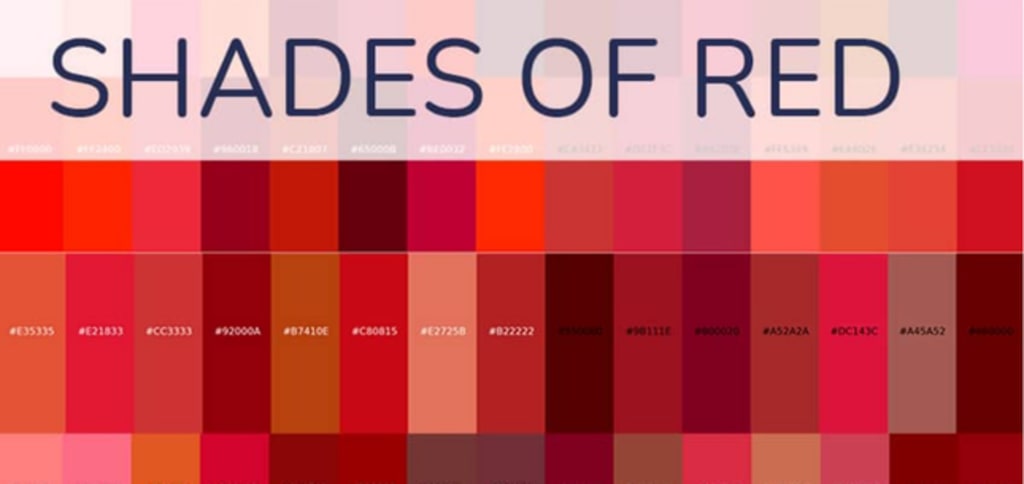
Red is one of the most powerful and emotionally charged colors in the spectrum. It represents passion, love, energy, strength, and even danger. But did you know that red is not just one single color? There are countless types of color red, each with its own personality, emotion, and use in design, fashion, and branding.
In this blog, we’ll explore the many variations of red, how they differ, and why understanding these subtle differences can make a big impact in how we use color in everyday life.
What Makes a Color “Red”?
To start, it’s important to understand what qualifies as a red color. Red sits between orange and violet on the visible light spectrum, and it can lean toward warmer or cooler tones depending on its undertones. If a red has a bit of blue in it, it becomes cooler (like burgundy), while orange-tinted reds feel warmer (like scarlet or vermilion).
These slight shifts in hue and saturation create a wide range of red shades, each offering a different mood or visual effect.
Most Popular Types of Color Red
Let’s take a look at some of the most well-known and commonly used types of color red:
1. True Red
This is the purest form of red—bold, bright, and unmistakable. Often used in logos, stop signs, and classic red lipstick, it’s a universal symbol of attention and action.
2. Crimson
A deep, rich red with a slight blue undertone. Crimson is often associated with royalty, luxury, and elegance.
3. Scarlet
Scarlet is a bright red with an orange tint, symbolizing energy and vitality. It’s a popular choice in fashion and sports branding.
4. Maroon
A dark red with brown undertones. Maroon is often seen as mature, grounded, and serious, making it perfect for academic or formal settings.
5. Burgundy
Similar to maroon but with a hint more purple. Burgundy conveys sophistication and is widely used in interior design and upscale fashion.
6. Cherry Red
Vibrant and youthful, cherry red is playful and energetic. It’s commonly used in pop culture, beauty products, and retro design.
7. Brick Red
A muted, earthy red resembling fired clay bricks. Brick red brings a rustic, warm feeling to design spaces.
8. Rose
A soft, pinkish red that leans into romance and femininity. Rose tones are calming and emotionally warm.
9. Rust
A reddish-orange color inspired by oxidized metal. Rust feels vintage and organic, and is popular in boho and autumn-themed palettes.
10. Vermilion
A bright, fiery red-orange color with cultural significance in Chinese and Indian traditions. Vermilion is bold and sacred.
How Many Types of Color Red Exist?
There’s no exact number, because red exists on a gradient and new names for variations are created all the time—especially in fashion, paint, and digital design. Color systems like Pantone or HTML HEX codes identify hundreds of distinct red shades.
In digital design, colors are defined by combinations of RGB (red, green, blue) values. Slight changes in these numbers can create a new shade. Similarly, Pantone and paint brands like Sherwin-Williams or Behr offer entire catalogs of red tones, each with its own name and use case.
The bottom line? There are hundreds of recognized red shades, each with a unique blend of emotion, symbolism, and impact.
Why Understanding Red Shades Matters
Whether you’re designing a logo, painting a room, or picking out an outfit, choosing the right type of color red can influence how your message is received. For instance:
Bright reds grab attention and convey energy
Dark reds feel elegant and sophisticated
Muted reds offer warmth and comfort
Cool reds bring a sense of calm and refinement
Understanding these differences allows you to be more intentional with your choices—making your work more effective and emotionally resonant.
Final Thoughts
Red is far more than just a color—it’s a powerful tool for expression, communication, and creativity. With so many types of color red available, you can fine-tune your message and mood with precision. Whether you're using red in branding, interior design, or art, knowing your reds can make all the difference.
Ready to dive deeper into how color affects our emotions and decisions? Visit Color Psychology to explore more expert insights and unlock the hidden meanings behind every color on the spectrum.
About the Creator
Color Psychology
Explore how colors impact emotions, behavior, and decisions at ColorPsychology.org! From branding to interior design, discover expert insights into the meaning and effects of colors.
Keep reading
More stories from Color Psychology and writers in Writers and other communities.
What Is Green Color Means? Understanding Its Symbolism and Psychology
When we think of colors that soothe the soul and refresh the mind, green instantly comes to mind. But what is green color means exactly? Beyond being the color of trees, grass, and nature, green carries rich emotional, cultural, and psychological significance that impacts how we feel and behave.
By Color Psychology9 months ago in Writers
Show Me Your Prose!
I’ve caught the unofficial challenge bug again, and I have a lot of devious ideas (like my Cthulu’s Challenge: poetry in pig latin, but I’ll probably save that one for next Christmas or some other time when the sweetness gets a bit too cloying for my tastes.
By Harper Lewis3 days ago in Writers
One Hard Thing
Stop me if you’ve heard this one before: You have the number, you know your schedule- you’ve even picked out the perfect day and time to make this appointment. Shoot, you’ve even picked out alternative days and times just in case their schedules can’t accommodate you!
By Taylor Rigsby7 days ago in Motivation


Comments
There are no comments for this story
Be the first to respond and start the conversation.