
How Leading Healthcare Analytics Companies Are Shaping the Industry
Data-driven healthcare is transforming clinical decisions, operations, and patient outcomes.
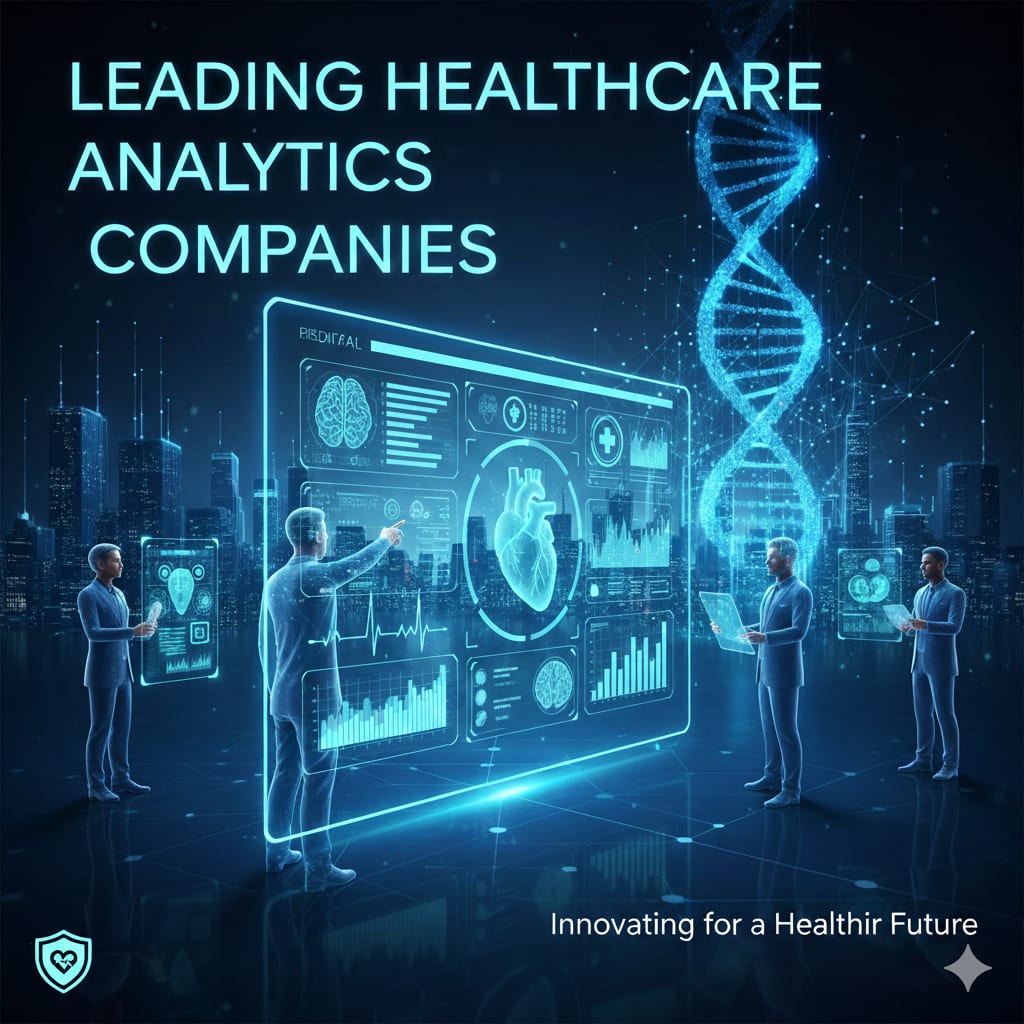
Healthcare is undergoing one of the most significant digital transformations in its history. Hospitals, insurers, and healthcare providers are moving away from intuition-based decisions toward data-driven care models powered by analytics and AI. At the center of this transformation are healthcare analytics companies, which are helping organizations turn complex medical and operational data into actionable insights.
From predicting patient risks to optimizing hospital workflows, healthcare analytics is no longer optional—it’s foundational to modern healthcare systems.
Let’s explore how analytics leaders are reshaping the industry.
The Shift Toward Data-Driven Healthcare
Healthcare organizations generate enormous volumes of data every day, including:
- Electronic health records (EHRs)
- Medical imaging data
- Claims and billing information
- Wearable device data
- Clinical documentation
- Population health metrics
Historically, much of this data remained underutilized due to system silos and limited processing capabilities. Today, analytics platforms can integrate and interpret this data in real time.
Leading healthcare analytics companies are building platforms that enable:
- Predictive clinical insights
- Operational efficiency improvements
- Financial performance optimization
- Population health management
- Risk-based care models
This shift is redefining how healthcare systems operate at every level.
Improving Patient Outcomes with Predictive Analytics
One of the most powerful contributions of healthcare analytics is predictive care.
Advanced analytics systems can identify:
- Patients at risk of readmission
- Early signs of disease progression
- Medication adherence issues
- Potential complications after surgery
- High-risk populations
Instead of reacting to medical events, providers can intervene early.
For example, predictive models are now used to:
- Detect sepsis risk hours before symptoms escalate
- Identify chronic disease patients needing proactive care
- Monitor ICU patient deterioration patterns
This proactive approach reduces mortality rates and improves care quality while lowering costs.
Transforming Hospital Operations
Healthcare analytics is not limited to clinical decision-making—it also transforms operations.
Hospitals use analytics to optimize:
- Bed utilization
- Staff scheduling
- Operating room efficiency
- Emergency department wait times
- Supply chain management
Analytics dashboards allow administrators to make real-time operational decisions based on actual hospital performance data.
For instance, predictive staffing models can forecast patient volume and ensure the right number of clinicians are available. This reduces burnout while improving patient experience.
Financial Intelligence and Revenue Cycle Optimization
Financial sustainability remains a major challenge in healthcare. Analytics companies are helping organizations gain visibility into revenue cycle performance.
Analytics solutions can:
- Detect billing anomalies
- Predict claim denials
- Identify coding errors
- Track reimbursement patterns
- Optimize payment workflows
Revenue cycle analytics helps providers reduce administrative costs while improving cash flow predictability.
This is particularly valuable in value-based care environments, where financial performance depends on quality metrics and patient outcomes.
Enabling Population Health Management
Population health is becoming a priority for healthcare systems worldwide. Analytics platforms allow providers to monitor patient groups instead of focusing solely on individual encounters.
Using analytics, organizations can:
- Identify high-risk patient populations
- Track chronic disease trends
- Measure preventive care effectiveness
- Monitor community health indicators
- Evaluate treatment outcomes across demographics
Population-level insights help healthcare systems allocate resources more effectively and design targeted care programs.
AI and Machine Learning in Healthcare Analytics
Artificial intelligence is accelerating the capabilities of healthcare analytics platforms.
Machine learning models are now used to:
- Analyze imaging data
- Automate clinical documentation insights
- Predict disease progression
- Detect fraud in claims data
- Support clinical decision-making
AI-powered analytics reduces manual workload while increasing diagnostic accuracy and operational efficiency.
Importantly, analytics companies are focusing on explainable AI, ensuring clinicians understand how models reach conclusions. Trust is critical in healthcare environments.
Interoperability and Data Integration
One of the biggest historical barriers in healthcare has been fragmented data systems.
Leading analytics platforms now emphasize:
- EHR interoperability
- Standardized data formats
- API-based integrations
- Real-time data pipelines
By connecting clinical, financial, and operational systems, analytics tools provide a single source of truth for healthcare organizations.
This integration enables faster decision-making and eliminates redundant processes.
Supporting Value-Based Care Models
Healthcare systems worldwide are shifting from fee-for-service models to value-based care.
Analytics companies support this transition by enabling:
- Quality performance tracking
- Risk adjustment modeling
- Cost-of-care analysis
- Patient outcome measurement
- Care coordination insights
Without analytics, value-based care is extremely difficult to implement at scale.
Analytics platforms help providers align clinical performance with financial incentives while maintaining high patient care standards.
The Future of Healthcare Analytics
The next phase of healthcare analytics will likely include:
Real-time clinical decision intelligence
- AI-powered care coordination
- Digital twin patient modeling
- Predictive hospital operations
- Personalized treatment recommendations
- Autonomous administrative workflows
As healthcare data ecosystems mature, analytics will become deeply embedded in daily clinical and operational workflows.
The organizations that adopt analytics early will gain a significant advantage in care quality, efficiency, and financial performance.
Conclusion
Healthcare analytics is transforming the industry from reactive care delivery to proactive, intelligence-driven healthcare systems. The impact spans clinical outcomes, operational performance, and financial sustainability.
Leading healthcare analytics companies are not just building reporting tools—they are creating the intelligence layer that modern healthcare depends on.
As data continues to grow in volume and complexity, analytics will play an even greater role in shaping the future of global healthcare.
About the Creator
Keep reading
More stories from Lilly Scott and writers in Writers and other communities.
Common Mistakes in Healthcare Data Analytics
Healthcare organizations invest heavily in analytics, yet many fail to realize its full value. The issue is rarely the lack of data — it’s how data analytics is implemented, interpreted, and operationalized. Avoiding common mistakes is critical for turning insights into real clinical and business impact.
By Lilly Scotta day ago in Writers
Writing About Writing: The Rainbow Trap
The good thing about living in modern times is that LGBTQ representation in media is increasing. Not just in niche and Independant media, either, but also in mainstream media. Books, movies, TV shows, comics... they're finally catching on that LGBTQ+ people form a significant part of their audience, and deserve to see themselves on screen and in fiction, not just as victims in documentaries and true crime shows.
By Natasja Rosea day ago in Writers
Military Aviation Balances Innovation With Proven Technology
Military aviation operates in an environment where failure is not an option. Every new technology must improve performance without introducing unnecessary risk. In 2026 and beyond, air forces across the world continue to face the same challenge how to adopt advanced innovations while relying on proven systems that have already demonstrated reliability in real combat conditions.
By Beckett Dowhan3 days ago in Writers


Comments
There are no comments for this story
Be the first to respond and start the conversation.