
How do different types of concrete affect core drilling outcomes?
Different Types of Concrete affect Core Drilling Outcomes
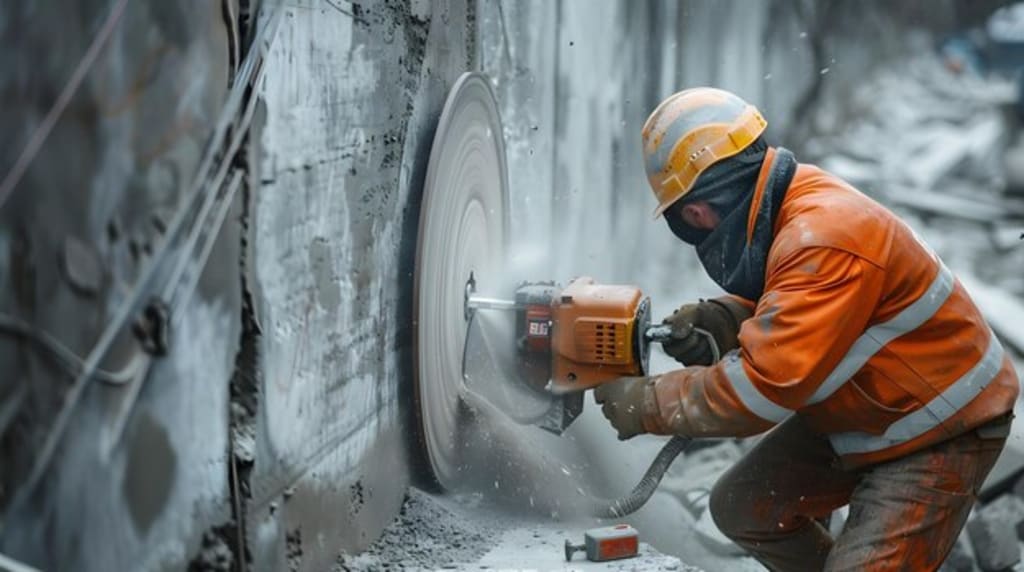
Concrete is one of the commonest construction materials around the world that is known for its strength and durability and flexibility. Not all concrete, however, is created equal and even the type of concrete used can significantly affect outcomes in core drilling operations.
Core drilling is one of the specialized techniques used to extract cylindrical samples of concrete for testing purposes, utility installation, or structural modification. This paper delves into how different types of concrete impact core drilling results, hence the implications for concrete coring services.
Understanding Concrete Types
Concrete comes in many forms and each form has properties which define how it behaves during core drilling. The main categories of concrete include:
- Normal strength concrete: It consists of cement, water, and aggregates. It is the most widely used in construction. The compressive strength of such concrete ranges between 20 to 40 MPa.
- High Strength Concrete: The type of concrete designed to attain compressive strengths greater than 40 MPa. It usually incorporates supplementary cementitious materials, along with high-grade aggregates.
- Reinforced Concrete: Steel rebar is inserted into this concrete so its tensile strength can be significantly enhanced and are mostly used for structural purposes.
- Precast Concrete: Being manufactured in controlled environments, precast concrete elements will be designed toward an application and can contain many additives to achieve optimal functionality.
- Lightweight Concrete: It is created by using lightweight aggregates or adding foaming agents. Such material has a much reduced overall weight but with fair strength.
- SCC: This very flowable concrete can fill the form without the vibration needed by conventional concrete to have itself compacted within a mold and can be ideal for complex forms but at times tough to core drill.
Concrete Type Effect on Outcome of Core Drilling
1. Core Drilling Speed and Efficiency
Concrete type has effects on the efficiency and speed of core drilling operations.
- Normal Strength Concrete: Generally speaking, this concrete normally has a much more handleable hardness and density in which faster drilling might be attained. Core drilling projects using this type can be done fairly rapidly.
- High Strength Concrete: While it may be more robust in terms of structural integrity, increased hardness worsens delays in drilling speed, and special diamond-tipped bits also need to be efficient as well.
- Reinforced Concrete: Reinforcing bar makes penetration difficult due to the risk of preservative damage to the drill bits or structural compromise of the surrounding material.
2. Bit Wear and Service Life
Other forms of concrete affect how quickly the drill bits will wear down:
- Normal Strength Concrete: Slightly affects standard drill bits, and therefore provides a longer service life and lower replacement drill bit count.
- High-Strength and Reinforced Concrete: Such materials cause fast bit wear due to density and hardness. Furthermore, the operators will have to invest in costly quality bits aimed at hard material.
3. Core Quality
The quality of the core sample obtained is crucial to most applications:
- General Strength Concrete: Generally yields good quality cores which are intact and can be used for tests or analysis.
- High-Strength Concrete: Despite core extraction success, the method might undergo micro-cracking because of stress used to drill tougher materials.
- Lightweight Concrete: The densities of the cores will be lower and thus fragile, making test processes complicated.
4. Drilling Methods
The method applied in core drilling may depend on the type of concrete
- Water-Cooled Drilling: It is necessary especially in high-strength or reinforced concrete to deal with heat generated during drilling and bit wear.
- Dry Drilling: Could be sufficient for strength-grade or low strength concrete but has some tendency to produce dust and cloud the area.
5. Structural Integrity
The structure must at all times be left intact in core drilling:
- Reinforced Concrete: The need is to plan well enough that in no way the structure is disturbed in the form of rebar. The use of GPR can help in identifying the rebar even before getting into the drilling operation.
- Precast Concrete: Uniformity in precast products often lends to greater predictability with core drilling, but operators still need to take into consideration joint locations and where there might be voids within the material.
Best Practices for Core Drilling for Different Concrete Types
To achieve maximum efficiency and quality outcomes in different concrete types when core drilling, there are best practices in common use:
- Conduct Pre-drilling Evaluations: Before commencing drilling, evaluate the concrete type and condition through GPR or other non-destructive testing.
- Select Proper Tools: Select the drill bits to be used, which could be designed specifically for the type of concrete that will be drilled. For example, in drilling high-strength or reinforced concrete, diamond-tipped bits are used.
- Employ Cooling Systems: If deemed necessary, utilize water-cooling systems for the bits to make them last longer and serve well during the drilling operations.
- Monitor drilling parameters: vary in speed and pressure according to the feedback coming from the drilling so as to ensure optimal results without highly wearing the equipment.
- Plan structural considerations; always take into consideration the reinforcement or structural elements when making the preparation of cores locations, so that one doesn't end up damaging and putting at risk others.
Proper management of concrete would affect the core drilling thus optimizing performance in Concrete coring services. These factors include different drilling speed, bit wear, core quality, techniques employed, and structural integrity will be helpful to professionals who want to enhance their level of operational efficiency without compromising the quality of the results.
As new materials or new techniques will begin in the future construction project, knowing which difference applies how and why will continue to be paramount to success in concrete coring services.
Contractors are able to obtain even better results in their core drilling once thorough preparation and planning, specific for each type of concrete, is conducted while keeping all the safety standards and timelines in place for the project.
About the Creator
It's Winter
Anne Bernays and Pamela Painter — What If? Writing Exercise for Fiction Writers prompts The Exercise —Write a scene involving two characters. Have the point-of-view character presume something entirely different about the situation from what the other character's overt behavior seems to imply. For example, a landlord comes to visit, and the tenant suspects that it isn't a visit but an inspection. Make up several situations in which one character can fantasize or project or suspect or even fear what another character is thinking. The Objective - To show how your characters can use their imaginations to interpret the behavior and dialogue of other characters.
By Denise E Lindquist22 days ago in Writers
What Is a Visual Search Engine? A Complete Guide by Chance Vision
Most of us are used to typing words into a search bar. But what if you don’t know what something is called? You may have seen an item, a place, or an object and thought, “I wish I could just show this to my phone and get an answer.”
By Ausfab Group3 days ago in Writers


Comments
There are no comments for this story
Be the first to respond and start the conversation.