
How advanced is the security system Endpoint Detection and Response (EDR)?
How advanced is the security system Endpoint Detection and Response (EDR)?
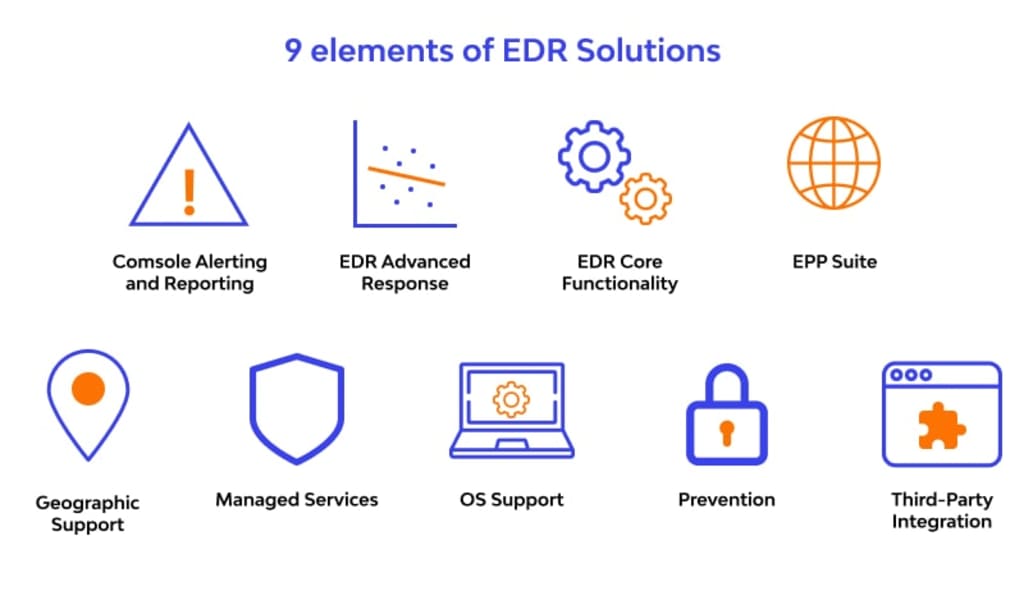
As cyber threats become increasingly sophisticated, traditional security tools like antivirus software and firewalls are no longer sufficient on their own. Organizations now require more dynamic and intelligent tools to protect their digital assets. One such tool that has gained prominence in the cybersecurity landscape is Endpoint Detection and Response (EDR). Designed to offer real-time monitoring, detection, and response to threats at the endpoint level, EDR is often hailed as a significant leap in enterprise security. But just how advanced is this technology?
Understanding Endpoint Detection and Response (EDR)
Endpoint Detection and Response refers to a category of security tools designed to monitor endpoint devices (desktops, laptops, servers, mobile devices) for signs of malicious activity. These tools collect and analyze data from endpoints to detect potential threats, respond to incidents in real time, and provide forensic data for investigation.
Unlike traditional endpoint protection platforms (EPPs), which primarily focus on preventing known threats using signature-based detection, EDR systems use behavior-based analytics, threat intelligence, and machine learning to detect and respond to unknown or emerging threats.
Core Capabilities of Advanced EDR Systems
To understand the advancement of EDR, we need to examine its core capabilities. Here are the primary components that make EDR a sophisticated security solution:
1. Real-Time Continuous Monitoring
EDR tools continuously monitor endpoint activity, capturing detailed data such as process execution, file activity, registry changes, and network connections. This level of visibility enables security teams to spot subtle indicators of compromise (IOCs) that might otherwise go unnoticed.
2. Threat Detection and Behavioral Analysis
One of the most advanced features of EDR is its ability to detect anomalies based on behavioral patterns. Rather than relying solely on known malware signatures, EDR tools use artificial intelligence (AI) and machine learning (ML) to detect suspicious behavior, such as:
Unusual login patterns
Lateral movement across the network
Unauthorized privilege escalation
Abnormal process creation
This proactive detection significantly enhances an organization’s ability to identify zero-day attacks and advanced persistent threats (APTs).
3. Automated and Manual Response Options
EDR platforms offer both automated responses and manual tools for incident response. Automated responses might include isolating a compromised device, killing malicious processes, or blocking a suspicious IP address. For more complex threats, analysts can manually initiate investigations and take tailored actions.
4. Threat Intelligence Integration
Modern EDR tools integrate with global threat intelligence feeds to enrich detection capabilities. By leveraging external databases of known malware signatures, IP addresses, and threat actor profiles, EDR tools can better understand and contextualize detected threats.
5. Forensic Analysis and Incident Investigation
EDR solutions allow security teams to perform deep forensic analysis. By preserving a detailed record of endpoint activity, analysts can trace the origin, scope, and impact of an attack. This post-incident visibility is invaluable for learning from incidents and improving future defenses.
6. Scalability and Cloud-Native Architecture
With the rise of remote work and distributed environments, EDR tools have evolved to support cloud-native architectures. Advanced EDR platforms can scale across thousands of endpoints globally, providing a centralized dashboard for monitoring and management.
How Advanced is EDR in Practice?
EDR is not just conceptually advanced—it delivers tangible improvements in threat detection, incident response, and overall cybersecurity posture. Here’s how:
Enhanced Detection of Sophisticated Threats
Advanced persistent threats and fileless malware can evade traditional antivirus software. EDR’s ability to analyze behaviors and patterns enables it to detect these stealthy threats effectively. Moreover, machine learning algorithms continuously improve their detection capabilities by learning from new data, making the system more intelligent over time.
Rapid Incident Response
Time is critical in cybersecurity. The faster a threat is detected and neutralized, the less damage it can cause. EDR tools reduce response times significantly by providing real-time alerts, automation scripts, and remote remediation capabilities.
Reduced Dwell Time
Dwell time—the period between when an attacker gains access and when they are discovered—can range from days to months in unprotected environments. EDR drastically reduces this time by offering early detection and detailed visibility into endpoint activities.
Supports Compliance and Reporting
Many industries are governed by regulations like GDPR, HIPAA, and PCI-DSS. EDR systems help organizations meet compliance requirements by providing audit trails, reporting tools, and evidence of incident handling.
Limitations and Challenges
Despite its strengths, EDR is not a silver bullet. There are challenges and limitations that must be considered:
False Positives: EDR systems can generate a high volume of alerts, some of which may be false positives. This can lead to alert fatigue if not managed properly.
Complexity: Deploying and managing EDR systems can be complex and resource-intensive. It often requires skilled personnel to interpret the data and respond effectively.
Data Privacy Concerns: Constant monitoring and data collection can raise privacy concerns, particularly in regions with strict data protection laws.
Reactive Nature: While EDR is highly effective at detecting and responding to threats, it often operates post-compromise. It is most powerful when used in conjunction with proactive tools like Endpoint Protection Platforms (EPPs) and Extended Detection and Response (XDR).
The Future of EDR
EDR is continuously evolving, with advancements focused on deeper integration and automation. Key trends shaping the future of EDR include:
1. Convergence with XDR
Extended Detection and Response (XDR) expands EDR capabilities across multiple security layers—including network, email, server, and cloud. By correlating data from various sources, XDR provides a unified view of threats, making detection and response more efficient.
2. AI-Driven Automation
As machine learning models become more sophisticated, EDR systems will rely more heavily on AI for automated decision-making, threat scoring, and remediation actions. This will reduce the burden on security analysts and enhance response times.
3. Integration with SOAR Platforms
Security Orchestration, Automation, and Response (SOAR) platforms integrate with EDR to streamline incident management. EDR provides the data and detection, while SOAR automates response workflows across multiple tools and teams.
4. User and Entity Behavior Analytics (UEBA)
Combining EDR with UEBA adds another layer of behavioral analysis by monitoring user actions. This helps detect insider threats and account takeovers by flagging deviations from normal user behavior.
Conclusion
Endpoint Detection and Response (EDR) represents a significant advancement in cybersecurity. With its real-time monitoring, behavioral analysis, automated response, and forensic capabilities, EDR offers a comprehensive solution to today’s sophisticated cyber threats. However, its full potential is realized only when integrated into a broader security ecosystem that includes prevention, threat intelligence, and human expertise.
As cyber threats continue to evolve, so too will EDR systems—driven by innovation in AI, cloud computing, and integration frameworks. For organizations serious about strengthening their cyber defenses, investing in a robust EDR solution is no longer optional—it’s essential.
About the Creator
Working To Find Work
Working To Find Work: How College Graduates Are Struggling for Employment By Jonathan Mandel 14 January 2026 Historically, college graduates have enjoyed higher employment rates than their high school graduate counterparts. This seemed like an obvious occurrence: Having gone through the rigors of higher education, recent college graduates have historically been granted greater, more lucrative access to the labor market due to their advanced degree.
By Jonathan Mandel7 days ago in Writers


Comments
There are no comments for this story
Be the first to respond and start the conversation.